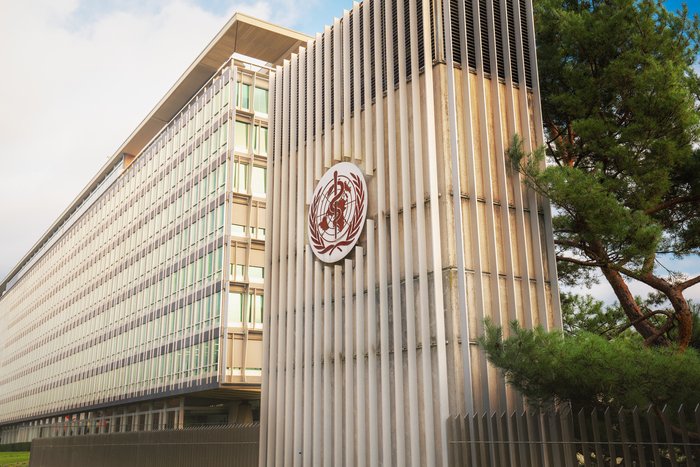
In May, Kidney Care UK’s Policy Director Fiona Loud represented UK kidney patients at the 79th World Health Assembly in Switzerland. The World Health Assembly (WHA) is the decision-making body of the World Health Organisation (WHO), the United Nations agency responsible for international public health. Every year, the 194 member states of the WHO meet to decide the priorities of the organisation.
As Fiona explains, kidney disease is increasingly understood as a key issue in international public health.
In May 2025, the WHA made a historic agreement to adopt a resolution on kidney health, agreeing to prioritise kidney disease. In December 2025, world leaders adopted the most comprehensive political declaration on Noncommunicable Diseases (NCDs) to date. For the first time, this document explicitly integrated kidney disease into the global NCD agenda, placing it alongside other cardiovascular diseases, diabetes, and cancer.
Kidney Care UK were there to listen to the discussions, talk about the impact of kidney disease and to speak to representatives of our government about why it is so important for people with kidney disease to benefit from these policies, including early detection of the condition and accessing treatments to delay progression.
The agreement is good for the world and also good for the UK because it shows our policymakers that kidney disease counts and kidney health is for all.
A year on, we were invited to return to the WHA, where the atmosphere was a little more confident. What struck me in the events I attended or spoke at was a keen interest in learning from other countries and the will to work together across conditions.
At a Kidney Health roundtable put together by the Global Patient Alliance for Kidney Health (Kidney Care UK are members) I spoke about how CKD is rising sharply in the UK, causing increased pressure on the capacity of our dialysis units and longer waiting times on the kidney transplant waiting list, which has now reached 7,000 people.
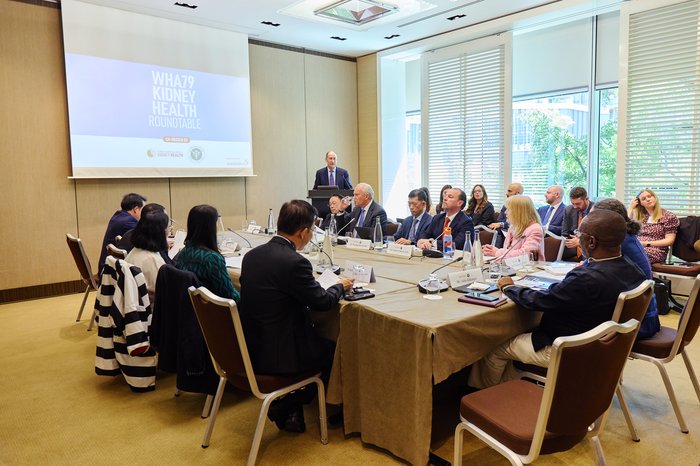
We heard about ambitious health check programmes in nations as diverse as Egypt, Japan, Thailand and Vietnam and our own NHS National Clinical Director for England spoke of the ambitions of the Renal Services Transformation Programme.
It was good to be able to speak about Kidney Care UK's Bloody Amazing Kidneys campaign as a way to raise awareness of the importance of kidney health. More than 330,000 people have completed the Kidney Health Checker and at least half of them have high blood pressure, a major risk for kidney disease, which backs the case for greater public awareness and improved health checks.
Here in the UK, we have a NHS Health Check to identify people aged between 40-74 at risk of several health conditions, but we believe that the Check should start at the age of 30, especially for those with a family history of kidney disease and those from Black and South Asian backgrounds, where there is already a known risk of diabetes, hypertension and kidney disease starting younger. The Health Check should also test directly for kidney disease rather than the current system where a person is called back for a kidney test if they are shown to have a risk for CKD. Too many people drop out and the system is inefficient and time consuming.
Looking at kidney disease through the course of a whole life highlights opportunities to do better; at an event with the International Diabetes Federation, the World Diabetes Foundation and the International Society of Nephrology we heard about how many women (1 in 7 pregnancies worldwide) develop gestational diabetes which can lead to type 2 diabetes later in life because they are not properly followed up.
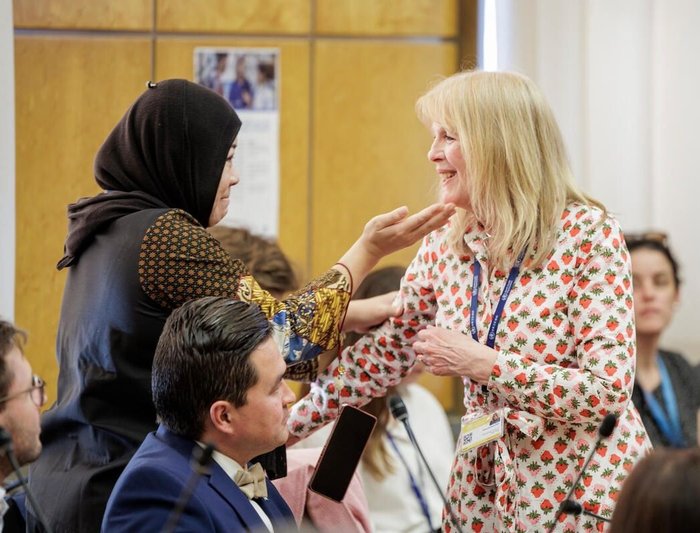
Patient advocate Anita Sabidi spoke from the heart about the rights of women to have a healthy pregnancy. This avoidable and alarming risk has also just been highlighted in the news by Diabetes UK. And as we know many people with diabetes will also develop kidney disease. I was honoured to have been invited to speak about my own life with kidney disease where the clues like pre-eclampsia, anaemia, endocrine problems and, over time, increasing blood pressure were not put together until my kidneys were already too damaged to prevent deterioration.
At another event with Global Patient Alliance for Kidney Health we heard from women whose symptoms had not been picked up soon enough, leading to crises like stroke or heart attack. The disproportionate effect on women’s health was brought out very clearly through these personal testimonies. The missed opportunities our stories showed speak to the urgency to do so much better at finding kidney disease and its related conditions.
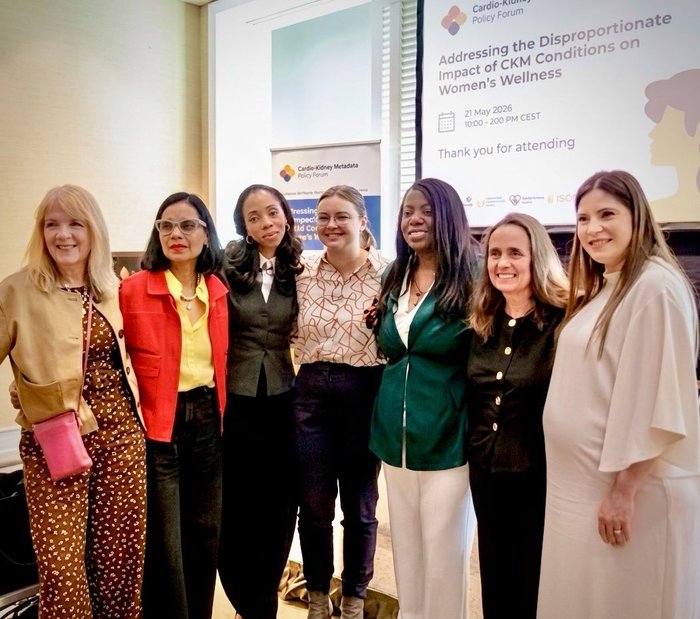
This WHA showed that countries are working to find people with kidney disease, often using health check programmes. Patient advocates eloquently showed the need to do better through their own life experiences. The need to realise the ambition of the Kidney Health resolution with confidence and good leadership and to recognise the investment in health required was clear.
We at Kidney Care UK are committed to pursuing those ambitions for better detection, working with our healthcare teams and providing the patient perspective, with the goal of achieving kidney health for all.
