Broc-cauli cheese
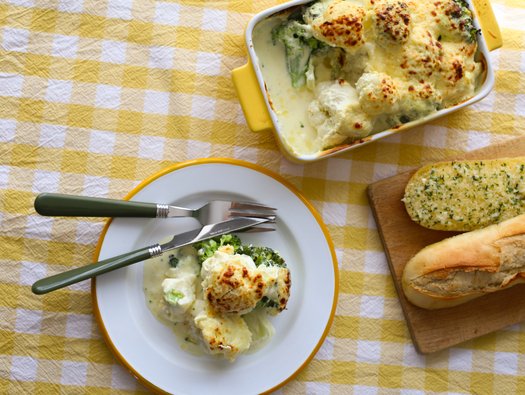
A simple twist on cauliflower cheese, made with both cauliflower and broccoli. It provides a source of protein and is low in potassium, phosphate and salt when enjoyed in the recommended portion size.
https://kidneycareuk.org/get-support/healthy-diet-support/kidney-kitchen/recipe-index/broc-cauli-cheese/
A simple twist on cauliflower cheese, made with both cauliflower and broccoli. It provides a source of protein and is low in potassium, phosphate and salt when enjoyed in the recommended portion size.
1 small head of cauliflower, broken into florets
1 small head of broccoli, broken into florets
200g soft cream cheese
150ml milk (semi skimmed, whole or skimmed)
50g Cheddar cheese, grated
1 teaspoon English mustard (or Dijon if preferred)
2 part-baked baguettes (300g pack contains 2 baguettes)
40g unsalted butter, softened
1 teaspoon garlic purée
1 teaspoon dried parsley
Cook the baguettes according to the instructions and then set aside to cool.
Preheat oven to 180°C / 160°C fan / gas mark 4. Put the cauliflower and broccoli into a pan of water and bring to the boil and cook for approximately 5 minutes until the vegetables are almost tender. Remove from the heat and drain.
Make the sauce by heating the cream cheese over a medium heat to loosen it and then whisk in the milk to fully combine into a sauce with a good grind of black pepper and the English mustard. Remove from the heat.
Arrange the cauliflower and broccoli into a baking dish and pour over the cheese sauce. Sprinkle the grated Cheddar over the top and then cook in the oven for 25 minutes until nicely golden.
While this is cooking, make the garlic butter by mixing the butter with the garlic purée and dried herbs, beat well. Halve the cooked baguettes and spread with the garlic butter. Put the two halves of baguette back together and wrap in tin foil. Add into the oven with the cauliflower cheese with 10 minutes remaining on the cooking time.
Serving sizes are based on adult portions. Here is a guide for children:
Toddler (age 1-4): ¼
Young child (age 5-9): ½
Older child (age 10-13): ¾
Teenagers (14+): 1
Some children do have bigger appetites than others. You child’s portion may need to be changed to fit their typical diet if you think the recommended serving sizes are too large or small. We would advise speaking with your dietitian prior to increasing the serving size if your child has struggled to manage potassium or phosphate.
The baguette is the main source of carbohydrate in this recipe, and the value has been provided for those who have been trained in insulin adjustment.
If you need to gain weight, have a growing child who needs more calories, or have a poor appetite, you can use whole milk to make the cheese sauce and add extra butter to the garlic bread.
This recipe provides a source of protein but is not high in protein. If you have been advised to eat more protein, be sure to include higher protein foods at your other meals and snacks throughout the day.
This recipe is low in potassium, when following the quantities in the ingredients, and the serving sizes. Therefore, suitable for those advised to eat less potassium.
This recipe is also low in phosphate, however it does contain some phosphate, mainly provided by the milk, and cheeses, therefore if you have been prescribed a phosphate binder you should take as directed.
Use gluten-free baguettes.
Use vegan alternatives to cream cheese, milk and Cheddar.
To reduce saturated fat and increase fibre, consider using lower fat milk, lower fat cream cheese and choosing wholemeal baguettes.
This recipe has been kept as low cost as possible, however cream cheese could be replaced with a supermarket own-brand alternative, fresh garlic can be used instead of garlic purée, and the dried parsley can be omitted.
Leftovers can be stored in the fridge for up to 2 days and reheated. The cauliflower cheese can be made the day before and kept in fridge overnight, then cooked.
Kidney Kitchen renal dietitian Angeline Taylor explains how eating more plant foods can help you stay well when you are living with chronic kidney disease (CKD).
You can enjoy a wide variety of delicious and healthy food when you are living with kidney disease. All Kidney Kitchen recipes are analysed and approved by kidney dietitians. Search through our kidney-friendly recipes or filter them by category below.
This comforting, wholesome twist on mac and cheese is a delicious way to get more greens into the whole family. Packed with flavour, but low in salt, potassium, and phosphate.

By giving us your email address, you're giving us permission to send you regular Kidney Kitchen emails from Kidney Care UK. Further information about how we protect and use your personal data is available in our Privacy policy. If you would like to change the way we communicate with you at any time please email [email protected]. You can unsubscribe at any time by using the link at the bottom of every email we send.