Pork and fennel pizza
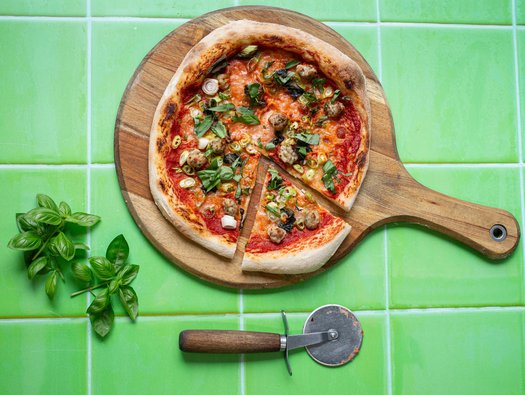
Enjoy as an occasional treat, or share with family for a balanced meal.
https://kidneycareuk.org/get-support/healthy-diet-support/kidney-kitchen/recipe-index/pork-and-fennel-pizza/
Enjoy as an occasional treat, or share with family for a balanced meal.
900g 00 flour (or strong white flour)
7g sachet of dried active yeast
550ml tepid water
Half a 400g tin tomatoes
½ teaspoon garlic granules (or 1 clove garlic, finely chopped)
½ teaspoon dried oregano
Pinch of black pepper
200g pork mince (or chicken or turkey mince)
½ teaspoon fennel seeds (optional)
½ teaspoon garlic granules (or 1 clove garlic, finely chopped)
½ teaspoon dried oregano
Pinch black pepper
8 spring onions, sliced
30g pack basil, stems discarded and leaves torn
150g mozzarella, drained and torn into pieces
70g pack of washed rocket
Dough: In a large bowl, mix the flour and yeast, add the water and bring together using a wooden spoon. Once you have a smooth dough, pour the mixture out onto a clean worktop and knead for 15 minutes. Place it back into the bowl and leave to rest for 10 minutes, then knead again for 30 seconds and divide the dough into 8 balls.
Roll each portion of dough into a smooth ball and place on an oven tray, leaving enough room for the balls to expand. (At this stage, you can individually wrap in cling film and freeze any dough you don’t need until your next pizza session.) Cover the tray with cling film or a damp cloth and leave the dough to prove for at least an hour in a warm place.
Pizza: Pre-heat the oven to 220°C/ 200°C fan/gas mark 7. Wash your hands thoroughly, add the pork mince, herbs and spices into a large bowl and scrunch together with your hands until smooth. Set aside.
Add all the sauce ingredients into a bowl and whizz up with a stick blender until smooth. Alternatively, use a potato masher.
Cut 4 large squares of greaseproof paper big enough to construct your pizza on (roughly 12-inch/30cm squares). Once the dough balls are proved, roll each one out with a rolling pin or stretch by hand to a roughly 10-inch or 25cm circle and lay out on a piece of the greaseproof paper. With a large spoon or ladle, spread the sauce out, leaving a 1-inch or 2.5cm border around the edge, then sprinkle over the pork mince mixture, spring onions and mozzarella pieces. Go sparingly, remembering less is more!
With an oven glove, carefully pull out an oven rack from the hot oven, slide the topped pizza (on the greaseproof paper) off the worktop onto the rack, return to the oven and cook for 15-20 minutes or until they look cooked and tasty! Slice the pizzas, then finish with a sprinkle of rocket leaves.
Serving sizes are based on adult portions. Here is a guide for children:
Toddler (age 1-4): ¼ adult portion
Young child (age 5-9): ½ adult portion
Older child (age 10-13): ¾ adult portion
Teenagers (14+): 1 adult portion
Some children do have bigger appetites than others. You child’s portion may need to be changed to fit their typical diet if you think the recommended serving sizes are too large or small. We would advise speaking with your dietitian prior to increasing the serving size if your child has struggled to manage potassium or phosphate.
The flour is the main source of carbohydrate in this recipe, and the value has been provided for those who have been trained in insulin adjustment.
Despite the use of tomatoes, a high potassium ingredient, this recipe is low in potassium, when following the quantities in the ingredients, and the serving sizes. Therefore, suitable for those advised to eat less potassium.
This recipe is also low in phosphate, however, it does contain some phosphate, mainly provided by the flour, cheese, and mince therefore if you have been prescribed a phosphate binder you should take as directed.
If you need to gain weight, have a growing child who needs more calories, or have a poor appetite, this recipe is already a great source of energy. Using full-fat mince and mozzarella will help you get the full benefit of that extra energy. You can boost it even further by drizzling olive oil over the finished pizza before serving, or for a different flavour, try garlic or chilli oil instead.
This recipe is high in protein, so suitable for those advised to eat more protein, such as those receiving dialysis. If you have been advised to eat less protein, then pick low-protein foods for your other meals that day.
Follow food hygiene guidance during preparation and storage guidance below.
This pizza is a tasty treat, but it’s still important to enjoy it as part of a balanced diet. You could make it a little healthier by using low-fat mince, opting for lighter mozzarella or a smaller amount of cheese, sharing a portion with someone else, or adding a side salad or extra vegetables. If you’re watching your fat and energy (calorie) intake, try to balance this meal with lighter choices throughout the rest of the day.
Strong white bread flour can be used as an alternative to 00 grade flour if preferred. 00 grade flour is a very fine flour that is perfect for pizza dough. This recipe has been kept as low in cost as possible.
Once cooked and cooled, this recipe can be stored in an airtight container in the fridge and reheated for the following day.
You can enjoy a wide variety of delicious and healthy food when you are living with kidney disease. All Kidney Kitchen recipes are analysed and approved by kidney dietitians. Search through our kidney-friendly recipes or filter them by category below.
A pizza with a twist. This lentil base is tasty and versatile, high in fibre, low in salt, potassium and phosphate. It's a different way of making a delicious home-made pizza!
This low phosphate and low potassium pizza is lower in salt than a shop bought alternative and very tasty. This recipe makes 2 pizzas, enough to serve 4 people with a side salad for a more balanced meal.

By giving us your email address, you're giving us permission to send you regular Kidney Kitchen emails from Kidney Care UK. Further information about how we protect and use your personal data is available in our Privacy policy. If you would like to change the way we communicate with you at any time please email [email protected]. You can unsubscribe at any time by using the link at the bottom of every email we send.