Sausage and mash pie

Sausage and mash pie
  • Low potassium
  • Low salt
  • Main meal
  • British
  • 1 hour or less
Download recipe card

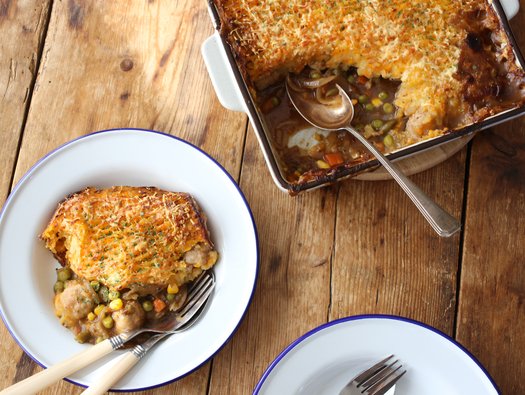
A modern take on a traditional favourite with plenty of vegetables. It provides a source of protein and is low in potassium, but because sausages can contain added phosphate, this recipe is best enjoyed as an occasional meal.

Ingredients

1 tablespoon oil

8 sausages – each cut into 4

2 teaspoons dried thyme or 4 sprigs of fresh thyme – leaves only

2 onions – peeled and finely sliced

1 tablespoon apple cider vinegar or your choice of vinegar

400ml beef stock – made from very low salt or zero salt stock cubes

black pepper

2 tablespoons plain flour

400g floury potatoes, peeled and cut into chunks

200g swede – peeled and cut into chunks

200g carrots – peeled and cut into chunks

25g wholegrain mustard

20g butter

25g mature cheddar cheese – grated (optional)

200g frozen mixed vegetables
Method

  1. Step 1

    Make the mash by putting your potatoes, carrots and swede into a large pan, cover with cold water and place over a medium/high heat and bring to the boil. Once boiling, reduce the heat and simmer for 20 minutes or until all the vegetables are tender. When cooked, drain and return to the pan, off the heat, and allow to cool.

  2. Step 2

    While the potatoes and vegetables are cooking, prepare the sausages. Heat a frying pan over a medium/high heat with the oil, cook the sausages until they are lightly browned, then add in the thyme and onions and cook for a further 10 minutes over a medium heat until onions are soft and sausages fully browned.

  3. Step 3

    Preheat the oven to 200°C/180ᵒC fan/gas mark 6. Add the apple cider vinegar to the pan with the sausages and onions and bring up to a simmer, then add in the flour, stirring continuously for 1 minute and then add in the stock, again stirring continuously to create a thick gravy. Season with black pepper. Stir through your frozen vegetables and cook for a further few minutes.

  4. Step 4

    Take your pan with the potatoes and vegetables, and mash, add in the butter and stir until a smooth consistency. Stir through the wholegrain mustard.

  5. Step 5

    Tip the sausage mix into your casserole dish and top with the mash. Sprinkle over the cheese (if using) and bake in the oven for 20 minutes or until golden brown.

  6. Step 6

    Remove from the oven and serve.

Food facts

Serving sizes are based on adult portions. Here is a guide for children:

Toddler (age 1-4): ¼

Young child (age 5-9): ½

Older child (age 10-13): ¾

Teenagers (14+): 1

Some children have bigger appetites than others. You may need to adjust the portion size to fit your child's usual diet if the recommended serving sizes seem too large or too small.

If your child has been advised to limit potassium or phosphate, speak to your dietitian before increasing the portion size.

The potato and swede are the main sources of carbohydrate in this recipe, and the value has been provided for those who have been trained in insulin adjustment.

If you need to gain weight, have a growing child who needs more calories, or have a poor appetite, you can increase the energy content of this meal by adding extra butter to the mash or vegetables, and sprinkling over the optional cheese.

This recipe provides a source of protein. It contains more protein than a low protein recipe but is not considered high in protein.

If you have been advised to eat more protein, you may wish to include higher protein foods at other meals and snacks throughout the day.

If you have been advised to eat less protein, you may wish to adapt this recipe by using vegetarian sausages in place of meat sausages.

Despite the use of some high potassium ingredients, such as potatoes, this recipe is low in potassium, when following the quantities in the ingredients, and the serving sizes. Therefore, suitable for those advised to eat less potassium.

Not everyone with kidney disease needs to eat less potassium. Only consider the potassium content of this recipe if you have been advised by your kidney team or healthcare professional to reduce the amount of potassium in your diet.

This recipe is high in phosphate. Most of the phosphate comes from the sau-sages, as many sausages contain added phosphate ingredients to help improve texture and shelf life.

To make this recipe low in phosphate, look for sausages that do not contain added phosphates. You can check the ingredients list on the packaging for phosphate additives.

If you have been prescribed phosphate binders, remember to take them as directed by your healthcare team.

Use gluten-free sausages and flour.

Use vegetarian sausages and stock.

Use vegan alternatives for sausages, stock, butter and cheese (if using).

Although no salt has been added during cooking, this recipe is not low in salt because it contains processed meat. Processed meats are often high in salt and may also contain phosphate additives.

When shopping, compare food labels and choose products with less salt where possible. You can also check the ingredients list and look for products without added phosphates.

For this reason, meals containing processed meats are best enjoyed occasionally rather than as an everyday choice.

Omitting the optional cheese topping can also help reduce the salt content further.

This recipe has been kept as low cost as possible. Using supermarket own-brand ingredients where possible may help reduce costs further. Dried thyme can be used instead of fresh herbs, and you can use whichever vinegar you already have at home.

Once cooked and cooled, this recipe can be stored in an airtight container in the fridge and reheated for the following day.

This pie can be made the day before, stored in the fridge overnight and then cooked when required. Preheat the oven to 180°C and cook for 40 minutes until piping hot and the cheese has turned golden.

More kidney-friendly food and recipes

  • Cooking with kidney disease

    Gone are the days when a kidney dietitian would give you a list of foods you can't eat when living with chronic kidney disease (CKD). It's time to start to enjoy the foods you CAN eat in ways you never imagined possible.

  • Kidney Kitchen recipes

    You can enjoy a wide variety of delicious and healthy food when you are living with kidney disease. All Kidney Kitchen recipes are analysed and approved by kidney dietitians. Search through our kidney-friendly recipes or filter them by category below.

  • Sausage and mash

    A classic family favourite with a kidney-friendly twist. It provides a source of protein and is low in potassium and salt, but because sausages often contain added phosphate, it's best enjoyed as an occasional meal.