Slow cooker classic beef stew
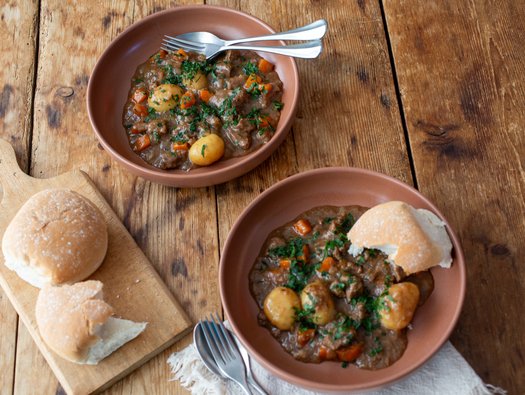
The prolonged low heat turns the beef tender and creates a nutritious, high-protein recipe that melts in your mouth.
https://kidneycareuk.org/get-support/healthy-diet-support/kidney-kitchen/recipe-index/slow-cooker-classic-beef-stew/
The prolonged low heat turns the beef tender and creates a nutritious, high-protein recipe that melts in your mouth.
2 tablespoons vegetable oil
2 large onions, peeled and chopped
500g stewing beef, cut into 2cm chunks
20g plain flour
Good grind of black pepper
150g carrots, peeled and cut into large chunks
500ml beef stock, made with 1 zero-salt or low-salt stock cube
Sprigs of fresh thyme
300g tin of peeled new potatoes or 200g boiled and peeled potatoes
30g fresh parsley, roughly chopped
4 bread rolls
Heat 1 tablespoon of the oil in a frying pan over a medium heat and cook the onions for around 5 minutes, to soften and colour them. Remove the onions from the pan and set aside.
Toss the beef chunks in the flour and black pepper and cook in the same frying pan with the remaining tablespoon of oil, turning to brown on all sides. Depending on the size of your frying pan, you may need to do this in batches.
Tip the carrots, beef and onions into your slow cooker. Pour the beef stock over the mixture and add a few sprigs of thyme. Put the lid on and cook for 4 hours on high.
After 3 hours, add the tin of new potatoes (water drained) or 200g of peeled boiled potatoes to the slow cooker. Continue cooking for the final hour, or until the beef is nice and tender.
Once cooked, remove the thyme and serve the stew with a sprinkle of fresh parsley and a bread roll each on the side.
From step 3 onwards: either use a large, lidded saucepan (simmering on a low heat for 2-3 hours) OR use a large, lidded casserole dish and put in the oven at 160°C / 140°C fan / gas mark 3 for 2-3 hours.
Serving sizes are based on adult portions. Here is a guide for children:
Toddler (age 1-4): ¼
Young child (age 5-9): ½
Older child (age 10-13): ¾
Teenagers (14+): 1
Some children have bigger appetites than others. You may need to adjust the portion size to fit your child's usual diet if the recommended serving sizes seem too large or too small.
If your child has been advised to limit potassium or phosphate, speak to your dietitian before increasing the portion size.
The bread and potatoes are the main sources of carbohydrate in this recipe, and the value has been provided for those who have been trained in insulin adjustment.
If you need to gain weight, have a growing child who needs more calories, or have a poor appetite, you can add high-energy ingredients or foods to the recipe, such as buttering the bread rolls or using extra oil.
This recipe is high in protein, therefore suitable for those advised to eat more protein, such as people receiving dialysis. If you have been advised to eat less protein, you may wish to replace half of the beef with pre-soaked and drained or tinned butterbeans/kidney beans/chickpeas (or any beans of your choice).
Despite the use of some high potassium ingredients, such as potatoes, this recipe is low in potassium, when following the quantities in the ingredients, and the serving sizes. Therefore, suitable for those advised to eat less potassium. Not everyone with kidney disease needs to eat less potassium. Only consider the potassium content of this recipe if you have been advised by your kidney team or healthcare professional to reduce the amount of potassium in your diet.
This recipe is low in phosphate when following the quantities in the ingredients and serving sizes. However, it does contain some phosphate, mainly from the beef. If you have been prescribed phosphate binders, take them as directed by your healthcare team.
To reduce the phosphate content further, you could replace some or all of the meat with a plant-based alternative such as pre-soaked and drained or tinned butterbeans/kidney beans/chickpeas (or any beans of your choice).
Use dried thyme or mixed herbs if you don’t have fresh.
Use gluten-free flour to coat the beef and serve with gluten-free bread rolls.
Serve with wholewheat bread rolls for a healthier option.
Once cooked and cooled, this dish can be stored in an airtight container in the fridge for up to 2 days, or it can be frozen in a suitable airtight container for up to 3 months. Defrost thoroughly before reheating and reheat until piping hot throughout before serving.
This recipe is also suitable for batch cooking. Divide into portions, cool completely and store in the fridge for up to 2 days or freeze for up to 3 months.
If you have been advised to follow a fluid restriction, then the fluid within this recipe should be included in your fluid allowance.

By giving us your email address, you're giving us permission to send you regular Kidney Kitchen emails from Kidney Care UK. Further information about how we protect and use your personal data is available in our Privacy policy. If you would like to change the way we communicate with you at any time please email [email protected]. You can unsubscribe at any time by using the link at the bottom of every email we send.