What is APOL1 kidney disease?
APOL1 kidney disease (also known as APOL-mediated kidney disease) is a type of kidney disease that is caused by changes in the apolipoprotein L1 (APOL1) gene. Variations in this gene lead to a higher risk of developing chronic kidney disease (CKD) in people from African or Caribbean heritage.
It is currently unknown how many people in the UK have APOL1 kidney disease. People from African or Caribbean backgrounds are around 4 times more likely to develop CKD than people from other backgrounds and APOL1 kidney disease is thought to be at least partly responsible for this difference.
What are the signs and symptoms of APOL1 kidney disease?
APOL1 kidney disease has the same signs and symptoms of other types of CKD. Many people do not have symptoms in the early stages of CKD, as even damaged kidneys can still work well enough to prevent any noticeable symptoms.
You may have some mild symptoms such as itchiness, fatigue (tiredness) or swelling, especially around the ankles.
Although many people do not have any symptoms, kidney damage can still affect your health. CKD can increase your chance of developing acute kidney injury, high blood pressure, heart disease or a stroke. Early diagnosis and regular monitoring is therefore very important as lifestyle changes and medical treatment can prevent CKD from getting worse.
People with AMKD are more likely to develop advanced CKD quicker than other people.
What causes APOL1 kidney disease?
APOL1 kidney disease is caused by a variant (change) in the apolipoprotein 1 (APOL1) gene which helps support the body’s immune system.
Genes carry information about different characteristics or traits and are passed down (inherited) from our parents. Some genes control elements of our appearance such as our eye colour, height, and hair colour. Other genes help the body fight infection.
APOL1 (apolipoprotein 1) is a gene that helps protect people from an infection called sleeping sickness (or trypanosomiasis). Sleeping sickness is transmitted in Africa by Tse Tse flies. Many people (particularly in West Africa) have developed different versions of this gene to help protect them against strains of sleeping sickness.
These different versions of the APOL1 gene are called ‘APOL1 gene variants’.
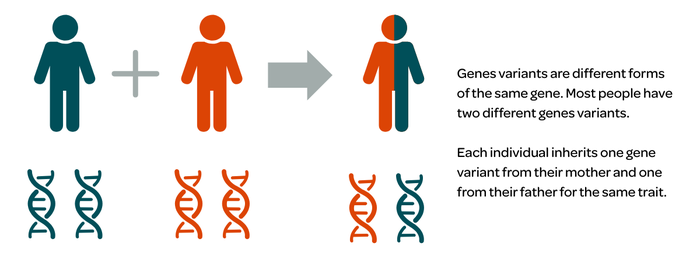
APOL1 gene variants have been found to have a link to kidney disease in certain combinations.
The unchanged APOL1 gene is found in people without African ancestors and is called G0 or common type APOL1.
People with African backgrounds may have different versions of this gene or ‘APOL1 variant genes’. These variant genes are called G1 and G2.
How do I inherit APOL1 genes?
Everyone has two copies of the APOL1 gene – one from each parent.
Inheriting one copy of the G1 or G2 variant will not increase your risk of developing kidney disease but inheriting two copies will.
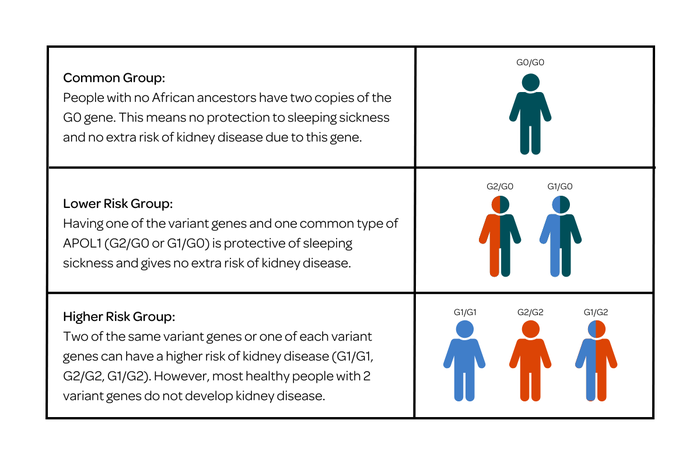
You can inherit a variant of the APOL1 gene from either or both of your parents. The parents of most people with APOL1 kidney disease will not be affected because they have one variant and one unchanged version of the gene.
Only 1 in 5 people who inherit two copies of either the G1 or G2 variants will develop kidney disease.
It is currently unknown why some people with G1 or G2 variants develop kidney disease while many have normal kidney function. There appears to be a ‘trigger’ that switches the gene on. This might be an infection like Covid or HIV, or an immune condition like lupus. For most people the ‘trigger’ is currently unknown.
How is APOL1 kidney disease diagnosed?
APOL1 kidney disease is diagnosed by genetic testing, which is available at specialist centres or as part of research studies.
Routine blood and urine tests are used to detect kidney disease. Some people have a kidney biopsy to get more information.
It is recommended that potential living kidney donors from African or Caribbean backgrounds are tested for APOL1 variants as part of their donor assessment process.
Does APOL1 kidney disease affect other parts of the body?
APOL1 kidney disease appears to only directly affects the kidneys but CKD itself can increase the risk of heart disease, stroke and high blood pressure.
Does APOL1 kidney disease run in families?
If you have two copies of the variant APOL1 gene, you will pass one copy onto your children.
However, most people will not develop kidney disease, even if they inherit two variant APOL1 genes.
It is recommended that family members of people with kidney disease have a kidney health check with their GP to make sure that they are not affected.
Genetic testing for family members is only recommended if they are found to have kidney disease.
How is APOL1 kidney disease treated?
There is currently no specific treatment for APOL1 kidney disease although research is being conducted. Treatment will depend on your level of kidney function and your general health.
This can include:
- Eating a healthy, balanced diet, with more fruit and vegetables and fewer animal products and processed foods. Most people with early stage CKD do not need to follow a specific kidney diet. Always speak to a health professional for personalised advice before you restrict your diet in any way. You will be referred to a kidney dietitian for advice if you need to change what you eat because of your CKD.
- Controlling your blood pressure. High blood pressure can speed up kidney damage. You may be prescribed blood pressure medication to keep your blood pressure under control. This is often in the form of medication such as angiotensin-converting enzyme (ACE) inhibitors or angiotensin receptor blockers (ARBs).
- Stabilising your kidney function. Sodium glucose co-transporter-2 (SGLT2) inhibitors slow down the progression of your kidney disease and lower the risk of developing heart failure.
- Preventing bone damage. Vitamin D supplements may be prescribed to help keep your bones healthy and strong.
Where can I get more information or support about APOL1 kidney disease?
We are not aware of any UK-based support groups for APOL1 kidney disease. If you know of any APOL1 kidney disease infection patient groups, please let us know so we can share their details.

Publication date: 09/2025
Review date: 09/2028