Across the UK, venues and attractions such as theme parks, theatres, leisure centres, eateries and many more, have partnered with the Access Card programme to demonstrate their commitment to inclusivity and easily accessible services.
The Access Card is a handy way to communicate your needs as a person with a chronic condition to staff at venues, events and attractions.
Each card comes with photo ID and includes different symbols, based on your requirements. These include things like having urgent toilet needs, difficulty standing for long periods, or that you have an essential companion who needs to be with you so you can access services.
A growing number of venues across the UK have partnered with the Access Card programme to demonstrate their commitment to inclusivity and easily accessible services. These include theme parks, theatres, leisure centres, restaurants and more.
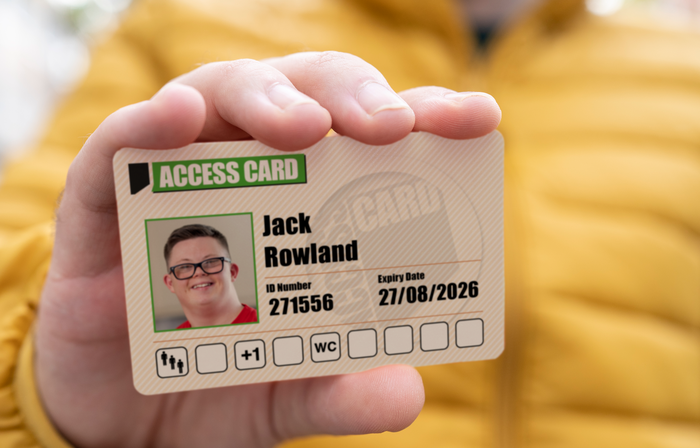
At some places, the Access Card can also be used when making purchases online, acting as proof of your needs when booking tickets. This means you don’t need to submit additional evidence of your need, such as a blue badge or proof that you are receiving certain benefits.
The card costs £15 for three years. During your application, you will need to show you meet certain criteria, and so may have to submit evidence such as proof that you are receiving PIP (or ADP), or a letter from a consultant.
Kidney patient experiences of using the Access Card


Victoria Frith (left) and Janee Sa (right)
Victoria Frith
Victoria Frith is studying to become a dietitian and lives with a rare type of genetic diabetes which causes kidney failure, hearing loss and sight problems.
Victoria has had two kidney transplants and sometimes has to use a wheelchair, which means she finds queueing difficult. She uses the Access Card to make service providers aware of her needs.
Victoria is deaf and enjoys theme parks and visits to the theatre. She sometimes needs to take someone with her for extra support and in many cases is able to get them in for free.
I suffer a lot with fatigue. When I was on dialysis, I had it really badly and used my wheelchair quite a lot. When I’m not in the wheelchair, to most people, I’m not visibly disabled, but I may still need extra help. The symbols on the card tell service providers that I may have difficulties with access, or my hearing. One advantage of the Access Card is not having to explain why I may have certain needs. It’s so much easier than carrying round my DLA or PIP letter. I use the Access Card where there is going to be a queue, or any sort of access that might be difficult for me to manage, and if I need to take someone else with me for the extra support.
Janee Sa
Janee Sa is in her 70s and lives in Eastbourne. She mostly uses her card in the theatre and cinema in her home town and occasionally on visits to London.
Janee had a kidney transplant and has reduced mobility. She uses the card to alert venues that she has trouble standing for long periods.
I use it for the theatre and cinema in Eastbourne and both places have my Access Card information stored, so each time I go, I don’t have to provide any extra evidence. It’s a really useful tool to have and it opens up more opportunities for me to get out and about.
Visit the Access Card website for more information.