A diagnosis of chronic kidney disease (CKD) means that your kidneys do not work as well as they should. The term ‘chronic’ means that it is a long-term condition rather than a short-term one like a cold. Chronic does not mean that the condition is severe.
Most people with early stage CKD have very mild symptoms or none at all and are managed by their GP. Only 1 in 50 people with CKD will ever need to receive dialysis treatment or have a kidney transplant.
CKD is divided into stages based on how well your kidneys clean your blood. This leaflet gives more information about mild or early stage CKD, its diagnosis, treatment and general lifestyle advice.
What happens if I have CKD?
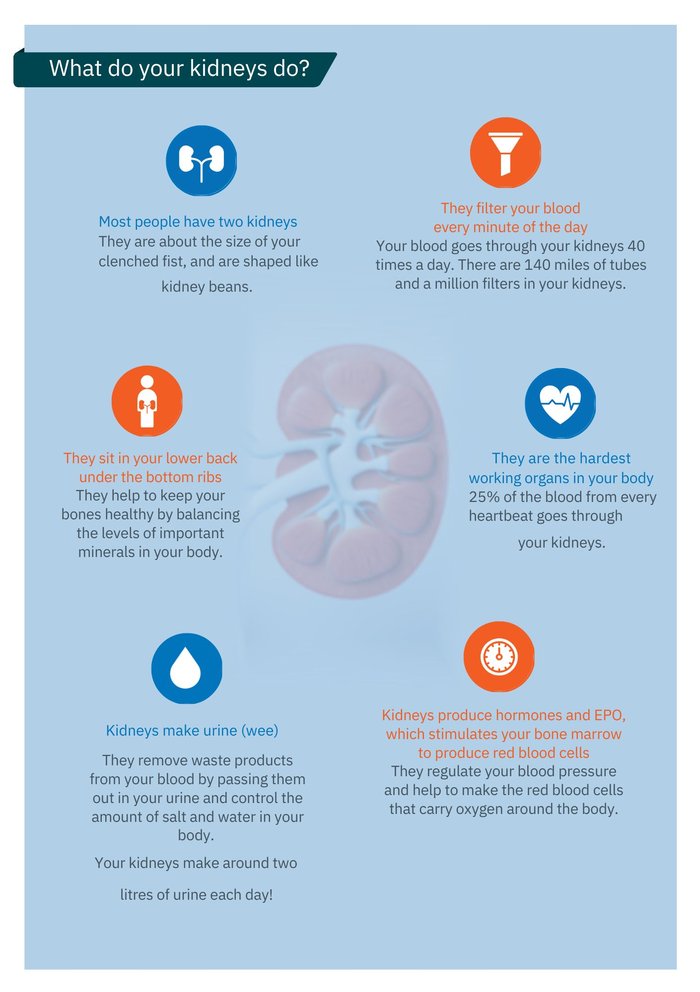
If you have CKD, your kidneys do not work as well as they should.
Waste products start to build up in your body as your kidneys can’t remove them properly. Damage to your kidneys’ filter system lets blood and protein leak into your urine. You may not be able to see any blood but it can be seen under a microscope

How is CKD diagnosed?
CKD is usually diagnosed by blood and urine tests. You may have these tests as part of a routine check-up at your GP surgery or because you are at increased risk of developing CKD because you have other conditions such as diabetes, high blood pressure or heart disease, or a family history of kidney disease.
Your GP should tell you if you have been diagnosed with CKD so you can discuss your diagnosis, treatment options and what it means for your health.
How is CKD categorised?
The kidneys' job is to filter extra fluid and waste from your blood. CKD is divided into five stages based on how well your kidneys are working.
This is measured by your estimated glomerular filtration rate (eGFR). Your eGFR may be listed as a measurement of ml/min or as a percentage. For example, if you have an eGFR of 50, it means your kidneys are working at about 50%.
Most people with CKD stages 1 to 3 manage the condition themselves with support from their GP and do not need any specialist care from kidney doctors. This level of CKD is considered mild or early stage.
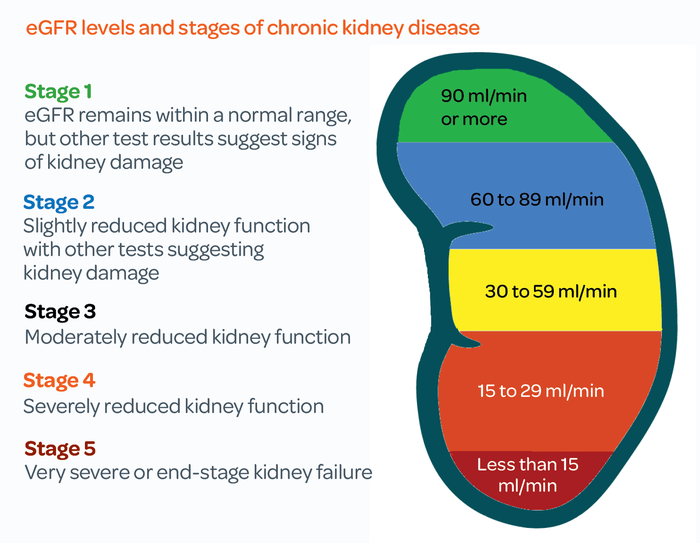
CKD can get worse over time, although in the majority of people it will not progress to stage 4.
If your kidney function continues to drop or if you have a lot of protein in your urine, you will be referred to a kidney care clinic where you will be seen by a specialist kidney doctor (nephrologist) at a hospital for further treatment. This may be called an advanced kidney care (AKC) or low clearance clinic.
How common is CKD?
CKD is very common. It affects around 1 in 10 people in the UK.
Who gets CKD?
CKD can affect people of all ages, including babies and children. It can run in families and is more common in people from Asian and Black backgrounds. Your kidneys naturally start to ‘wear out’ as you get older which makes it more likely that you will develop CKD. Around 4 in 10 people over the age of 70 have some form of CKD.
What are the risk factors for CKD?
The following are the most likely reasons why someone may develop CKD:
- Type 1 or type 2 diabetes
- Heart disease
- High blood pressure (hypertension)
- Inflammation within the kidneys (glomerulonephritis)
- Long-term, regular use of certain medicines including non-steroidal anti-inflammatory drugs (NSAIDs) such as ibuprofen and naproxen
- Family history including inherited kidney conditions and rare diseases which account for 1 in 10 cases of CKD in adults and almost all cases in children.
Your GP will try to find out what has caused your CKD to help decide the best treatment plan for you.
What happens to the body during early stage CKD?
Your kidneys play a vital role in keeping your body healthy. If you develop CKD:
- waste products and excess fluid may start to build up in your body as your kidneys can’t remove them properly
- damage to your kidneys’ filter system can cause blood and protein to leak into your urine
If you have CKD, you have a greater risk of cardiovascular events such as heart attacks or strokes. This is why it is important to treat CKD, even in the early stages, in order to protect your heart.
What are the symptoms of early stage (1 to 3) CKD?
Most people do not have symptoms in the early stages of CKD, as even damaged kidneys can still work well enough to prevent any noticeable symptoms.
Early stage kidney disease is often diagnosed because of a blood or urine test for a different condition.
You may have some mild symptoms such as itchiness, fatigue (tiredness) or swelling, especially around the ankles.
Although many people do not have any symptoms, kidney damage can still affect your health. CKD can increase your chance of developing acute kidney injury, high blood pressure, heart disease or a stroke. Early diagnosis and regular monitoring is therefore very important as lifestyle changes and medical treatment may prevent CKD from getting worse.

What happens after I have been diagnosed with early stage CKD?
If you have been diagnosed with CKD stages 1 to 3 you should have annual checks with your GP to monitor your condition and overall health. At each visit you will have your weight and blood pressure measured and a sample of your urine will be checked for signs of blood, protein or infection. You will also have a blood test to measure your kidney function. Your GP will discuss any symptoms you may be having and whether any treatment is needed.
Can CKD be reversed or improved?
In most cases kidney function that has been lost cannot be regained. However, lifestyle changes and appropriate medication can help to reduce the level of protein in your urine and preserve your remaining kidney function. This plays a key role in lowering your cardiovascular risk and slowing further kidney damage.
Will I need to go to hospital to see a specialist?
Most people with early stage CKD are treated by their GP and do not need to go to hospital to see a specialist kidney doctor (nephrologist). However, if more investigations are needed, or if you have any other medical conditions as well as CKD, you may need specialist treatment. This may be at a specialist clinic at your GP surgery, or in a hospital.
How is early stage CKD treated?
If your kidney function is stable, you may not need any specific treatment and will be monitored by your GP.
If treatment is needed, the aim is to help control the decline in your kidney function. This can include:
Controlling your blood pressure. High blood pressure can speed up kidney damage. You may be prescribed blood pressure medication to keep your blood pressure under control. This is often in the form of medication such as angiotensin-converting enzyme (ACE) inhibitors or angiotensin receptor blockers (ARBs).
Stabilising your kidney function. Sodium glucose co-transporter-2 (SGLT2) inhibitors slow down the progression of your kidney disease and lower the risk of developing heart failure.
Will I need to have dialysis or a kidney transplant?
Dialysis and transplant are treatments for kidney failure which is when the kidneys can no longer work well enough to keep you healthy. Only 1 in 50 people with CKD will develop kidney failure so it is very unlikely that you will need to have dialysis or a transplant.

Can I still work?
Most people with early stage CKD have very few symptoms and feel well. Your kidney disease may therefore have very little effect on your ability to work. Like all medical conditions, your CKD is private information and you do not have to share it with anyone else if you do not want to. However, if you are asked about your health on an official employment document and you do not mention CKD, it could cause problems later on. Sharing information also means that your employer can help with any adjustments that you may need to help you manage your CKD alongside work.
Do I need to follow a special diet?
Most people living with early stage CKD will benefit from a healthy diet and lifestyle and do not need to follow a specific kidney diet. Always speak to a health professional for personalised advice before you restrict your diet in any way. You will be referred to a kidney dietitian for advice if you need to change what you eat because of your CKD.
There are no specific ‘kidney-friendly’ foods, although lots of online information will suggest that there are. Research shows that cutting down on ultra-processed foods and eating a diet high in fruit, vegetables, pulses, nuts, seeds and wholegrains can help support kidney health. It’s also helpful to limit how much salt you eat, as too much salt can raise blood pressure and make the kidneys work harder.
A healthy balanced diet can help kidney health by:
- Managing blood pressure. High blood pressure is a common complication of kidney disease and can further damage the kidneys. A diet low in salt and rich in fibre and potassium from fruit, vegetables, wholegrains, nuts, seeds and pulses, helps to lower blood pressure and reduce the risk of complications. In the early stages of kidney disease, potassium is good for your kidneys. You should only restrict potassium-rich foods if a health professional advises you to do so.
- Controlling blood sugar levels. If you have diabetes, managing your blood sugar levels may help to protect your kidneys from further damage. Choose foods that are high in fibre and limit sugary snacks and drinks to help manage your blood sugar levels.
- Promoting heart health. People with kidney disease often also have cardiovascular disease (conditions affecting the heart or blood vessels). A heart-healthy diet that limits saturated fats and includes lots of protective fruit and vegetables helps reduce the risk.
- Reducing the kidneys’ workload. Eating fewer ultra-processed foods such as packaged snacks, sugary drinks and ready meals is recomended because very large amounts of certain food additives can harm the kidneys. Ultra-processed foods with many added ingredients like flavourings, sweeteners, additives or preservatives also tend to be high in salt, unhealthy fats and sugars.
Are there any supplements that will help?
No, there are no supplements or herbal remedies that have been proven to help with CKD. Some may actually be harmful as they can cause a build-up of certain substances in your body which your damaged kidneys cannot get rid of properly. Always check with your doctor before taking any vitamins, supplements or herbal medicines.

What can I do to stay healthy?
Maintain a healthy weight. Blood pressure often increases with weight gain and maintaining a healthy weight helps to keep your blood pressure under control. This also reduces the risk of cardiovascular disease and helps slow the progression of kidney disease.
- Stay active and move more. This can be a simple as increasing the amount of walking that you do each day. Doing any amount of physical activity is better than none. Your GP can give you advice about how to exercise safely.
- Give up smoking or vaping. Your GP can help you with this.
- Cut down on your alcohol intake. The recommendations for alcohol for people with CKD are the same as for the general population: not to drink more than 14 units a week (for both men and women). Visit the Drinkaware website for more information on alcohol and units.
- Keep up to date with your vaccinations. When you have kidney disease, you are more likely to get other illnesses and take longer to recover. This can make your kidney function worse, so it is important to get treatment early. Ask your GP about having flu, pneumonia and Covid-19 vaccinations.
- Check your blood pressure regularly. Your GP can tell you your ideal blood pressure and how you can monitor this yourself at home or at a pharmacy.
- Some over-the-counter and prescription medicines can make your kidney disease worse. This includes nonsteroidal anti-inflammatory drugs (NSAIDs) such as ibuprofen and naproxen. Always tell your doctor and pharmacist that you have kidney disease and check that the medication you are given is safe to take.
Do not stop any medication without taking medical advice.
Where can I find out more information?
- Kidney Kitchen from Kidney Care UK offers healthy, delicious multicultural food for every stage of kidney disease. Approved by kidney dietitians and enjoyed by everyone.
- NHS: Chronic kidney disease

Publication date: 10/2025
Review date: 10/2028