Haemodialysis (HD) is a treatment for kidney failure. When your kidneys don’t work properly, they can’t clean your blood, so toxins build up in your bloodstream. Your kidneys also make less urine so excess fluid and waste products remain in the body.
Haemodialysis ‘cleans’ your blood by running it through a dialysis machine filter to remove toxins and excess fluid. This is what kidneys do on their own if they are healthy.
- Most people have haemodialysis 3 times a week. Each session lasts around 4 hours.
- You can have haemodialysis in a hospital, in a specialist dialysis unit or at home.
- Because haemodialysis replaces the work of your kidneys, you will need to keep having the treatment for the rest of your life, unless you have a kidney transplant.
How can haemodialysis help me?
Haemodialysis is a life-changing treatment for many people with kidney failure. It does some of the work of healthy kidneys and helps to support your remaining kidney function.
Haemodialysis can improve your quality of life by:
- helping to relieve many of the symptoms of kidney failure, including feeling sick, tired or weak
- helping with symptoms caused by having too much fluid in your body, such as puffy ankles and shortness of breath
- helping to protect your bones and reduce your potassium levels.
Having haemodialysis is likely to have a major impact on your life. It is an intensive treatment that will take up a lot of your time. It is therefore important to consider how you can live well while receiving dialysis – both during the sessions themselves and in your wider life.
How can I stay well before my haemodialysis sessions?
Fluid balance
Healthy kidneys control the amount of fluid in your body. This is known as fluid balance.
Excess water normally leaves your body as urine. However, if you have problems with your kidneys, they might not make enough urine to get rid of extra fluid. This extra fluid will then build up in the body. This is known as fluid overload.
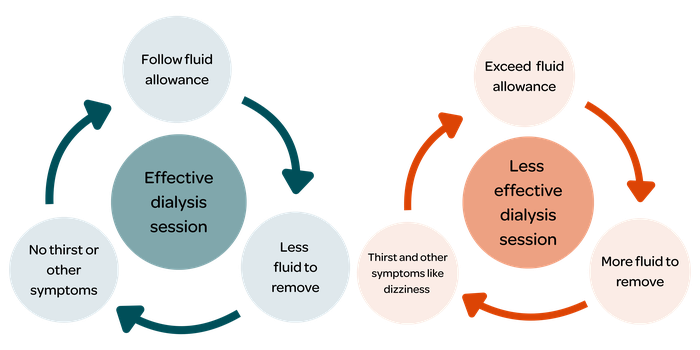
Dialysis removes this excess fluid. Most people on haemodialysis need to restrict their fluid intake as haemodialysis can only safely remove a limited amount of fluid with each treatment. Your kidney team will work out the amount of fluid that you can drink each day to keep healthy. This is known as your fluid allowance. Keeping to this allowance in between your dialysis sessions will help them to be more effective.
Weight balance
Dry weight is your normal body weight without any build-up of excess fluid. Controlling your fluid intake will help you stay at your dry weight. This will make each haemodialysis session more effective and reduce the chance of you developing other symptoms like excessive thirst or dizziness.
You will be weighed before and after each haemodialysis session to make sure that the right amount of fluid comes off.
What is shared haemodialysis care?
Shared haemodialysis care gives you the opportunity to become more involved with your haemodialysis treatment, with guidance and support from nursing staff. You can choose which aspects of your care you would like to manage. This could range from setting up the machine to preparing the packs or putting in your own needles. The emphasis is on taking part and feeling involved at a level that suits you.
Shared haemodialysis care can help you to feel more in control of your treatment. However, there is no pressure to do this – it really is personal choice. The dialysis team will always be there to help with your treatment. Some people on haemodialysis who do shared care then choose to do their haemodialysis at home.
How can I stay well during my dialysis sessions?
If you have haemodialysis in hospital or on a dialysis unit, you may feel frustrated at how long it can take to set everything up for your session when you just want to get onto the machine and get on with your haemodialysis.
Ask your dialysis nurse to explain what they are doing so you understand what is happening and why it is needed. For example, by following strict hygiene procedures like washing their hands thoroughly, your dialysis team are reducing the chances of you developing any infections.
Haemodialysis machines are constantly measuring different things to make your haemodialysis safe and effective. Your machine will sound an alarm if it detects anything out of the ordinary and may pause your dialysis. Your healthcare team will find out what is causing the issue and fix it.
Dialysis is an intensive treatment that can put a lot of strain on your body. Talk to your kidney team if you feel unwell during haemodialysis. They may be able to make some changes to your treatment which might make you feel better. This might include slowing the fluid removal rate, adjusting your dry weight or reviewing some of your medication.
Many people feel cold during haemodialysis. This may be because the haemodialysis machine is set at a lower temperature than your body temperature to make fluid removal safer. Wearing more layers of clothing or having a blanket over you can help make you more comfortable.
How can I stay well in between my dialysis sessions?
Receiving haemodialysis will be a key part of your treatment for kidney failure. However, there are other things that you can do to stay well, alongside your haemodialysis sessions.
Being physically active can enhance your health and wellbeing, giving you extra energy. Kidney disease makes your muscles weak, so it is important to keep moving to keep them strong.
Physical activity can take many forms. Try to find one that you can do, that fits into your lifestyle and that you enjoy. Exercise doesn’t have to cost money. Regular walks or spending time gardening can be just as beneficial as a gym membership.
Some haemodialysis units have exercise equipment you can use while you dialyse, so talk to your kidney team to see what is available.
Your kidney team may refer you to a physiotherapist who can help design the right exercise routine for you. There are also specialist kidney exercise programmes available online.
Your kidney team or a specialist kidney dietitian will give you personalised advice about any changes that you need to make to your diet to keep you healthy and feeling well. This may include increasing the amount of protein you eat and reducing the amount of phosphate, potassium or fluid you consume.
Keep to any fluid allowances as advised by your kidney team and try to stay at a healthy weight.
Attend all of your haemodialysis sessions so that the toxins are regularly removed from your blood stream.
Some medicines can be harmful to people with kidney disease. Tell your kidney team about any medicines that you are taking, even if they are not related to your kidney disease. This includes over-the-counter medicines, herbal remedies or supplements that you buy yourself from a chemist or health food shop.
Information about how to look after your haemodialysis line and stay safe from infection can be found in our information page and patient information booklet, Haemodialysis access with a tunnelled line.
Your blood pressure will be checked every time you have haemodialysis in hospital or in clinic. Your kidney team can also teach you how to check it at home.
A dietitian can give you personalised advice about drinking alcohol when you are receiving haemodialysis treatment.
If you are a smoker, giving up will help you stay well. Your GP can help you with this.
When you have kidney disease, you are more likely to get other illnesses and take longer to recover. This can make your kidney function worse, so it is important to get treatment early. Ask your GP about having flu, pneumonia and Covid-19 vaccinations.
You will have regular blood tests while you are receiving dialysis. Knowing your own test results and understanding what they mean can be really empowering. It allows you to have some control over your kidney failure and can help you make informed decisions and positive choices for your health and wellbeing. Ask your healthcare team about how you can access your blood results online.
Do I have to tell my employer that I am receiving haemodialysis?
No. Like all medical treatments this is private information and you do not have to share it with anyone else if you do not want to. However, haemodialysis is a lengthy and long-term treatment and you may need time off work to attend your haemodialysis sessions. Sharing information means that your employer can help with any adjustments that you may need to help you manage your treatment alongside work.
Can I still go on holiday if I am having haemodialysis?
Yes, you can still travel and go on holiday if you are on haemodialysis. It is important to plan your travel in advance with your dialysis team – ideally give at least three months’ notice. If you are away from home, you will still need to follow your regular treatment schedule and have your haemodialysis in the local area.
For more details see our patient information about Dialysis Away From Base (DAFB) or talk to your kidney team.
What financial support is available?
You may be eligible for financial support from the UK government in the form of welfare benefits. There are many types of benefits and those you are eligible for can depend on many different things, including the severity of your kidney disease. Support can include help with housing costs, council tax and prescriptions.
Is there are support available to help me travel to my haemodialysis sessions?
If you have haemodialysis in hospital or a clinic, talk to your healthcare team about any help that might be available with parking or travel costs. You may also be able to access patient transport services.
How can I look after my mental health?
Haemodialysis can have a big impact on your life. As well as the physical aspects of living with kidney failure, it can also affect your emotional and mental wellbeing.
You may feel angry and resent living with a long-term health condition, question why it is happening to you or feel sad or hopeless about the future.
However you are feeling, it’s important to remember that you are not alone and that there are people who can help you.
You may find it helpful to talk to other people on dialysis. Ask your kidney team if they have any peer support arrangements available or if there are other patients that they can put you in touch with.
Your kidney healthcare team may also be able to refer you to a counsellor to help support your mental health.
If you find yourself having negative thoughts over a long period of time or you have any thoughts about hurting yourself, it is important to seek urgent help from a professional, such as your GP or kidney team.

Publication date: 07/2025
Review date: 07/2028