Chronic kidney disease (CKD) means that your kidneys do not work as well as they should. Chronic means that it is a long-term condition that will last for the rest of your life.
Kidney failure is a severe form of CKD where your kidneys can no longer work well enough to keep you healthy.
A kidney transplant is a treatment for kidney failure. It involves an operation to place a healthy kidney from someone else (a donor) into a person with kidney failure (the recipient). The new kidney can come from someone who has died (deceased donation) or from a living donor (living donation).
A kidney transplant is a very good treatment for kidney failure, but the transplanted kidney will not last forever. This page describes what happens when a kidney transplant stops working. This is known as kidney transplant failure.
How long will a kidney transplant last?
On average, a kidney transplant from a living donor will last for 20-25 years, while a kidney from a deceased donor will last 15-20 years.
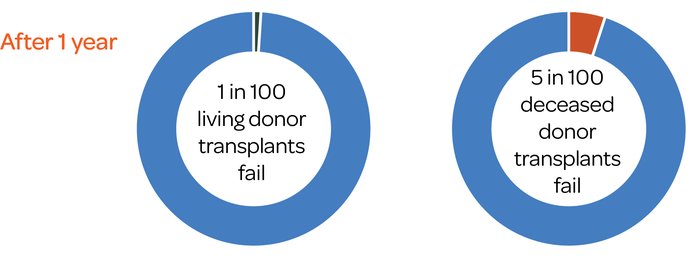
99 in 100 living donor transplants and 95 in 100 deceased donor transplants are still working after 1 year.
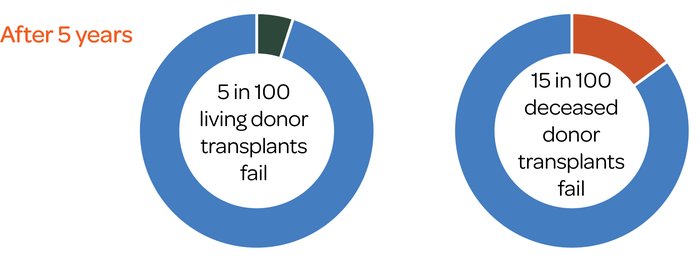
95 in 100 living donor transplants and 85 in 100 deceased donor transplants are still working after 5 years.
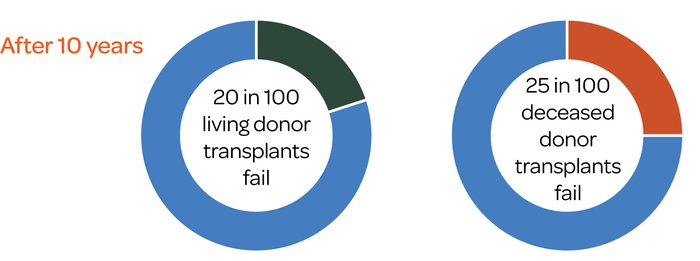
80 in 100 living donor transplants and 75 in 100 deceased donor transplants are still working after 10 years.
What is kidney transplant failure?
There are lots of different reasons why kidney transplants fail. Some of the most common reasons are:
- rejection of the transplant. This is when your body’s immune system attacks the kidney transplant, which can happen if you do not take your transplant medications as prescribed
- the transplanted kidney has been damaged by the condition or disease that damaged your own kidneys (for example, diabetes or IgA nephropathy). Your kidney team will tell you if this is likely to happen before you have a transplant
- a blood clot blocks one of the kidney transplant blood vessels
- there is an infection in the transplant that cannot be treated
- long term effects of medication you take to prevent rejection
Blood tests and scans may help your kidney team to understand why the transplant is failing.
They may also recommend that you have a kidney biopsy. This is a minor outpatient procedure during which a needle is used to take a tiny piece (sample) of your kidney transplant for further examination. The sample is examined under a microscope to look at your kidney in greater detail. The amount of kidney taken during a biopsy is around half the size of a matchstick and removing it will not affect how well your kidney works.
Your kidney team will try to explain why your transplant is failing. However, sometimes it is not clear why a transplant fails. Not knowing the exact cause can be very difficult.
How will I know if my kidney transplant is failing?
Your kidney team will monitor you closely in the months and years after your kidney transplant. You will have regular blood and urine tests to check how well the kidney transplant is working.
If your kidney transplant starts to fail, you may notice that your kidney function blood tests have been getting worse over a series of days, weeks or months. You may develop some of the same symptoms of kidney failure that you had before your kidney transplant. These may include:
- weight loss and poor appetite
- swollen ankles, feet or hands
- puffiness around the face, especially in the morning
- shortness of breath
- tiredness, low energy levels
- blood in your urine
- an increased need to wee, especially at night
- difficulty sleeping
- itchy skin
- muscle cramps or weakness
- feeling sick
- headaches
- a low sex drive, erectile dysfunction or changes to your periods
You may also experience pain or tenderness over your transplant kidney, a high temperature or fever or discomfort when passing urine.
Some people do not have any symptoms, however. Your failing transplant may be noticed by your healthcare team when they examine your blood and urine test results. They will let you know if they think that your kidney transplant is failing.

How long will it take for my kidney transplant to fail?
In some cases, kidney transplants can fail very quickly. In other cases, the failure happens very slowly over several years. Your kidney team can tell you if they think your kidney transplant is failing, but it is very difficult for them to predict exactly when it will stop working completely.
Can transplant failure be stopped?
If your kidney team have told you that your transplant is failing, it usually means that they think your kidney function will continue to drop and that the kidney will eventually fail.
In some cases, changes can be made to delay or stop transplant failure. This will depend on the reason why the kidney transplant is failing.
If your kidney transplant is failing because of rejection, this can sometimes be treated with more anti-rejection tablets.
If your kidney transplant is failing because of an infection like BK nephropathy, reducing your anti-rejection medicines may help your body’s immune system to respond to the virus, and your kidney transplant function might improve.
Do not stop or change any medication unless advised to do so by your healthcare team.
How is kidney transplant failure treated?
Treatment aims to keep your transplanted kidney working as well as possible for as long as possible.
You may have more regular appointments with your kidney team to monitor your kidney function.
Your kidney team may recommend that you change the dosage of your anti-rejection medication. Do not stop taking your anti-rejection medication unless your kidney team advise you to. Even when a kidney transplant has failed, most people need to take some anti-rejection medication.
In some cases, new treatments might be started to help control your blood pressure, remove excess fluid, or treat any side effects of kidney failure such as anaemia (a shortage of red blood cells).
Your kidney team may refer you to a specialist dietitian to advise you on any dietary changes that may help you to remain as healthy as possible.
You may move from a kidney transplant clinic to a specialist clinic for failing transplants, or for low kidney function (low clearance clinic).
At the same time as trying to keep your transplanted kidney working for as long as possible, your kidney team will also discuss long-term treatment options with you. These might include:
- having another transplant
- dialysis, which is when a machine or device is used to clean your blood. This is what kidneys do on their own if they are healthy.
- choosing to receive conservative or supportive care which focuses on managing the symptoms of kidney disease and keep your kidneys working for as long as possible without dialysis or another transplant.
What support is available for me?
Finding out that you have kidney transplant failure can be very challenging, especially if the diagnosis was unexpected. It is important to take time to think about what you have been told. Ask your kidney team to repeat or clarify something if you don’t understand.
You might experience a range of emotions when you find out that your kidney transplant is failing, including disappointment, shock, anxiety or sadness. You may also feel unprepared or feel ‘in limbo’ as you wait for your transplant to fail and for any further treatment to start. You might feel worried about what effect changing treatment will have on your life, your ability to work, and your ability to travel.
Your kidney team may be able to refer you to a specialist kidney psychologist or counselling service if you think you would find it useful to talk through your emotions.
- It may help to take notes in your appointments, so you remember what your kidney team tell you. You can also ask them to give you some written information that you can read in your own time.
- You may want to bring a family member or friend with you to your appointments. They can help you remember what is said and they may ask questions that you have not thought about.
- There may be practical things to think about such as work, finances and your family. Your medical team can share information or point you in the direction of further specialist support.
Your kidney team will discuss your treatment options with you so you can agree on a care plan. This lists your personal choices and treatment preferences. Making these plans in advance and when you are still feeling well can help ensure that your wishes are carried out at a future time when you may be too unwell to express them.

Publication date: 07/2025
Review date: 07/2028
The content of this leaflet was informed by findings from the NIHR funded IN-FAKT study [NIHR204085]. The views expressed are those of the author(s) and not necessarily those of the NIHR or the Department of Health and Social Care.