Changing the blood tests doctors use to calculate a person’s kidney function could improve kidney disease diagnosis and monitoring, according to a recently published study.
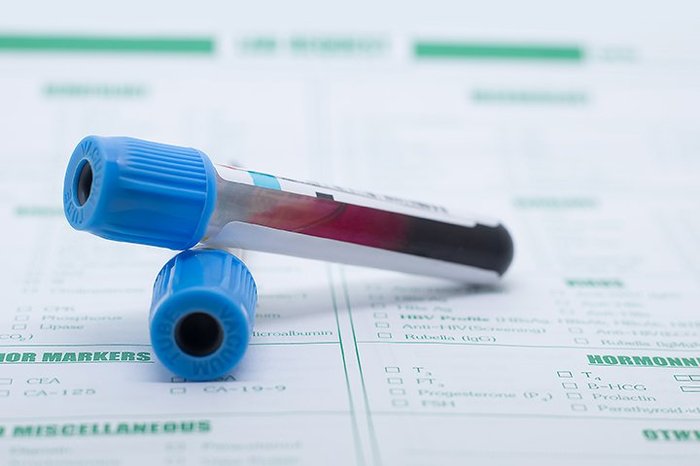
A blood test is one of the main ways to get tested for chronic kidney disease (CKD). A typical blood test for CKD looks at levels of creatinine, a waste product from your muscles which is found at higher levels in the blood when a person’s kidneys aren’t working properly. The amount of creatinine that is normal varies depending on factors including sex and ethnicity, age and how much muscle you have.
Doctors use the results of the test and other information about the person to work out their estimated glomerular filtration rate (eGFR), a measure of how well the kidneys filter waste from the blood. eGFR is used alongside other tests to diagnose kidney disease. Generally, the more damaged a person’s kidneys are, the lower their eGFR will be.
The CKD-EPI Equation for Glomerular Filtration Rate that doctors in England use to work out eGFR from creatinine levels is effective but can sometimes be inaccurate, which is a problem in situations where a high degree of accuracy is important, such as when doctors are deciding which treatment is right for a patient.
The eGFR-C study was funded by the National Institute for Health and Care Research (NIHR) to investigate whether the addition of a test for a protein called cystatin C would improve the accuracy of the eGFR calculation. Cystatin C is made by your body and kept at a balanced level by healthy kidneys. If cystatin C levels in the blood are too high this may indicate the kidneys are not working well.
Researchers compared different ways of estimating kidney function. Over three years, they studied 1167 adults with moderate CKD, estimating their eGFR levels using different equations: one based on creatinine levels, one using cystatin C levels, and one equation using both.
The researchers found that the equations using both “biomarkers” (creatinine and cystatin C) were more accurate in measuring kidney function than the equations using just one biomarker.
The study suggests that if use of the combined equation using both biomarkers became more widespread, this could help improve the diagnosis and monitoring of kidney disease, allowing healthcare professionals to make better-informed care decisions.
Kidney Care UK’s Policy Director Fiona Loud was part of the Study Management Group while Kidney Care UK Patient Ambassador Nick Palmer was a member of the Study Steering Committee. As well as working to achieve Kidney Care UK’s mission to support people with kidney disease, Fiona and Nick are also kidney patients themselves, and provided expert patient input, recommendations on patient involvement, and represented the voice of patients on newsletters sent out to study participants.
It’s always a privilege to be involved in research that ensures the patient voice is heard and advances kidney patients' care. It’s hugely encouraging to see the long-awaited results of this study. Utilising the additional biomarker of cystatin C with creatinine in the kidney function calculation is very much welcomed. Having an accurate GFR assessment is important to enable individuals to know about their condition and its progress, avoid harm from inaccurate diagnosis and guide kidney protective therapy. Advances in diagnosing and monitoring CKD earlier and with greater accuracy, supporting the timing of treatment and reducing progression, is really helpful.Nick Palmer, Kidney Care UK Patient Ambassador
Find out more about early stage CKD with Kidney Care UK's patient information: