Celebration cake
https://kidneycareuk.org/get-support/healthy-diet-support/kidney-kitchen/recipe-index/celebration-cake/
200g unsalted butter, softened
200g caster sugar
200g plain flour
4 eggs
1 teaspoon bicarbonate of soda
1 teaspoon cream of tartar
50ml milk
2 teaspoons vanilla essence
150g unsalted butter, softened
300g icing sugar
Sprinkles, colouring and decorations as desired
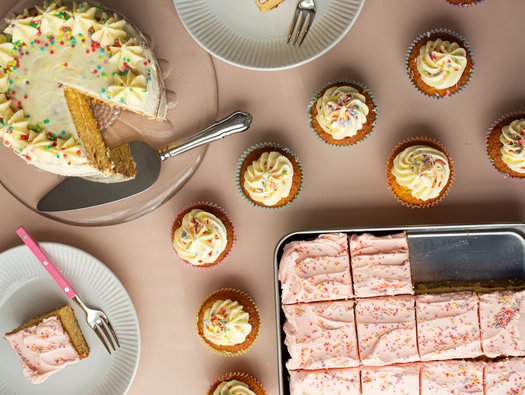
Preheat the oven to 170°C /150°C fan / gas mark 3. Prepare your baking tray/tins: for a tray bake, grease and line (greaseproof paper) a 20cm x 30cm tin; for a round layered cake, grease and flour 2 x 17.5cm diameter cake tins; for cupcakes, line a muffin tin with cases.
Beat the butter and sugar together until pale and fluffy. Add in the flour, eggs, bicarb, cream of tartar, milk and vanilla, beating again until smooth.
Put mixture into appropriate tray/ tins /cases. Cooking times as follows:
Tray bake: 40–45 minutes;
Cakes: 23–25 minutes;
Cup cakes: 18–20 minutes
Bake all options until a skewer comes out clean. Remove from oven and cool in tray/cake tins/cases.
Make the icing. Beat the butter until soft, then beat in icing sugar. If you want to add colour or flavour, do so now. You can either spread the icing using a knife, or put into a piping bag and pipe on the decoration.
For the cake, use some of the butter icing in the middle, then sandwich both cakes together and pipe remaining buttercream on the top. Add your chosen decorations.
Serving sizes are based on adult portions.
This celebration cake recipe makes 12 adult portions.
Here is a guide for children:
Toddler (age 1-4): ¼ portion
Young child (age 5-9): ½
Older child (age 10-13): ¾
Teenagers (14+): 1
Some children do have bigger appetites than others. You child’s portion may need to be changed to fit their typical diet if you think the recommended serving sizes are too large or small. We would advise speaking with your dietitian prior to increasing the serving size if your child has struggled to manage potassium or phosphate.
Flour and sugar are the main source of carbohydrate, and the value has been provided for those trained in insulin adjustment.
This recipe is low in potassium, when following ingredient quantities and serving sizes. It is also low in phosphate, but does contain some, mainly from the flour, so if you have been prescribed a phosphate binder, take it as directed.
This is a high-energy recipe to be enjoyed occasionally as part of a balanced diet. Serve with berries, or another fruit, to help boost its nutritional value.
Use gluten-free flour.
Once cooled, keep in an airtight container for 5 days.
This is a versatile recipe you can adapt for different occasions – dress it up or dress it down! It’s low in salt, potassium and phosphate, making it a delicious treat for everyone to enjoy as an occasional treat. By using low-phosphate raising agents, like bicarbonate of soda and cream of tartar, it helps to keep the cakes/cupcakes low in phosphate and kidney-friendly.
Living with kidney disease doesn’t mean missing out on all baked goods, even on a low-phosphate diet. Kidney Kitchen recommends some tips and tweaks to help make your bakes a little more kidney-friendly.
You can enjoy a wide variety of delicious and healthy food when you are living with kidney disease. All Kidney Kitchen recipes are analysed and approved by kidney dietitians. Search through our kidney-friendly recipes or filter them by category below.
A deliciously moist carrot cake with a cream cheese icing and a passion fruit curd. This cake makes delicious use of leftover bread for an indulgent, low potassium treat.

By giving us your email address, you're giving us permission to send you regular Kidney Kitchen emails from Kidney Care UK. Further information about how we protect and use your personal data is available in our Privacy policy. If you would like to change the way we communicate with you at any time please email [email protected]. You can unsubscribe at any time by using the link at the bottom of every email we send.