Chicken fajitas
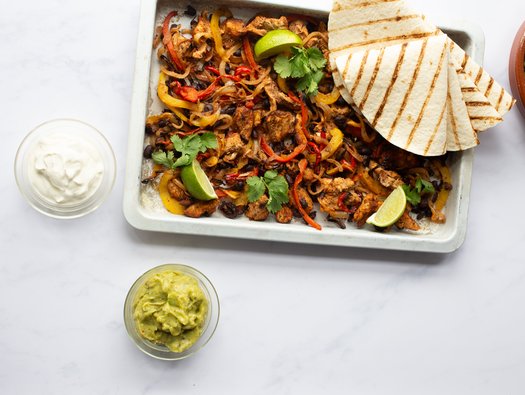
This healthy recipes contains a moderate amount of calories and good source of protein.
https://kidneycareuk.org/get-support/healthy-diet-support/kidney-kitchen/recipe-index/chicken-fajitas/
This healthy recipes contains a moderate amount of calories and good source of protein.
200g chicken breast, cut into strips
1 red pepper, de-seeded and sliced
1 yellow pepper, de-seeded and sliced
1 onion, peeled and sliced
1 tablespoon olive oil
400g tinned black beans, drained and rinsed
1 teaspoon hot chilli powder
2 teaspoons sweet smoked paprika
1 teaspoon ground cumin
1 teaspoon garlic powder
1 teaspoon dried oregano
80g soured cream
160g guacamole (or you can make this yourself, see tips section)
4 x flour tortillas
200g mixed salad leaves
6-8 cherry tomatoes, halved
½ cucumber, diced
1 tablespoon olive oil
2 teaspoons apple cider vinegar
2 teaspoons Dijon mustard
grind of black pepper
Make the fajita seasoning by mixing all the ingredients together. Add the chicken strips and olive oil and mix until all combined.
Preheat the air fryer to 190°C in roasting setting. Mix the vegetables and beans in with the chicken and cook for 15 minutes, shaking the basket twice during cooking.
This recipe can also be cooked in a frying pan on the hob if preferred. Pan-fry the chicken in the olive oil until browned all over, then add the rest of ingredients and cook over a medium heat for 15 minutes.
Make the salad dressing by adding all the ingredients to a bowl and whisk together. Add this dressing to the diced cucumber, salad leaves and tomatoes just before serving and combine well.
Once the chicken fajita mixture is cooked serve it with tortillas, soured cream and guacamole. Serve with the prepared salad on the side.
Serving sizes are based on adult portions. Here is a guide for children:
Toddler (age 1-4): ¼ adult portion
Young child (age 5-9): ½ adult portion
Older child (age 10-13): ¾ adult portion
Teenagers (14+): 1 adult portion
Some children do have bigger appetites than others. You child’s portion may need to be changed to fit their typical diet if you think the recommended serving sizes are too large or small. We would advise speaking with your dietitian prior to increasing the serving size if your child has struggled to manage potassium or phosphate.
The tortillas are the main source of carbohydrate in this recipe, and the value has been provided for those who have been trained in insulin adjustment.
Despite the use of some high potassium ingredients, such as Avocado, this recipe is low in potassium, when following the quantities in the ingredients, the cooking method, and the serving sizes. Therefore, suitable for those advised to lower potassium in their diet. This recipe is also low in phosphate, however it does contain some phosphate, mainly provided by the chicken, tortilla wraps and cheese, therefore if you have been prescribed a phosphate binder you should take as directed.
To lower the phosphate further you could consider replacing some or all of the meat with a plant-based alternative, such as 250g timed black beans-drained. However, this will also reduce the protein content of the recipe.
This recipe provides a source of protein. If you have been advised to eat less protein, consider reducing chicken to 100g and increasing beans to 200g-250g.
If you need to gain weight, have a growing child who needs more calories, or have a poor appetite, you can use a tablespoon of extra oil to cook the chicken. Adding extra meat or cheese to increase calories will increase phosphate content of the recipe.
Consider using 200g tempeh or tofu instead of chicken.
Consider using non-dairy sour cream alternatives.
Use gluten-free tortillas.
Use wholemeal tortilla wraps.
Use vegetable/sunflower oil.
Use a vinegar that you have in the kitchen.
If you don’t have all the spices handy, consider using fajita seasoning mix (check for no added salt versions).
Use Iceberg lettuce instead of mixed salad leaves.
Use any smooth mustard of your choice.
This dish is best eaten freshly made. Any leftover dressing can be stored in the fridge for up to a week.
This can be served with Taco shells or rice as an alternative.
You can make your own guacamole:
1 ripe avocado – peeled and pitted and mashed with a fork
1 red chilli – seeded and finely chopped
juice of 1 lime
small handful of fresh coriander – finely chopped
1 small red onion – peeled and finely chopped
mix all of the ingredients together.
This is an easy alternative to a traditional nacho recipe and comes with a bit of a spicy kick for a fabulous Mexican feast!
You can enjoy a wide variety of delicious and healthy food when you are living with kidney disease. All Kidney Kitchen recipes are analysed and approved by kidney dietitians. Search through our kidney-friendly recipes or filter them by category below.
Traditionally, the South Asian diet is healthy and contains plenty of dals, sprouts, vegetables and whole grains. However, the cooking methods and type of fats used can make them high in calories and saturated fats (which are less healthy than unsaturated fats).

By giving us your email address, you're giving us permission to send you regular Kidney Kitchen emails from Kidney Care UK. Further information about how we protect and use your personal data is available in our Privacy policy. If you would like to change the way we communicate with you at any time please email [email protected]. You can unsubscribe at any time by using the link at the bottom of every email we send.