Chicken hotpot
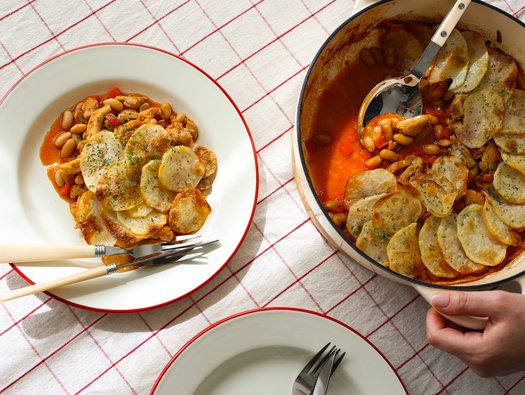
A hearty chicken hotpot that's easy to prepare and perfect for a family meal. It's low in potassium, phosphate and salt.
https://kidneycareuk.org/get-support/healthy-diet-support/kidney-kitchen/recipe-index/chicken-hotpot/
A hearty chicken hotpot that's easy to prepare and perfect for a family meal. It's low in potassium, phosphate and salt.
2 tablespoons oil
400g chicken thighs (boneless and skinless), cut into strips
1 large onion, peeled and diced
1 clove garlic, crushed
1 tablespoon tomato purée
1 teaspoon smoked paprika
1 red pepper, deseeded and diced
200ml chicken stock, made with a zero-salt or very low salt stock cube
400g tin cannellini beans (tinned in water without salt), drained and rinsed
400g potatoes, peeled and thinly sliced
40g unsalted butter
Preheat the oven to 180°C/160ᵒC fan/gas mark 4.
Heat 1 tablespoon of the oil in a large frying pan and cook the chicken strips over a medium heat for 5 minutes, or until golden all over. Transfer to a plate.
Add the remaining oil to the pan, followed by the onion. Fry for 5 minutes on a medium heat and then add the red pepper, tomato purée and paprika. Cook for 10 minutes, or until the onion is translucent and softened.
Add the chicken back into the pan, followed by the cannellini beans and stock. Bring to a simmer.
Once the mix is bubbling, transfer it to an oven-proof dish. Lay the potato slices in a lattice formation over the top of the chicken and vegetables. Dot with the butter.
Put in the oven and cook for 40-45 minutes until potatoes have browned, ensuring the chicken is cooked through before serving.
Serving sizes are based on adult portions. Here is a guide for children:
Toddler (age 1-4): ¼
Young child (age 5-9): ½
Older child (age 10-13): ¾
Teenagers (14+): 1
Some children have bigger appetites than others. You may need to adjust the portion size to fit your child's usual diet if the recommended serving sizes seem too large or too small.
If your child has been advised to limit potassium or phosphate, speak to your dietitian before increasing the portion size.
The potato is the main source of carbohydrate in this recipe, and the value has been provided for those who have been trained in insulin adjustment.
If you need to gain weight, have a growing child who needs more calories, or have a poor appetite, you can more oil or butter to this recipe to increase the energy.
This recipe is high in protein, therefore suitable for those advised to eat more protein, such as people receiving dialysis. If you have been advised to eat less protein, you may wish to replace some of the higher protein ingredient (chicken) with lower protein alternatives, such as another can of beans.
This recipe contains some higher potassium ingredients, such as potatoes and tomato purée. However, when made using the ingredients and amounts listed and eaten in the recommended portion size, it is low in potassium. If you would like to reduce the potassium even further, you can use tinned potatoes instead of fresh potatoes, as these are lower in potassium. Not everyone with kidney disease needs to limit potassium, so only consider the potassium content of this recipe if your kidney team or healthcare professional has advised you to reduce the amount of potassium in your diet.
This recipe is low in phosphate when following the quantities in the ingredients and serving sizes. However, it does contain some phosphate, mainly from the chicken and the butter beans. If you have been prescribed phosphate binders, take them as directed by your healthcare team.
Use a gluten-free stock.
To reduce the saturated fat content of this recipe, consider brushing vegetable oil over the potatoes in place of the butter in step 5.
Once cooked and cooled, this recipe can be stored in an airtight container in the fridge and reheated for the following day.
Cooking for yourself or a loved one with chronic kidney disease doesn't need to be intimidating. Follow our top tips for kidney-friendly cooking success.
You can enjoy a wide variety of delicious and healthy food when you are living with kidney disease. All Kidney Kitchen recipes are analysed and approved by kidney dietitians. Search through our kidney-friendly recipes or filter them by category below.
This quick tray bake is low in potassium, phosphate and salt. Make in advance and refrigerate for up to 2 days (reheat until piping hot).

By giving us your email address, you're giving us permission to send you regular Kidney Kitchen emails from Kidney Care UK. Further information about how we protect and use your personal data is available in our Privacy policy. If you would like to change the way we communicate with you at any time please email [email protected]. You can unsubscribe at any time by using the link at the bottom of every email we send.