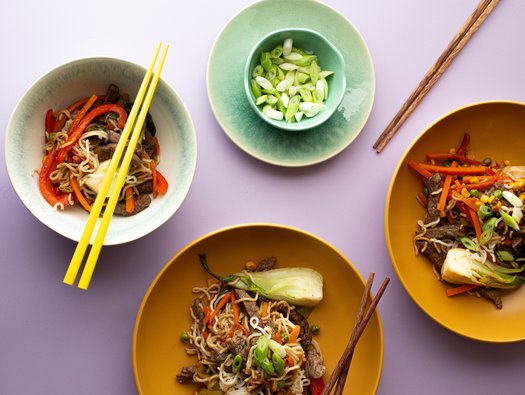
Easy beef and vegetable noodles
https://kidneycareuk.org/get-support/healthy-diet-support/kidney-kitchen/recipe-index/easy-beef-and-vegetable-noodles/
500g stir-fry beef strips
1 packet (approx. 300g) of plain/ unflavoured, wok-ready noodles or 4 nests of dried rice or egg noodles (cooked as per packet instructions)
6 spring onions, sliced on the diagonal
2 tablespoons vegetable oil
400g mixed vegetables (fresh, tinned or frozen) chopped/sliced to roughly even size (for instance: sweetcorn, peppers, peas, carrots, broccoli).
2 tablespoons reduced-salt soy sauce (look for options without potassium additives)
2 cloves garlic, minced
1 tablespoon tomato purée
1 tablespoon white wine vinegar
5cm piece of fresh ginger, peeled and finely grated or 1 teaspoon Chinese five/six spice
1-2 teaspoon/s sesame oil (optional)
Add the sauce ingredients to a bowl, mix thoroughly to combine and set aside.
Heat the vegetable oil in a wok or large frying pan over a high heat. Cook beef for 2-3 minutes, until browned. Add the vegetables, except spring onions, and cook for another 2 minutes. Add in the sauce, along with the noodles, and cook for a further 2 minutes.
Serve with spring onions scattered over the top, adding optional sesame oil if you wish.
Serving sizes are based on adult portions. Here is a guide for children:
Toddler (age 1-4): ¼ adult portion
Young child (age 5-9): ½ adult portion
Older child (age 10-13): ¾ adult portion
Teenagers (14+): 1 adult portion
Some children do have bigger appetites than others. You child’s portion may need to be changed to fit their typical diet if you think the recommended serving sizes are too large or small. We would advise speaking with your dietitian prior to increasing the serving size if your child has struggled to manage potassium or phosphate.
Noodles are the main source of carbohydrate, and the value has been provided for those trained in insulin adjustment.
Despite the use of some high potassium ingredients, such as beef, this recipe is low in potassium, when following ingredient quantities and serving sizes. It is also low in phosphate, but does contain some, mainly from the beef, so if you have been prescribed a phosphate binder, take as directed.
High in protein, this recipe is suitable for those advised to eat more protein. If you have been advised to eat less protein, replace some e.g. half or all of the beef with a plant-protein such as tofu, tempeh or Quorn.
For those needing to increase calories, add extra sesame oil when serving.
Use lean cuts of beef. You can also use pork, chicken, or prawns or a vegetable protein such as Quorn, tofu or tempeh to reduce saturated fat. Even though we use reduced-salt soy sauce, it’s still quite salty, so only use amount shown in the recipe.
Use fresh or frozen vegetables in this dish, and whatever you have. Broccoli or sugar snap peas are often cheaper than pak choi. You can also use your usual cooking oil instead of sesame oil.
This dish is best eaten freshly made.
Add a touch of spice and flavour with either chilli flakes, curry powder or extra black pepper.
You can enjoy a wide variety of delicious and healthy food when you are living with kidney disease. All Kidney Kitchen recipes are analysed and approved by kidney dietitians. Search through our kidney-friendly recipes or filter them by category below.
These tasty wontons are not only a delightful addition to your meal but are also low in salt, potassium and phosphate. Plus they provide a valuable source of protein, making them a nutritious option for dialysis days.

By giving us your email address, you're giving us permission to send you regular Kidney Kitchen emails from Kidney Care UK. Further information about how we protect and use your personal data is available in our Privacy policy. If you would like to change the way we communicate with you at any time please email [email protected]. You can unsubscribe at any time by using the link at the bottom of every email we send.