Mediterranean chicken pittas
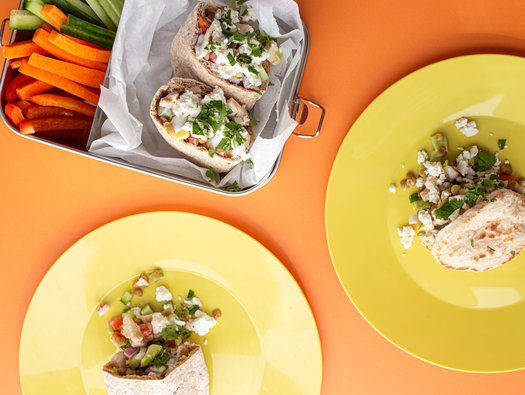
This recipe provides a fresh, high-protein meal that’s full of flavour, but low in potassium, phosphate and salt.
https://kidneycareuk.org/get-support/healthy-diet-support/kidney-kitchen/recipe-index/mediterranean-chicken-pittas/
This recipe provides a fresh, high-protein meal that’s full of flavour, but low in potassium, phosphate and salt.
1-2 (approx. 250g) cooked chicken breasts*, diced (*see tips for details)
2 tomatoes, deseeded and diced (approx. 75g)
½ avocado flesh, chopped (approx. 100g optional)
½ cucumber, diced (approx. 150g)
½ red onion, peeled and diced (approx. 60g)
30ml red wine vinegar
400g tin lentils, drained
30g feta, crumbled
4 pittas, (mini pittas for children’s portions), wholemeal if available
50g plain, full-fat yoghurt
1 lime, zest and juice
30g fresh coriander, chopped (optional)
Mix the chicken, tomato, cucumber, avocado (if using), lentils and onion together in a bowl. Toss with the red wine vinegar.
In a separate bowl, mix the yoghurt, lime zest and lime juice.
To serve, cut each pitta in half (toast if preferred), open the pocket, and fill with the chicken mix. If making mini pittas, use enough mixture to fill the pittas completely. Sprinkle over a little feta, drizzle with yoghurt and lime dressing and chopped coriander.
Serving sizes are based on adult portions. Here is a guide for children:
Toddler (age 1-4): 2 ½ tablespoons of the filling with 1 mini pitta (18g)
Young child (age 5-9): 5 tablespoons of the filling with 1½ mini pittas
Older child (age 10-13): 7 ½ tablespoons of the filling in 2 mini pittas
Teenagers (14+): Adult portions
Some children do have bigger appetites than others. You child’s portion may need to be changed to fit their typical diet if you think the recommended serving sizes are too large or small. We would advise speaking with your dietitian prior to increasing the serving size if your child has struggled to manage potassium or phosphate.
Pitta bread is the main source of carbohydrate, and the value has been provided for those trained in insulin adjustment.
Despite the use of some high-potassium ingredients, such as tomato and avocado, this recipe is low in potassium, when following ingredient quantities and serving sizes. It is also low in phosphate, but does contain some, mainly from the chicken and feta, so if you have been prescribed a phosphate binder, take as directed.
This recipe is high in protein and suitable for those advised to eat more protein, such as those having dialysis.
For those needing to increase the energy in their meals add butter to the pittas.
Use gluten-free pittas.
Avocados and fresh herbs can be expensive ingredients and are therefore optional to keep costs down.
If you store the bread and filling elements separately in the fridge, they will keep for a couple of days.
*Cook the chicken from fresh before using in the recipe, or use leftover chicken roasted at home the night before. Ready-cooked chicken bought from supermarkets will often contain phosphate additives, so preferably use fresh options.
You can enjoy a wide variety of delicious and healthy food when you are living with kidney disease. All Kidney Kitchen recipes are analysed and approved by kidney dietitians. Search through our kidney-friendly recipes or filter them by category below.

By giving us your email address, you're giving us permission to send you regular Kidney Kitchen emails from Kidney Care UK. Further information about how we protect and use your personal data is available in our Privacy policy. If you would like to change the way we communicate with you at any time please email [email protected]. You can unsubscribe at any time by using the link at the bottom of every email we send.