Roasted red pepper and chicken pasta bake
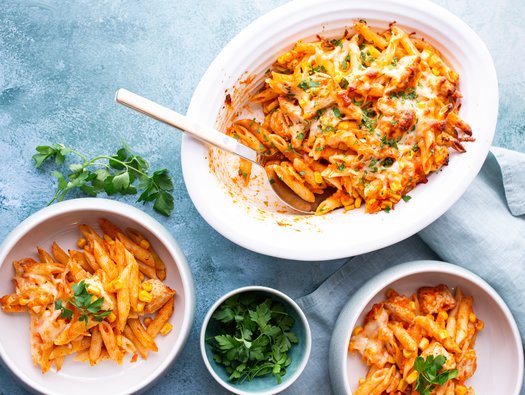
A delicious meal that is high in protein.
https://kidneycareuk.org/get-support/healthy-diet-support/kidney-kitchen/recipe-index/roasted-red-pepper-and-chicken-pasta-bake/
A delicious meal that is high in protein.
2 red peppers
2 tablespoons olive oil
300g dried pasta of your choice
1 garlic clove, crushed
300g chicken breast or skinless and boneless chicken thigh, cut into 2.5cm chunks
1 small onion, peeled and finely chopped
200g sweetcorn, tinned (drained) or frozen
185ml zero salt vegetable stock prepared according to packet instructions
30g cheddar, grated
Grind of black pepper
10g fresh herbs of choice, finely chopped
Preheat the oven to 210°C/190°C/ gas mark 5. Place the whole peppers onto a baking dish/tray and roast in the oven for approximately 45 minutes, until the skins are blackened. Remove from the oven and leave to cool enough to handle. Peel off the skins with your fingers, cut open and remove and discard the seeds. Roughly chop the flesh.
Heat one tablespoon of the olive oil in a pan and cook the onions over a medium heat until softened, then add in the garlic and cook for another minute. Add in the peppers and stir to combine and cook for a further 5 minutes over a low heat.
Add in the stock and stir until all combined and add in a grind of black pepper. Carefully pour the mixture into a blender and blitz until smooth.
Cook the pasta in a large pan of boiling water for 10-12 minutes, or according to packet instructions. Whilst the pasta is cooking, heat the remaining tablespoon of oil in a pan and fry the chicken until browned all over and cooked through. Remove from heat.
Reduce the oven temperature to 200°C/180°C/gas mark 4. Mix the cooked pasta and chicken with the sauce. Add in the sweetcorn and pour into a baking dish. Sprinkle with the cheddar and bake for 20 minutes until golden.
Remove from oven and serve with fresh herbs scattered over the top.
Serving sizes are based on adult portions. Here is a guide for children:
Toddler (age 1-4): ¼
Young child (age 5-9): ½
Older child (age 10-13): ¾
Teenagers (14+): 1
Some children do have bigger appetites than others. You child’s portion may need to be changed to fit their typical diet if you think the recommended serving sizes are too large or small. We would advise speaking with your dietitian prior to increasing the serving size if your child has struggled to manage potassium or phosphate.
The pasta is the main source of carbohydrate in this recipe, and the value has been provided for those who have been trained in insulin adjustment.
If you need to gain weight, have a growing child who needs more calories, or have a poor appetite, you can add these high-energy ingredients or foods to the recipe.
Use an extra 1-2 tablespoons olive oil to cook the sauce and the chicken. Using 300g boneless chicken thigh pieces instead of chicken breast will increase calories.
This recipe is high in protein, therefore suitable for those advised to eat more protein, such as those receiving dialysis. If you have been advised to eat less protein, then you may wish to reduce the quantity of chicken in the recipe to half and substitute this with either tinned beans (cannellini, edamame or butter beans) or mixed vegetables.
This recipe is low in potassium, when following the quantities in the ingredients, and the serving sizes. Therefore, suitable for those advised to reduce potassium in their diet.
This recipe is also low in phosphate, however it does contain some phosphate, mainly provided by the chicken and cheese, therefore if you have been prescribed a phosphate binder you should take as directed.
To lower the phosphate further than you could consider reducing the amount of cheese in the recipe.
Use gluten-free pasta
Use wholemeal pasta for a healthier option.
You can use other cuts of chicken or leftover chicken.
The sauce (without chicken) will keep in an airtight container in the fridge for 1 week or will freeze in a suitable container for up to 2 months. The complete dish is best eaten freshly made.
A nutritious comfort meal with good source of protein, this classic pasta dish is a great family supper that’s quick and easy to prepare.
You can enjoy a wide variety of delicious and healthy food when you are living with kidney disease. All Kidney Kitchen recipes are analysed and approved by kidney dietitians. Search through our kidney-friendly recipes or filter them by category below.
Cooking without salt doesn’t mean bland meals. There are plenty of ingredients that give your cooking a flavour boost without reaching for the saltshaker. We’ve checked with kidney dietitians so you don’t have to worry about the science – or compromise on fantastic flavour.

By giving us your email address, you're giving us permission to send you regular Kidney Kitchen emails from Kidney Care UK. Further information about how we protect and use your personal data is available in our Privacy policy. If you would like to change the way we communicate with you at any time please email [email protected]. You can unsubscribe at any time by using the link at the bottom of every email we send.