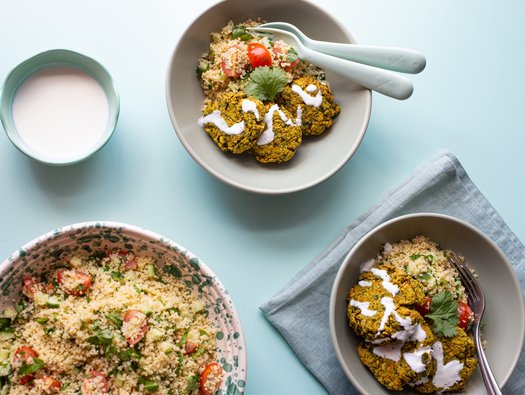
Spiced carrot falafel with herby couscous and a yoghurt dressing
https://kidneycareuk.org/get-support/healthy-diet-support/kidney-kitchen/recipe-index/spiced-carrot-falafel-with-herby-couscous-and-a-yoghurt-dressing/
100g porridge oats
1 teaspoon ground cumin
½ teaspoon ground coriander
1 teaspoon curry powder
½ teaspoon cayenne pepper
30g parsley
30g coriander
2 garlic cloves, peeled
1 tablespoon olive oil
140g carrots (2 medium), grated
2 x 400g tins chickpeas, drained and rinsed
240g couscous (uncooked weight)
30g fresh herbs, parsley, coriander, mint etc, roughly chopped
150g cucumber, chopped
12 cherry tomatoes, quartered
1 tablespoon olive oil
50g plain, Greek yogurt
1-2 tablespoons water
1 teaspoon of lemon juice
Put the oats in a food processor and blitz until they look like rough flour. Transfer to a large bowl and mix in spices.
Using the food processor again (no need to clean), add the herbs and garlic, blitz for 20 seconds. Add in the olive oil, carrots and chickpeas and blitz again until chickpeas are roughly chopped (10–20 seconds).
Pour blitzed chickpea and herb mixture into the spiced oat flour, and combine together – the mix should be quite dry (if too dry, add a tablespoon of water). Chill in fridge for 30 minutes.
Preheat oven to 190°C / 170°C fan / gas mark 5 and line a baking tray with greaseproof paper. Take falafel mix from fridge. Shape into balls using your hands (recipe makes 12–16 falafels, depending on size). Place on lined baking tray and slightly flatten with your fingers.
Bake in oven for 20–30 minutes (depending on size) until falafels are crisp on the outside, and slightly brown. Remove from oven.
While falafels are cooking, prepare and cook the couscous, according to packet instructions. Once cooked, add a tablespoon of olive oil, mix through and allow to cool. Then add remaining ingredients and mix.
For the dressing, combine the yogurt, water, lemon juice and mixing. Serve falafels with the couscous and yogurt dressing.
Serving sizes are based on adult portions. Here is a guide for children:
Toddler (age 1-4): ¼ adult portion
Older child (age 10-13): ¾ adult portion
Older child (age 10-13): ¾ adult portion
Teenagers (14+): 1 adult portion
Some children do have bigger appetites than others. You child’s portion may need to be changed to fit their typical diet if you think the recommended serving sizes are too large or small. We would advise speaking with your dietitian prior to increasing the serving size if your child has struggled to manage potassium or phosphate.
Oats, couscous and chickpeas are the main sources of carbohydrate, and the value has been provided for those trained in insulin adjustment.
Despite the use of some high-potassium ingredients, such as tomatoes, this recipe is low in potassium, when following ingredient quantities and serving sizes. It is also low in phosphate, but does contain some, mainly from the chickpeas and couscous, so if you have been prescribed a phosphate binder, take as directed.
This recipe provides a source of protein. If you need more protein, eat more at other meals. If you need less protein, choose foods with less protein at other meals.
For those needing to increase calories in their meals, add a tablespoon of oil, or small knob of butter to the couscous while cooking.
This recipe is a tasty way to include more plant-based foods. To reduce calories, use low-fat yogurt.
Use gluten-free oats.
Use a vegan yogurt.
You could use 2 teaspoons of dried herbs instead of 30g fresh herbs to keep the cost down.
Once cooked and cooled, this recipe can be stored in an airtight container for 3 days in the fridge and reheated in the microwave. You can also freeze the cooked falafel: once cooled, put into a freezer bag. They can be frozen for up to 2 months. Defrost in fridge overnight, then reheat in the microwave, or 10 minutes in 190°C oven.
Falafels are also ideal for a lunch box or picnic.
You can enjoy a wide variety of delicious and healthy food when you are living with kidney disease. All Kidney Kitchen recipes are analysed and approved by kidney dietitians. Search through our kidney-friendly recipes or filter them by category below.

By giving us your email address, you're giving us permission to send you regular Kidney Kitchen emails from Kidney Care UK. Further information about how we protect and use your personal data is available in our Privacy policy. If you would like to change the way we communicate with you at any time please email [email protected]. You can unsubscribe at any time by using the link at the bottom of every email we send.