I'm Sameer, a 30-year old CKD patient undergoing haemodialysis.
Generally, I'm an extrovert and social person who enjoys seeing friends and family and travelling (health permitting!) I work supporting clients with complex open-source intelligence investigations.
My kidney journey started in April 2020, when my kidneys, unknown to me, started failing. Navigating those years alone was tough, so I'm just here hoping to make it a little easier for someone else in my shoes.
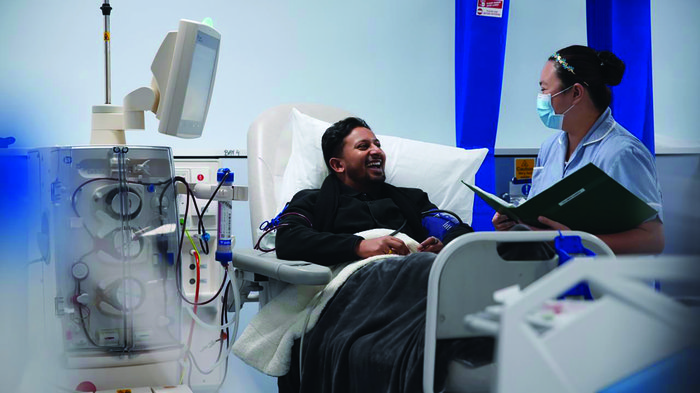
Well, here I am, currently sat in a dentist-like chair hoping to get my pearly-whites done. But no, instead I’m at the haemodialysis centre hooked-up for four hours of life-sustaining treatment. That, and the additional waiting time, before and after sessions! Fortunately for me, I have the flexibility of being able to work remotely, so I don’t often face the stresses of missing work for treatment or hospital appointments.
It made me think about the adjustments that people with chronic kidney disease (CKD) have to make on a daily basis. From the tiredness and fatigue that kidney failure brings, to the aches and pains doing the smallest of things, to the sleepless nights filled with anxiety and the work-related worries – everything has to be critically considered in our world.
Navigating life is a difficult phenomenon at the best of times, let alone with a chronic illness. My week typically starts off with Monday’s madness; thinking about all the work I need to get done, getting to dialysis, dinner plans and, obviously, the upcoming weekend!
Work life
For many dialysis patients, the ability to work is a real concern. Whether it’s working virtually from a laptop or needing to show up somewhere in person, there’s always that lingering question: Can I manage it today? I’m fortunate to be able to work from home, but not everyone is so lucky.
Many jobs and industries don’t provide such accommodations, leaving patients to grapple with uncertainty. I’m sure many of you reading this can relate to the very real fears of not being able to work, struggling to pay bills or a mortgage, even questioning if you’re physically capable of holding down a job. It’s a stress that weighs heavily on many of us, adding yet another challenge to an already complex journey.
Home life, food and travel
Feelings of dizziness, delirium and all-round rubbishness are frequent after dialysis sessions, so navigating your way around, whether you drive home from the dialysis centre, or just to do your weekly food shop, dialysis patients can struggle. I tend to drive myself, but sometimes still need a helping hand (my mum) to provide her taxi services.
When you’ve finally made it back home, you feel ravenous! But instead of eating your favourite foods, or in my case, the unmissable golden arches (McDonald’s) which I drive past every session, you need to make sure you’re eating the right things. Not too much sodium, not too much potassium – and my arch nemesis – not too many phosphates! There’s plenty of foods we shouldn’t eat, but you must strike a balance. I find the Kidney Kitchen is always a good place to look for delicious, healthy recipes!
Once dinner is done, you’ll suddenly remember you haven’t taken your medication and now need to get them down you – all 12 tablets, in my case! (There’s a ‘rattle’ joke here somewhere…)
More generally, there’s other things I worry about; travel, social life and the future. Travelling was a big part of my personal and professional life. I am fortunate enough to have travelled to many places around the world – a luxury I no longer enjoy, but I have dreams to return to this lifestyle. Those on peritoneal dialysis (PD) can still (hopefully) travel, albeit, lugging a 20kg bag full of dialysis fluid and medical supplies. Naturally, this always raises eyebrows in an airport. Using a disabled lanyard helps to allay these concerns.
Social life
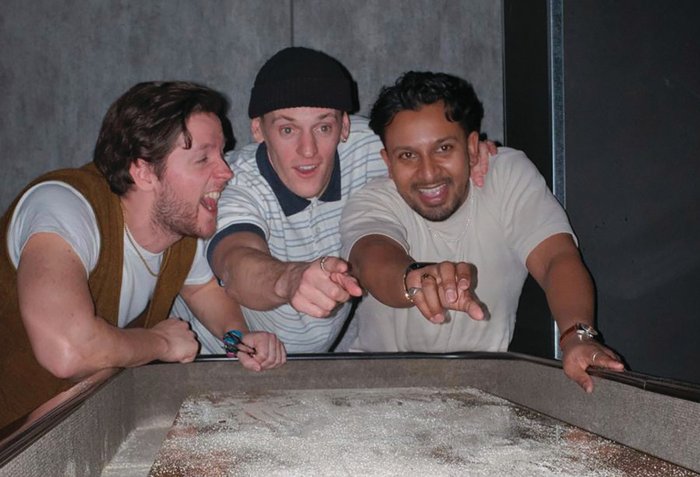
Being a young adult, my social life naturally holds great importance. Friendships mean the world to me. They offer comfort, support, and a sense of normality in this otherwise abnormal situation. Our shared sense of humour, though sometimes sharp, can feel like a shot to the kidneys – pardon the pun. However, it’s not always easy to keep up. The physical differences are undeniable and, at times, hard to accept. Fatigue sets in much quicker, and turning 30 doesn’t make it any easier! But despite the challenges, the value of these friendships far outweighs the struggles. They remind me that laughter, connection and shared experiences are the best medicine of all.
Looking to the future
Who knows what the future holds for any of us? The endless fears we carry on our shoulders every day can feel heavy and are amplified when we think about what lies ahead. For those of us navigating life with kidney disease, the constant dream of a near-normal eGFR (estimated glomerular filtration rate) and the ‘normality’ that a transplant might bring is a source of hope.
Perhaps, someday soon, things will change. Advances in technology, research and humanity’s relentless drive to innovate and improve offer glimpses of a brighter future. Just maybe, these efforts will shrink our fears and turn our hopes into reality.
Life’s challenges, particularly those brought on by a chronic illness, have a unique way of shaping and strengthening us. The stresses you face – though often overwhelming – build you into a more resilient version of yourself.
Strength in adversity
When you’ve had to endure tough times, especially from a young age, you learn to face life with a grit and determination that others may never experience. You find strength in knowing that you’ve not only faced adversity, but have emerged on the other side of it, stronger, wiser and more empowered.
Living with a chronic condition also changes your perspective. It teaches you to value life in its purest, simplest form. The small things in life; a good day, a cold pint, or even the energy to get through the day, become monumental joys. You learn to appreciate each day as the gift it truly is, celebrating even the ‘okay’ moments with gratitude. Because when life throws its hardest punches, you come out victorious.
This article first appeared in the Spring 2025 of Kidney Matters magazine.