What is fistula formation?
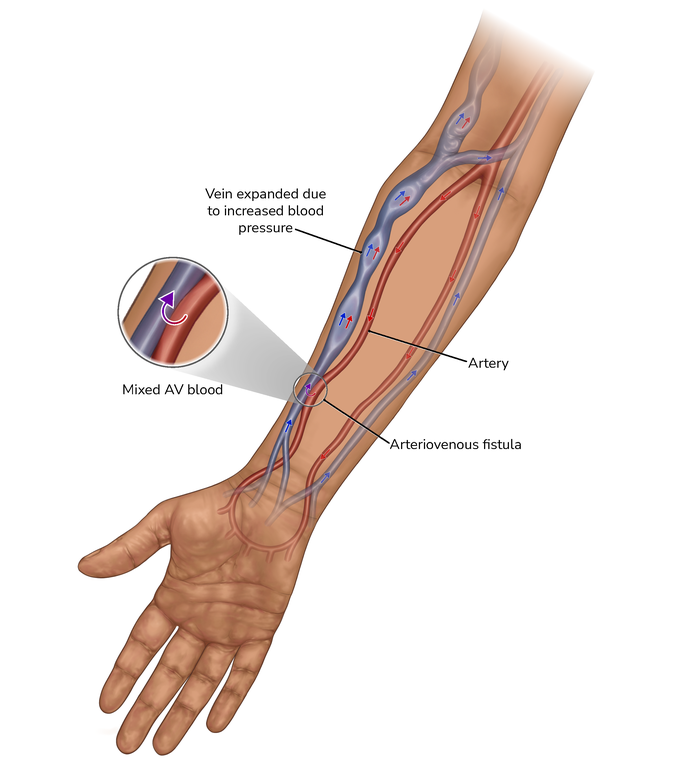
It’s an operation that joins an artery and vein together just under the skin to make one larger, stronger blood vessel.
This new blood vessel is called an arteriovenous (AV) fistula, usually simply known as a fistula. It provides a way for your healthcare team to access your bloodstream for haemodialysis.
What does fistula formation involve?
- A fistula is usually created on the inside of your non-dominant forearm.
- The surgeon makes a small cut in your skin to access the vein and artery.
- They cut a tiny opening in the vein and the artery and then connect the two. This allows blood that comes from your heart (arterial blood) to flow into the vein, creating pressure so the vein grows and strengthens, and can be used reliably for dialysis.
- It usually takes up to six weeks for a fistula to be functional, although it may be longer.
- Your healthcare team will check the fistula is ready to use using an ultrasound machine.
Is it safe? Are there any alternatives?
Sometimes a fistula cannot be made as the blood vessels are too small or they're not suitable. Your healthcare team will talk to you about the other options.
There are other ways to access your bloodstream for haemodialysis such as an arteriovenous graft or tunnelled line, but a fistula is the most effective and reliable method and usually lasts the longest with fewer problems.
The procedure to create a fistula is usually carried out under local anaesthetic and is very safe.
However, as with all procedures, there may be some risks and complications, including infection of the area, and mild to moderate bleeding from the wound site.
Some people develop unusual sensations, such as coolness and tingling, in the hand of the arm with the fistula, although this isn’t common. Mild cases may get better without treatment.
If you experience pain in your hand or cold numb fingers, then you should speak to your dialysis nurse or contact your healthcare team. This might mean that the blood flow to your hand has been reduced.
Up to one in five fistulas either clot or fail to develop, so there’s a chance you may need a further procedure. Your healthcare team can answer questions and help you weigh up the risks and benefits.
Where will the AV fistula formation operation take place?
In hospital, in an operating theatre.
A vascular surgeon – a surgeon who specialises in blood vessels – will create the fistula.
What happens before the procedure?
- You’ll have an initial assessment so the surgeon can check the quality of your veins. This may include an ultrasound scan of your arm.
- The surgeon will decide where to create the fistula. They’ll try to avoid the arm you use the most as you may need to rest the arm for a few days after the procedure.
- Once your surgeon has decided where they will create the fistula, it’s important you don’t have a drip in that arm, or have blood taken from it.
- Your surgeon will tell you whether you need to do anything else to prepare for the procedure. If you take anticoagulant medication to thin your blood or prevent clots, you may be asked to stop taking it beforehand.
What happens during the procedure?
- On the day, the surgeon will explain what will happen, and you’ll be asked to sign a consent form.
- In the operating theatre, you’ll be given local anaesthetic to numb the area. You will usually remain awake during the procedure.
- You may feel some pressure as the surgeon works, but the procedure shouldn’t be painful.
- When the surgeon has joined the artery and vein, they’ll close the opening with dissolvable stitches.
- The procedure takes up to an hour.
What happens immediately after the fistula formation?
Your arm will be raised on a pillow and wrapped up to keep it warm, and you’ll be given pain relief medication, such as paracetamol, if necessary.
You’ll usually be able to go home the same day but you should not drive so will need to arrange for alternative transport.
What should I expect when I get home?
Your healthcare team will give you guidance on caring for your fistula, and will explain how to feel it for a sensation known as a fistula “buzz” or “thrill”, which happens due to the high volume of blood flowing quickly through the area. It might feel strange at first, but it’s a sign your fistula is functioning properly.
It usually takes up to six weeks for your fistula to develop. You’ll have an appointment a few weeks after the procedure to check it’s developing in the way it should.
Is there anything else I need to know?
You’ll be able to see and feel the fistula under your skin, and a small scar will develop where your skin was opened up during the procedure.
Over time, fistulas get bigger and may become more noticeable and 'lumpy'.

Publication date: 02/2026
Review date: 02/2029