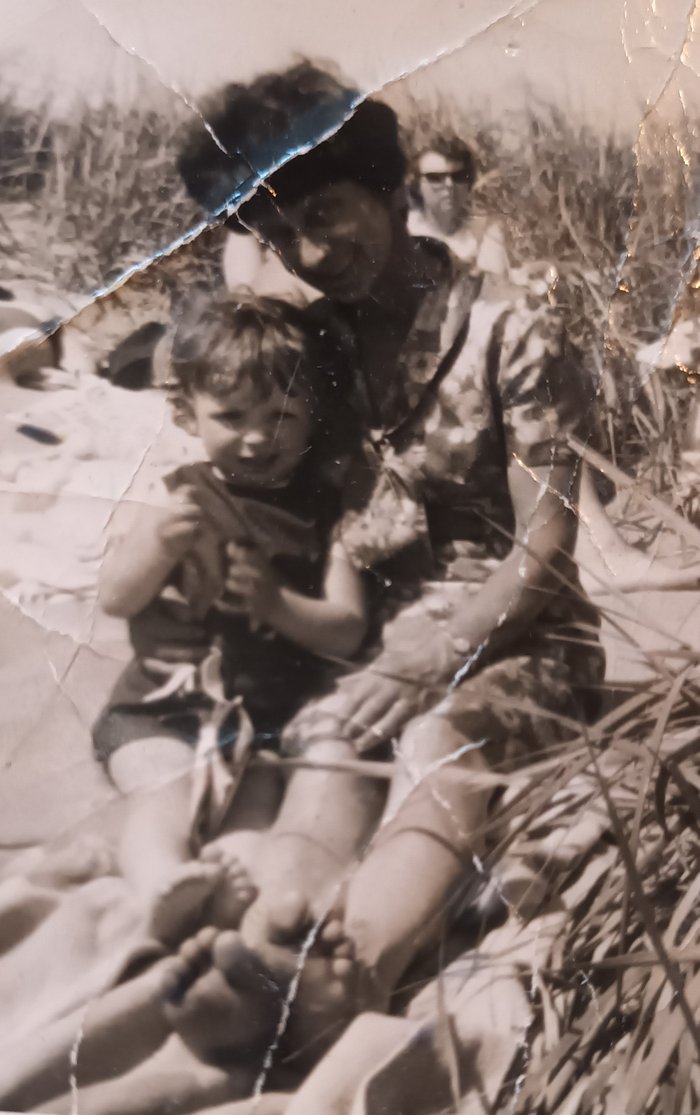
After Uncle Jackie's second transplant we all hoped that he could have his life back. He was my favourite uncle, and I remember playing with him on the beach and him being well.
My experiences of CKD
"When I was a child over 50 years ago, before Kidney Care UK existed, I became aware there was lots of anxiety in the family because of a condition that my uncle Jackie had. I remember going to Edinburgh on the train with my granny to see him in hospital. It felt like a day out, but when I got to hospital, I saw the seriousness of it.
"Jackie had kidney failure, and we had gone to see him having dialysis. I remember feeling his fistula and his arm, the movement of the pulse and blood. No one else was talking about any of it, so I asked and Jackie explained what it was. It was just a matter of fact for me as a child; I had the curiosity to ask those awkward questions. I was just dealing with the reality of the treatment that Jackie was having. People often try to protect children, but sometimes what's actually required is finding an age-appropriate way to explain kidney disease to them.
"After Uncle Jackie's second transplant we all hoped that he could have his life back. He was my favourite uncle, and I remember playing with him on the beach and him being well. That time was really cherished but eventually he went back onto dialysis and then died. At the funeral, my granny said that it was the day that she prayed would never happen but that she was always prepared for. A lot of the details and feelings from that time have stayed with me and my family.
"I can see, looking back, how isolating kidney disease must have been. There was a lot going on for Jackie and his family – Jackie was also a carer for his wife – and I imagine there was not a lot of support. Back then it was mostly medical care as opposed to a more social model of care."
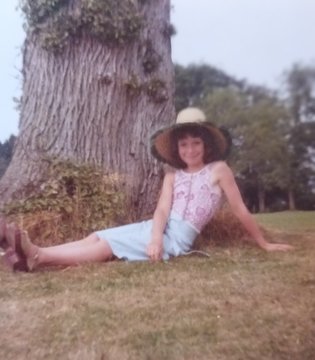
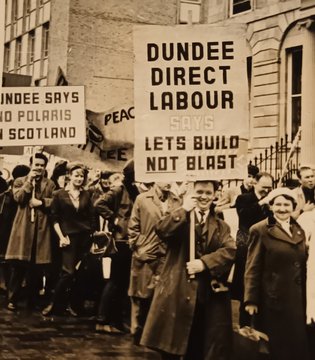
Allison as a child, and her Uncle Jackie at a peace rally
Living with kidney disease is a lot and my job gives people a platform to talk about anything. That is what our PSAO team can offer.
My role at Kidney Care UK
"In the Patient Support & Advocacy (PSAO) team, the service we provide is holistic. It wraps around the medical treatment, but it deals with other aspects of life that are just as important. When I am talking with patients, it is about trying to understand how much they want to discuss an issue they're having. I always explain that the PSAO team will be there at any time in their journey.
"When I saw the PSAO job advertised it immediately brought my uncle to mind. I feel my lived experience has equipped me to be able to engage with and talk with kidney patients and their families. There was always an atmosphere in my family that meant I could ask questions. I felt informed about my uncle, but also able to get on without worrying about him. Uncle Jackie's experience of kidney disease has informed me as a PSAO. I can empathise with this child's perspective, or that family member's perspective. Patients are thinking about more than themselves; there is a whole family behind that person.
"Kidney patients don't exist in a vacuum; they live with people and worry about those people. Patients who we support have children, nieces, nephews, grandchildren. I think of the help we provide as a 'hug' around a family. I ask about what is going on at home, their support networks, and they talk about the value of their family and how that is priceless.
"Living with kidney disease is a lot and my job gives people a platform to talk about anything. That is what our PSAO team can offer, when we ask someone how they are, we give them permission to talk about the non-medical side of CKD. We have the space and time to do that; nurses and clinical staff have less and less time to do so."
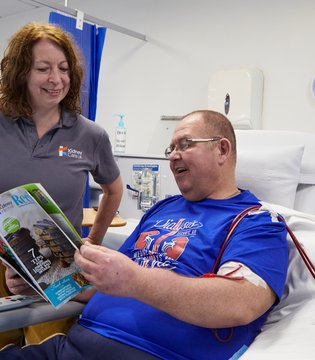
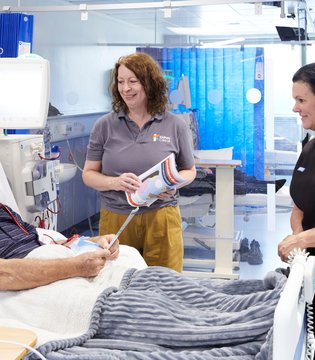
Allison chatting with patients and healthcare professionals
I try to have conversations with people about topics other than kidney disease. It is really important for the people I speak with to be reminded that they are people, not just kidney patients.
Looking after children and caring for the carers
"The way Kidney Care UK supports children and families is great. Children can often sense that things are going on, and we hear that a lot. Often, patients struggle to have conversations to explain what mummy, or daddy or grandma or grandpa is dealing with. Supporting children with compassion is important. If we don't give them information, they think that the situation is worse than it is or they might fill their own gaps with information they have conjured up.
"We often try to protect children from the reality of kidney disease, but sometimes what's needed is finding an age-appropriate way to explain it instead. We as a team don't talk with the children directly. We have conversations with parents, looking at what support they might need to talk about CKD with their child, and provide them with tools that can help.
"For example, we might give a mum the confidence to go into school, armed with reliable information about CKD, to discuss the impact their condition may be having on the child and their behaviour with a teacher. We can't conjure up change, but we can provide the opportunities to do so.
"It can take some parents longer than others, and that is okay. There is no one-size-fits-all solution and in fact, there are plenty of parents who are very able to have those conversations without our support. I can then learn from those parents and how they have navigated CKD with their children and share that further with other parents.
"I am a believer in looking after the carer looking after the patient. People I meet with sometimes don't even label themselves as a carer, they just see themselves as a wife or a mum or a grandad, but we can explain that they are going above and beyond being 'just' a family member. Carers are supporting so much that they can get lost in that caring. We are here to make sure they get the support they need, so they don't lose their identity or energy.
"I try to have conversations with people about topics other than kidney disease. It is really important for the people I speak with to be reminded that they are people, not just kidney patients. My uncle Jackie’s legacy is more than just being a kidney patient. He has inspired me to be who I am today."
Find out more about how our Patient Support & Advocacy service might be able to help you.
You can call our FREE Support Line on 0808 801 00 00 (Monday to Friday, 9am to 5pm) or you can email us at [email protected]