When the time came, I opted for peritoneal dialysis (PD) because I was working full-time and felt it offered me the most flexibility.
Diagnosis, peritoneal dialysis and transplantation
"I was first diagnosed with kidney failure over 20 years ago, when I was living in Jersey. I had a repetitive back injury, so my GP sent me for a scan. This showed what they thought were kidney stones, but a biopsy revealed a condition called Medullary Sponge Kidney, where small cysts form on tubes within the kidneys and reduce the flow of urine. I was told it was serious and that I'd be on dialysis within six weeks. Somehow, I managed to keep dialysis at bay for a further five years.
"When the time came, I opted for peritoneal dialysis (PD) because I was working full-time and felt it offered me the most flexibility. Although the dialysis fitted in well with work, I suffered agonising 'drain pain' when carrying out an exchange. My sister-in-law offered to donate a kidney and after two and a half years on PD, I received a kidney from her. The transplant went well and I had 14 wonderful years free from dialysis thanks to her generous gift.
"During this time, I left Jersey and returned to my hometown of Cleethorpes. I had regular clinic appointments at Hull Royal Infirmary, and when my transplant began to fail, the dialysis team closely monitored me. It took five years for it to lose function to the point where a return to dialysis became necessary."
My dialysis days were exceptionally long days, typically, 11 hours as it was a 35-mile trip each way to Hull and I needed patient transport as I couldn't walk.
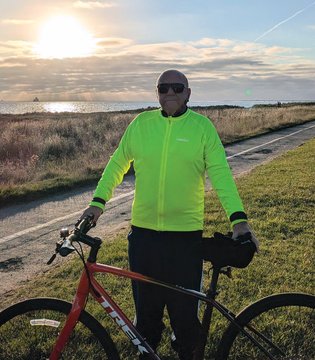
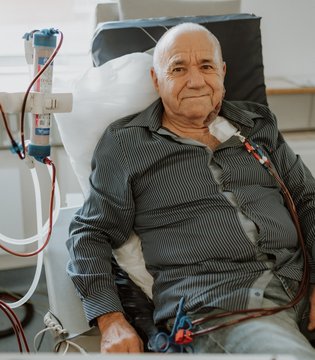
Keith with his bike and receiving haemodialysis
Transplant failure and moving back onto dialysis
"Because I had such a terrible experience with PD, I was reluctant to go back on dialysis and resisted it for as long as possible. But I left it too long and was admitted to A&E at Grimsby's Diana, Princess of Wales Hospital, where I believe my life was saved by an amazing doctor called Paul Parker – a superhero to me – who spotted the problem was with my heart because of an overload of fluid. I had waited so long before accepting treatment, my transplant had failed completely, and fluid had pooled around my heart and lungs.
"At one point, I recall having four doctors and nurses in my tiny A&E cubicle. I thought to myself this is serious – and it was. After 48 hours, I was transferred to the intensive care unit (ICU) where I spent 11 more days receiving one-to-one nursing care. I was then transferred to Hull Royal Infirmary, where I spent four weeks.
"They were able to gradually remove the fluid from around my heart by dialysis. I had to learn to walk again after 11 days being totally immobile while on the ICU. I then had regular dialysis sessions at Hull because a space at my local Grimsby unit was not available. My dialysis days were exceptionally long days, typically, 11 hours as it was a 35-mile trip each way to Hull and I needed patient transport as I couldn't walk. After four months, a space became available at Grimsby and my dialysis days halved in length as the unit is only a 10-minute drive from my home."
If you are about to return to dialysis and are dreading it, based on your previous experience, I can wholeheartedly say to you, do not be afraid.
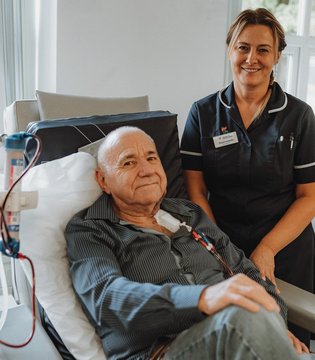
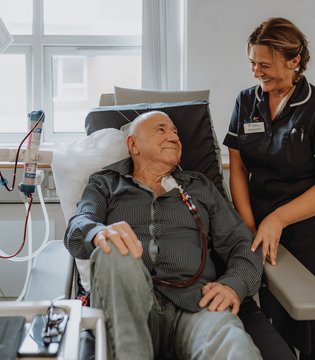
Keith and Renata, manager at Grimsby dialysis unit
Coming home to Grimsby
"At the Grimsby unit, I was struck by the staff's friendliness, not just the dialysis nurses but everyone: unit manager (the lovely Renata), dialysis supervisor, Caroline, and the cleaning staff. Everyone, including the patients, are so kind and friendly. There is a real family feel to the unit and the thing I had initially dreaded so much became something that made me extremely comfortable. I no longer dread dialysis.
"I had put off starting dialysis for so long, I almost died, yet the reality turned out to be that I had nothing to fear. This is down to the fabulous staff, their constant care and the deep sense of camaraderie at Grimsby dialysis unit.
"If you are about to return to dialysis and are dreading it, based on your previous experience, I can wholeheartedly say to you, do not be afraid. The mind plays terrible tricks over time, and while I know it is extremely difficult to accept that a much-loved transplant is failing, I feel so much better now I have returned to dialysis than I did forcing my failing transplant to support me.
"And you never know, you too might be lucky enough to dialyse here at the Grimsby dialysis unit. We will all make you very welcome!"
This story was first featured in Kidney Matters issue 27.