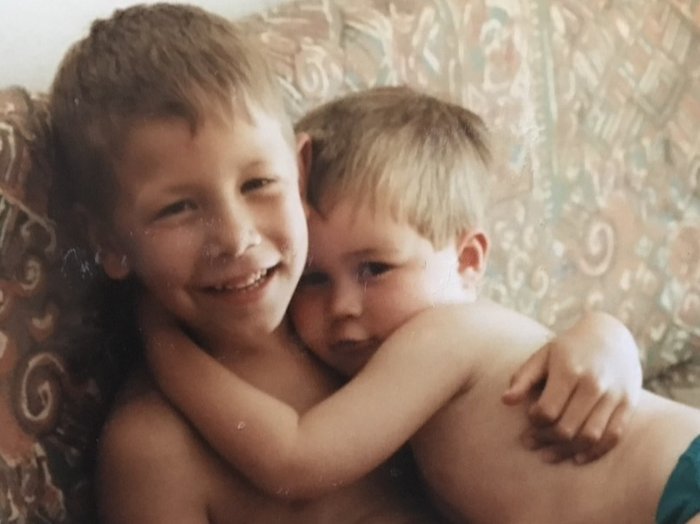
I can't compare my life now to before transplant; I have done more in the last two years than I did in the 10 years before.
My diagnosis
"I was diagnosed with IgA nephropathy (IgAN) in 2012. At that point I was fit and healthy, working as a personal trainer and gym manager.
"I felt fine in the years and months preceding my diagnosis. When I was seven, I had an episode of IgA vasculitis but there was no mention that it might lead to something else in the future. There were no symptoms after that until I was 24, when I started to retain lots of water. My legs got puffy – if you pressed your finger in my leg, you'd lose half your finger – and there was this rubber ring of fluid around my waist. I knew something was going on but I was young and maybe naïve, so I probably left it a bit too long to get checked.
"When I went to the GP they were clearly panicked about state of my legs. I had severe oedema, close to 10kg of extra weight. They did a urine test and identified there was lots of protein in my urine.
"I was sent to hospital and straight to renal, so they must've suspected it was kidneys from the off. A kidney biopsy and diagnosis confirmed that I had IgAN.
"I know my diagnosis was smoother and quicker than most people's, but I was told there was no treatment available and I'd need dialysis or transplant if they couldn't keep my eGFR under control.
"I remember feeling numb, almost removed from it all. I was given blood pressure medication, told I would be monitored, and off I went trying to live life with this big dark cloud hanging over me."
Transplantation journey
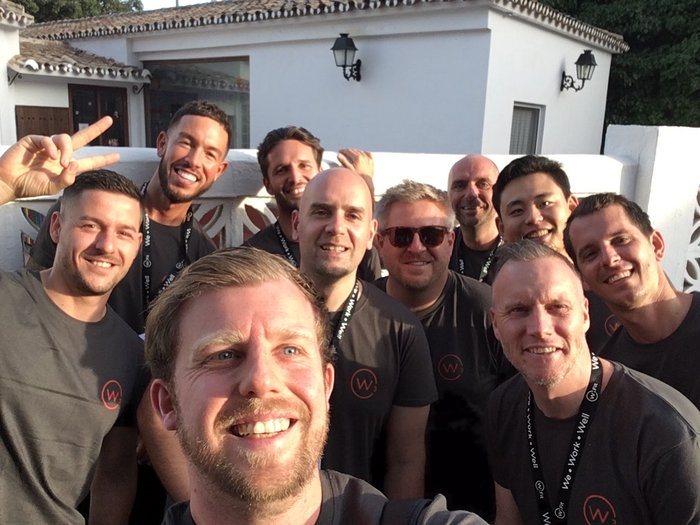
"The physical symptoms really kicked in during the 18 months before my transplant. I can't explain how fatigued I was. I was someone who was used to being really fit, but I had to cut down on training and exercise and reduce my hours at work. I would get decent sleep and by lunchtime I would be absolutely knackered and drained, like I was walking in mud.
"At the start of 2022, my kidney function deteriorated quickly and at that point I was told I'd need dialysis or transplant within two years. I started the process of living kidney donation, and I was lucky that a few people came forward. My uncle and my cousin, Matt, were confirmed as matches and we proceeded with Matt because he was fitter and healthier. That process took up most of 2022; Matt was confirmed as a suitable match in the April 2023, ready for a transplant in October 2023. My GFR was about 10 so it was squeaky-bum time!
"The operation went as well as it could have. They warn you going into transplant that the new kidney might take a while to start working but it worked straight away for me. Touch wood, my function has been stable since. Currently there is a chance of reoccurrence of IgAN, which brings other mental challenges, because at any point IgAN can cause damage again. But I can't compare my life now to before transplant; I have done more in the last two years than I did in the 10 years before."
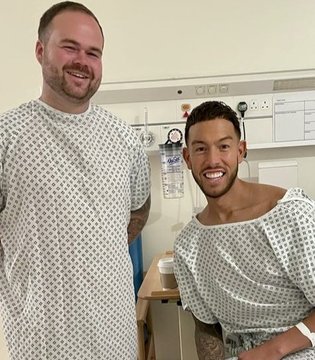
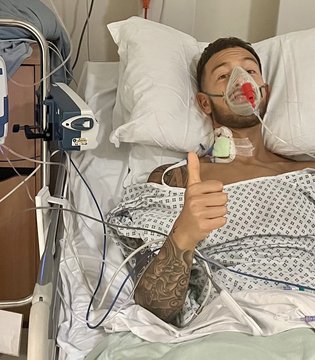
Ben and his cousin Matt after surgery
Challenges of living with IgAN
"I often describe my first years of living with as IgAN as a mental disease – there were very few physical symptoms, other than being careful in the sun on holiday, or eating less salt.
"But there were lots of challenges mentally, navigating life and knowing it would get tougher. Living with a chronic illness, you miss out on things. There were social outings and events that I'd miss because I was reluctant to do anything that might harm my health and because of the fatigue.
"The big one was that my IgAN was a contributor in the breakdown of my marriage. I got married in 2019 and at that point my kidney function wasn't fantastic, but it was stable. I had a chronic condition, but I was in a happy relationship and life was okay. But as my health deteriorated, that put a pressure on the relationship that is impossible to describe. We wanted the 'normal things' in a relationship – kids, a house – but I didn't know what life would look like for me as my function started getting worse. I couldn't commit and that led to the breakdown of the marriage. My partner was ready to start a family, and I just wasn't in the position to do that.
"I think there was a pressure I put on myself not to share things. I didn't want to be a burden; I didn't want to share my worries or my anxiety around the future. Most of those feelings I held in, which didn't help. It had an impact on how I showed up in relationships, romantic and family.
When you are going through it, you feel like you are the only person going through it, the only person in the world that feels all these pressures, but you are not. Don't be afraid to talk.
"Eventually I sought out mental health support, and I wish I had done it earlier, certainly towards the final year of waiting for the transplant with all the bucket-loads of stress that brings.
"It was also a financial challenge as my IgAN got worse and I worked less. You don't think of the implications of living with a chronic disease until you have one. When I started getting tired all the time, I had to apply for Universal Credit to top up my salary to pay my rent.
"All this extra financial stress came at the worst time possible, and there was almost this sense of having to prove myself 'ill enough'. I had doctor's notes to confirm how my IgAN would impact my ability to work. At that point I was ill enough to be on dialysis, but I wasn't because my treatment was going to be pre-emptive transplant.
"If I could go back and give advice to myself, it would be to not keep in all the stress and to not pretend not to be worried. Keeping everything inside just added to the volcano that was bubbling under the surface. Especially as a young guy, it can be difficult to express vulnerability. When you are going through it, you feel like you are the only person going through it, the only person in the world that feels all these pressures, but you are not. Don't be afraid to talk.
Life now
"I am back working in the fitness industry full time. I'm also back training again and I'm feeling strong and fit. Sometimes I need to pinch myself, it feels like I'm living the life I was supposed to be living all along. Me and Matt, my cousin, are as close as brothers. I was best man at his wedding 10 months post-transplant and we see each other close to daily. I can't describe how I feel about him. He was always like a little brother, but he has become my hero... I still haven't got my head around it; it is like there is a light coming from him when I see him.
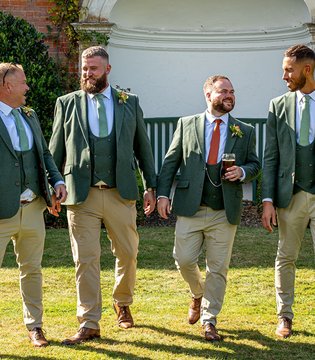
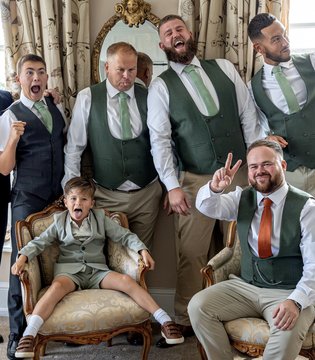
Ben at his cousin Matt's wedding
"I am half Portuguese, and I went to meet my Portuguese family for the first time in summer 2025 – I'd always wanted to, but this summer it felt like the right time. It was the most natural feeling, it was so special, like I had known them forever. That feels like another missing part of me that has been completed, another thing I can do that I wasn't able to before because of my condition.
"I still have quarterly blood tests, and I am reminded when I take my medication that my journey will still have many twists and turns, but life is good and I am excited for the future.
"To people living with IgAN: don't be afraid to be vulnerable and ask questions. Your condition isn't going anywhere, so sooner or later you have to learn about it, to whatever level is right for you. IgAN brings a different type of challenge to CKD; certainly, when I was diagnosed there wasn't any specialist treatment. Educating myself has helped me live with it better."
This story has been published with funding provided by CSL Vifor UK.