I was five years old, very small for my age and had to be left [at the hospital] alone as my parents could only visit once a week by bus. They must have been so worried, and it was a terrifying time for me, too.
Early years
"I can't remember much about my very early years after we had moved to live in the UK from Surat Gujarat in India. I was about four years old and still wetting the bed. Changing my bed every morning exhausted my mother and at that time, our local GP could not throw any light on what was causing the problem.
"My mother tried everything, from awarding me a gold sticker if I made it through the night with a dry bed, to withholding all drinks from me after 6pm. Nothing worked and the knowledge that I would soon have to start school added to their concerns.
"My parents, Narsihbhai and Shardaben, worked hard in Bradford factories at that time and we did not own a car. But my father found a specialist in Leeds who might be able to help us with a diagnosis and treatment. It would be a private appointment, but somehow, they found the money and we all travelled to Leeds on the bus."
Paying privately for a diagnosis
"I was diagnosed with vesicoureteral reflux (VUR) – where urine flows backward from the bladder to one or both ureters, sometimes to the kidneys – and admitted to hospital, where I stayed for two weeks. I was five years old, very small for my age and had to be left there alone as my parents could only visit once a week by bus. They must have been so worried, and it was a terrifying time for me, too. It was the 1970s and the medical investigations cost my father £200, which was a lot of money for them. The medical team confirmed I had kidney disease, which was causing my constant bed wetting and recurring urinary tract infections (UTIs). The consultant also confirmed it was likely I had been born with reflux, but this was the first my parents knew about it."
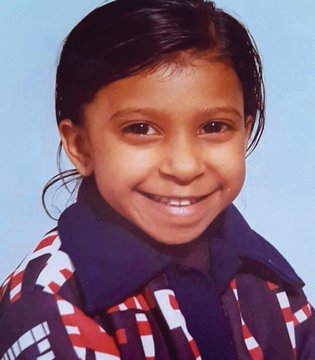
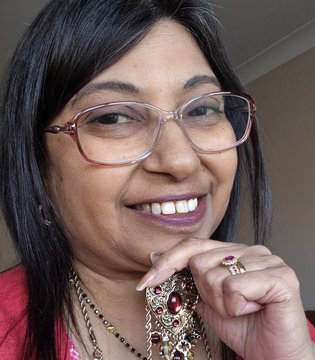
Bharti as a child and now
I started school where the bullying was relentless – children can be cruel sometimes. I tried to explain what was happening to my teacher, but she told me to stop telling tales.
Ureteral reimplantation
"Soon after this, I started school, where the bullying was relentless. Children can be cruel sometimes. They teased me and called me 'wee-wee girl'. I was so unhappy and so afraid all the time. I tried to explain what was happening to my teacher, but she told me to stop telling tales.
"My medication tasted awful and made me sick. But when I was seven years old, we discovered I needed an operation called a ureteral reimplantation, where a faulty valve between the bladder and the ureter is repaired. We all thought this would fix the problem, but it did not and soon I was back in hospital having more surgery to repair the other ureter. I missed a lot of school because I was always at hospital appointments, or in hospital having surgery. This affected my self-confidence and mental health.
"I carried on, tolerating the bullies at school, but by the age of 11, I was poorly again. This time, I needed my right kidney removed as it was very damaged. I was admitted to St James's Hospital in Leeds, where I spent six weeks. It took me a long time to recover. My parents were told my kidney disease was now progressive, and that one day, I would need dialysis and a kidney transplant. I was with dad and mum when they were told, hearing everything, but it all went over my head. I only started being aware of dialysis and transplantation in my 20s."
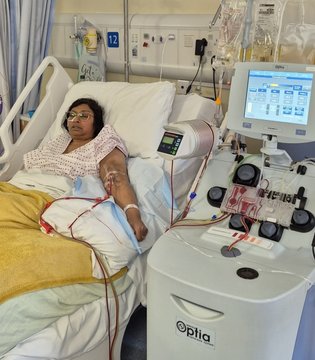
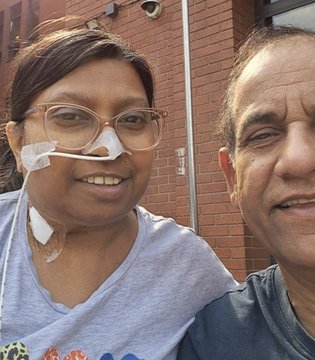
Bharti in hospital, receiving dialysis and with her husband
A family of my own
"I left school with no qualifications, so helped my dad who now ran his own shop. I attended regular check-ups at the hospital and in my early 20s I was told I would never have children – a devastating shock to me, as I knew I really wanted a family of my own one day.
"But less than two years after my husband Mukesh and I were married, in 1990, we were so happy to discover I was pregnant. Our first son was born in 1992, and we were overjoyed at our beautiful boy's arrival. Our second son was born in 1995. Both were healthy and happy, and I am so proud of my sons. As a family we have travelled extensively over the years, and my health remained reasonably stable.
"In 2021, I was told my kidney function was dropping. It was about 15% then and my kidney team put my name on the transplant list to see if I could get a kidney transplant rather than dialysis. But a year later, it was clear I needed to start dialysis, as my kidney was struggling.
"I had been alright with knowing I might need dialysis in the future, but when I was told that the 'future' was now, it felt like the floor had been taken away from me.
"The first time I went into hospital, I was so frightened. I am terrible with needles, but my husband came with me and the nurse who did the needling was so nice. I dialysed at the Beeston Dialysis Unit in Leeds while on the transplant waiting list, until my transplant in April 2025."
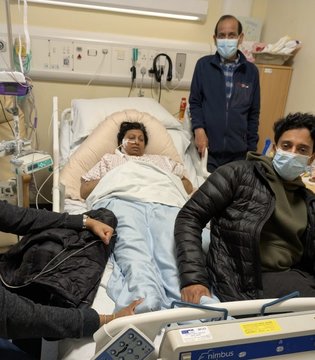
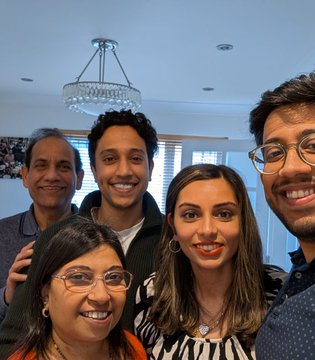
Bharti and her family after her kidney transplant
I have always wanted to use my experience and my love of chatting to people (I speak four languages) to help others facing kidney disease. I do really believe it helps to talk to someone who has been through it
Transplantation and becoming a peer supporter
"On 26 April 2025, I got a phone call from the transplant team saying they had a match for me, and I had surgery the next day. Things were a bit rocky after because I had to have dialysis straight away and then my new kidney started rejecting.
"I had so many treatments back-to-back: plasma exchanges, dialysis, all sorts of medications. You hear people talking about how you will get the transplant, everything will be fine and you will be home in seven days… In my case, all together I was in hospital for three months. It was a nightmare, for me and my family, to be honest.
"But I am getting there and I am now comfortable and I feel much better. Those months after my transplant, I felt as though I shouldn't have had the operation. I was asking myself, why did I bother with a transplant? But now it feels like the best thing I could have done. I am still here to tell the tale thanks to my donor. Everything worked out, I just have to keep on going. All the things I've been through since a child, then all of this, has blown my mind.
"My mental health has suffered throughout my journey, and I now see a psychologist who helps me navigate the dark days. Managing kidney disease and life can be a difficult balancing act. I have always wanted to use my experience, and my love of chatting to people (I speak four languages) to help others facing kidney disease. I really believe it helps to talk to someone who has been through it. So, I am now being trained as a peer supporter so I can fulfil this ambition and know I am really helping someone.
"I am Hindu and when I am in temples in my community, I try to speak with people to help them think a little more about transplantation. I explain why organ donation is so important and that it really does help other people. It is good to give something back at the end of your life.
"I am incredibly lucky to have my two sons, my supportive husband and would like to say thank you to everyone at Beeston Dialysis Unit for helping me find a positive way to use my experience."
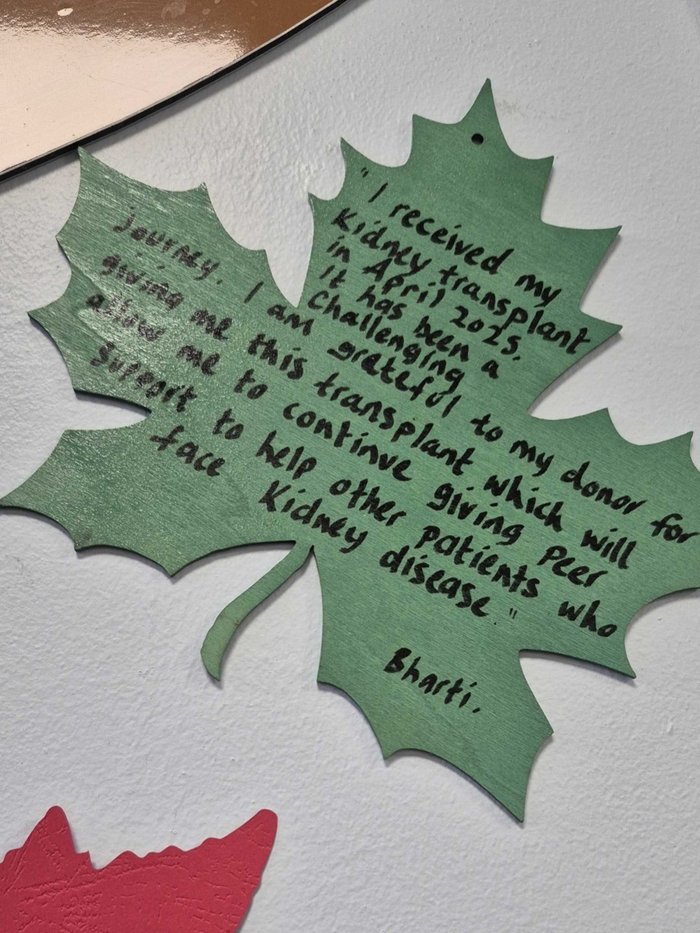
This story was first featured in Kidney Matters issue 28.