If I didn't tell you I was a dialysis patient, you probably wouldn't know; I am pretty 'normal'.
"My CKD kicked off in 2014, when I was 15. I noticed I was getting mild swelling in my ankles when I would take my boots off after air cadets. But over the months the swelling got painful, so I went to the doctor. Blood tests also did not express any abnormal signs – my eGFR showed 100% kidney function.
"Over months the swelling continued getting worse; it was in my face and neck when I'd wake up and over the day it travelled down to my legs. It was difficult and painful to walk around, so I went to see a different GP who happened to have received a kidney transplant himself and he recognised the symptoms. We did blood pressure tests and a urine dip, and the doctor said he was pretty sure I had nephrotic syndrome. After more tests and a kidney biopsy I was formally diagnosed with nephrotic syndrome, specifically focal segmental glomerulosclerosis (FSGS).
"Within two months of my diagnosis, my eGFR showed 50% kidney function. None of the medication or treatments really worked, and they couldn't figure out if my FSGS was genetic or autoimmune. I don't think I'll ever know, but I am okay with that. It is what it is.
"My kidney function kept dropping and just over a year after my diagnosis, I went onto peritoneal dialysis (PD) and then haemodialysis (HD) until I was called up for a kidney transplant. It was weird, I was on HD that night and a nurse came up and said I had been added to the transplant list, and that hopefully something would happen soon. The next morning, my mum told me, 'We've just had a phone call, you're getting a transplant'.
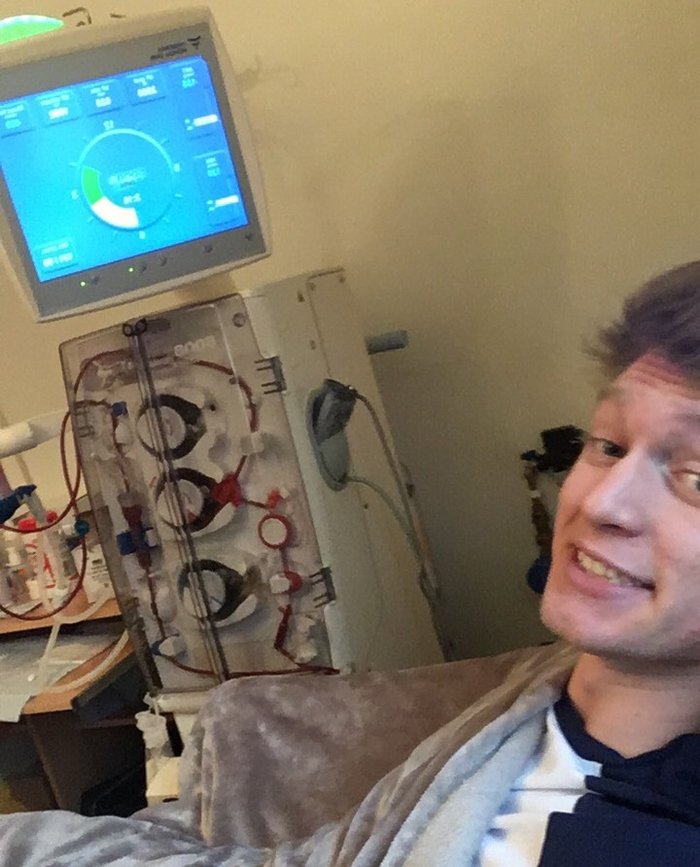
"The match was perfect, and the deceased donor kidney was in good condition, but the new kidney stopped working soon after the transplant. I was not creating urine, I was swelling up while being told I needed to keep drinking and I was in huge amounts of pain.
"I had a biopsy of the transplanted kidney, and they saw similar patterns of FSGS, which is called a reoccurrence. I was told it was one of the quickest cases of reoccurrence the medical team had ever seen.
"It was hard to hear. My mum and I had had an uncomfortable feeling that the transplant wouldn't work because with FSGS there is a 25% chance of reoccurrence, but at the time, we didn't really have a choice. Now that I have had a failed transplant there is a higher chance of reoccurrence if I go on to have another transplant.
"I now do home haemodialysis (HHD). I work in the day and dialyse in the evenings, four times a week for three hours. I can’t emphasise enough how much it has impacted and improved my life. It really works for me. If I didn't tell you I was a dialysis patient, you probably wouldn't know; I am pretty 'normal'."
Living with FSGS and choosing a plant-based diet
I wish I had known back then about the relationship of diet and lifestyle and CKD. I have been on a plant-based diet for the last four years and I have noticed a lot of positive changes to my health, even as a dialysis patient.
"As a teenager, I liked being active, so my FSGS did affect that aspect of things. There were times where I would feel exhausted doing something as small as going to town, and I would get down about not being able to keep up with friends or not being able to do what I used to.
"I really struggled with diet and fluid restrictions and keeping fluids down. I don't know if that was down to my kidneys not being able to excrete salt, or if it was psychological. I would try different things to manage that, every now and then sucking on an ice cube, or a boiled sweet to keep the saliva going a little bit. Even being on dialysis now is a struggle with fluid, but I am able to manage it better. I think that is because a lot of sugary and salty and ultra-processed food has gone from my diet.
"I wish I had known back then about the relationship between diet and lifestyle and CKD. I have been on a plant-based diet for the last four years and I have noticed a lot of positive changes to my health, even as a dialysis patient. There is strong research that a plant-based diet can slow progression of CKD and kidney failure and can help to manage end-stage kidney failure.
"I would tell other people with CKD to explore their diet and kidney disease. Changing or improving your diet and lifestyle is really powerful, even when you are ill – it might not be something you think you can do at first, but once you are able to get past that point, the benefits will come."
Kidney Care UK and financial support
To anyone who reads this: know that you are not alone in your journey. Support is everywhere and a lot of people are selflessly willing to give that support. You just have to look for it.
"It was my mum who first contacted Kidney Care UK when we applied for a grant to help pay for some of my second year of college. I had missed a few years of sixth form at school due to my failed transplant, and the next year I had gone to college and barely passed one A-level.
"But by the time I had finished that year I was back on haemodialysis and feeling better, so I decided to switch to a BTEC in engineering at the same college. The first year of the BTEC was free but I had to pay for the second year because I was 19.
"It was a joint effort between me and my mum, applying for the grant. That money was a lifesaver because even with a student loan we wouldn't have been able to afford for me to get the course done without the grant from Kidney Care UK."
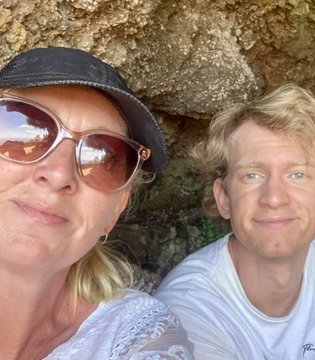
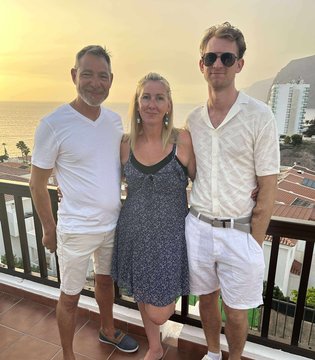
Cade with his parents
"I did get a pretty decent result at the end of the course which I was really happy with and with that result I was able to get a degree apprenticeship at Rolls Royce, where I work now. I was able to go for an interview and get offered a place because of my BTEC. I have now completed my four-year degree apprenticeship and kicked off my career in the aerospace industry. Without that BTEC I wouldn't be where I am now.
"I would recommend Kidney Care UK to every kidney patient, whether you are looking for a grant, information, or anything else. They are there to improve life, as much as they can, for people who are going through these difficult times. It's about trying to bring back more normality to people with kidney disease, so they can focus on themselves and their lives rather than being so uncertain. To anyone who reads this: know that you are not alone in your journey. Support is everywhere and a lot of people are selflessly willing to give that support. You just have to look for it."