Eloise's diagnosis of cystinosis
"Eloise was diagnosed late for a cystinosis patient. Anecdotally, it is so rare – around 1 in 200,000 live births – and most kids are diagnosed with cystinosis at birth or within six months to a year. Eloise wasn't diagnosed until she was 18 months old, just before the Covid-19 lockdown.
"Most children with cystinosis present with failure to thrive, they wee a lot, and they are often diagnosed because of a sibling or parent has the disease, as cystinosis is an inherited condition that can run in the family. Eloise has an older sister, Clara, who doesn't have cystinosis, and while Eloise was often thirsty, we didn't initially think it was anything to worry about.
"We worried that she wasn't growing enough, so we went to the GP who referred us to Royal Surrey County Hospital because they thought she might have a rare condition called diabetes insipidus. As Eloise was being investigated for that, I was talking to my uncle who used to be a renal tubular disease consultant and he thought it could be cystinosis rather than diabetes insipidus. This shows how rare cystinosis is – that even though his specialty is renal tubular diseases, he'd only treated two or three cystinosis patients in his career!"
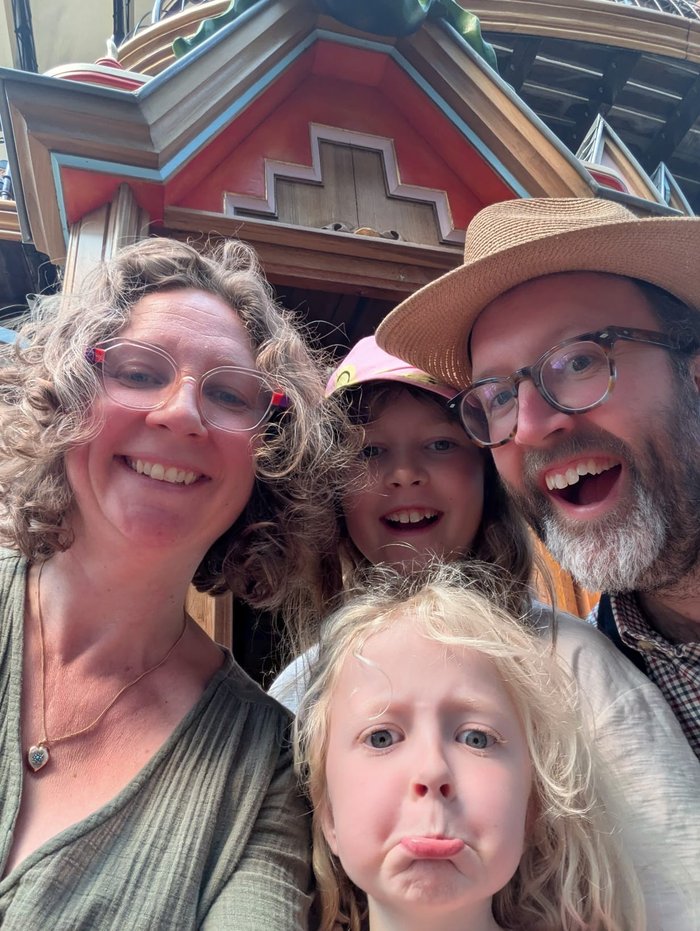
"We were eventually referred to the head of renal at Great Ormond Street Hospital (GOSH). Eloise was informally diagnosed with cystinosis after the optician did tests and saw cornea crystals, one of the main signs of cystinosis (the official diagnosis came from a DNA test).
"The day of diagnosis was horrendous, as it must be for all parents or guardians receiving news of their child having an incurable disease. My wife, Jenni, and I had read a lot about cystinosis after speaking with my uncle and we knew that although it is a life-limiting disease there was an effective treatment called Cystagon. Knowing that there was a treatment made the diagnosis easier to handle, along with knowing that there were other, even more serious diagnosis that we could have been faced with."
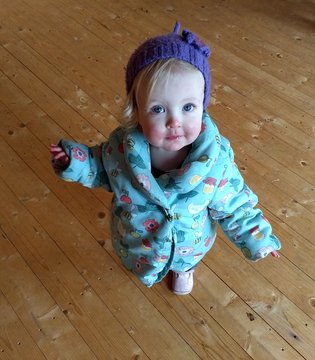
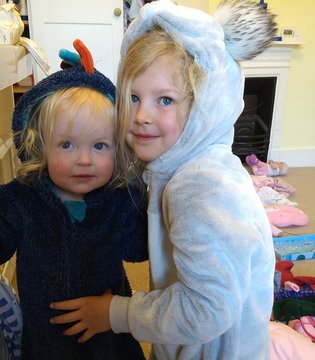
Eloise as a toddler, and with her older sister, Clara
Living with cystinosis
"There are lots of challenges to having a child with cystinosis. Initially, Eloise's medication had to be taken orally as a solution, and it tastes foul, like rotten eggs. When she was small it was okay but as she got older, we had to physically hold her down in order to get the medication into her. This put a great deal of stress on us as parents, our other child Clara, the whole family. She switched to tablets at around four years old which made a huge difference.
"The medicine regime itself is also challenging. The medicine has to be taken every six hours, and the nighttime dose lands at 1:30am, every night, so Jen and I alternate each night."
I have to take lots of tablets, and I have to take eye drops. It's kind of boring because it is just taking the same sort of medication all over again every time. It was bad taking it before it was a tablet, it tasted funny.Eloise
Telling Eloise and her sister about cystinosis
"It was a deliberate choice to inform Eloise about her cystinosis in an appropriate way. Jen and I didn’t want to hide any of her illness from her. This is primarily because Cystagon, the main medication for cystinosis, has a poor adherence in teens. It is a very unpleasant medication to take, due to its bad smell and taste, and has nasty side effects such as halitosis and body odour. Consequently, peer pressure during teenage and young adult years can make patients less likely to adhere to a consistent treatment plan. In addition, because it ideally has to be taken every six hours, it can be very hard for teens and young adults to fit medication into their daily schedule. But because the disease is progressive, the more consistent we can be with Eloise's medication regime the better are her prospects in terms of maintaining her kidney function for as long as possible.
"We wanted to set up from the beginning that cystinosis was part of who Eloise is, but without putting too much pressure on her or letting it define her. That way, she is aware of what her condition is and why the medication is not optional. The more consistent we can be with the medication, the better her prospects in terms of managing her kidney function."
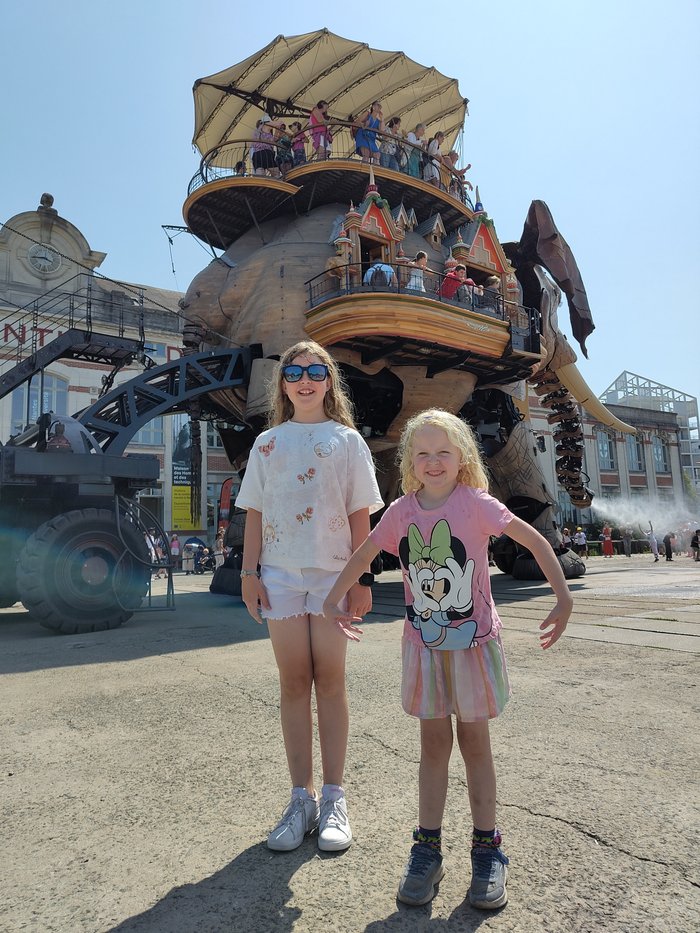
"To that end we've encouraged Eloise to take lots of ownership of her medicine during the day - for example, she has a wristwatch that tells her when to go to the office at school to take her medication, and she takes her medicine box into the office every morning and collects it at the end of school. Until another treatment comes along, Cystagon is very much part of her life, and it is, quite literally, lifesaving. So, the more she can adhere to her medication schedule, the better. It is very much a part of her life until another treatment comes along.
"Anecdotally, I think we have it relatively easy because Eloise has responded so well to Cystagon and because she is active and she eats. Other kids with cystinosis are on far more supplements to make up for losing salts and minerals, and they often don't eat well. For 95% of the time, she is a normal 7-year-old, apart from the medicine she has to take. She dances, swims, goes on play dates and school trips, attends a mainstream school."
I like gymnastics. It's super fun and I like how you get to different tricks on everything. I'm best at the one-handed cartwheel; my sister Clara taught me. Clara likes teaching me things, she has taught me to do a dive roll and when I go swimming. I also have a best friend called Abi and our favourite thing to do sing – we like singing Better When I'm Dancing, and This Is Me from The Greatest Showman.Eloise
"Jenni and I also try to think about how the cystinosis affects Clara, Eloise's older sister. Most of the time, she just treats Eloise's cystinosis as just another 'thing', I think because Eloise has responded so well. Again, we have tried not to hide anything from Clara, and she knows that cystinosis will make Eloise more ill as she gets older.
"Clara is registered as a young carer with Surrey Young Carers. This is a great organisation that exists to support children who have additional caring responsibilities beyond the family norm. Clara helps us with Eloise's medication, visits GOSH with her when she can and is generally as involved as possible and appropriate with Eloise's care."
The cystinosis is annoying because sometimes I sleep lightly, and I get woken up when it is medicine time. An upside to is that at theme parks we get special access, and we get to skip the queue and go on rides immediately. I also get to do stuff because I am a young carer because I help Eloise. Every half term, the head of Young Carers lets me come out with her and do something fun, like a sensory room.Clara, Eloise's sister
Looking to the future
"Cystinosis is so rare that every patient's experience, and therefore every caregiver's experience, is different to some degree. Every patient must be treated individually. There is no one-size-fits-all answer and community support, particularly for rare diseases, is crucial.
"I am a trustee of Cystinosis Foundation UK and one of the things I am passionate about is trying to improve support for parents in the initial period after diagnosis. Actually, I felt support for us as parents was very lacking when Eloise was diagnosed. Your child knows nothing different at 18 months (or often younger), but you as parents have a huge mental workload dumped on you. You are trying to learn about the disease, medication, treatment, long term prospects, everything.
I am doing pretty well at the moment. I see a doctor at GOSH where I have blood tests, and I get measured for how tall I am, and I get weighed and I do a wee in a pot! They take pictures to see if my crystals in my eyes have gone and the last time I went, they could barely see any crystals.Eloise
"Cystinosis, to me, means 'perseverance'. It’s a long-term condition (and thankfully getting longer-term all the time*) so finding a balance between medication adherence and life is really, really important. It is possible, albeit hard, to negotiate a challenging disease like cystinosis while remaining positive and hopeful for the future."
*Without treatment such as medication, children living with cystinosis are likely to develop kidney failure in about 10 years.