Everyone in the family was taken aback after the diagnosis. People were googling aHUS, getting worried! It was all just so overwhelming at the start.
Diagnosis
"I was diagnosed with CKD in December 2020 when I was 34. I was at work and started to feel poorly and I noticed my wee was foamy. My best friend’s husband had been in kidney failure for six months, so I asked her about it, and she told me to ring the doctor. I also did a blood pressure test at work, and the result was super high. So, I rang the doctor and after some blood and urine tests I was told my kidney function was 35.
"I had a range of other tests and then a kidney biopsy in February 2021 which picked up that I had blood clots in the vessels of my kidneys and a gene deficiency that can trigger a rare kidney condition called atypical Haemolytic Uraemic Syndrome (aHUS). The doctors still don’t know if it was this gene or my high blood pressure that damaged my kidneys and even now, they don’t know why my blood pressure can get so high.
"I’ve had high blood pressure since I was 25, when it was discovered before an operation. They got the blood pressure got down for surgery, but I was never told to monitor it. I got a repeat prescription for blood pressure medication and went about my life.
"I had never heard anything about aHUS before I was diagnosed. At first, I was told it came from an inherited H deficiency gene. My kidney team wanted the family to get tested for the gene, so the first port of call was my son who was 13 at the time. Thankfully, he didn’t have the gene. My mum did, but it has never affected her.
"Everyone in the family was taken aback after the diagnosis. People were googling aHUS, getting worried! With transplantation, you have to have infusions of a medication called eculizumab because the transplant can trigger an aHUS relapse, so my family were asking if I would ever get a transplant if I needed one in the future. It was all just so overwhelming at the start, but I have had the best care from the renal unit at South Tyneside and Sunderland NHS Foundation Trust; the slightest thing, with any test I have, I will get a call from them.
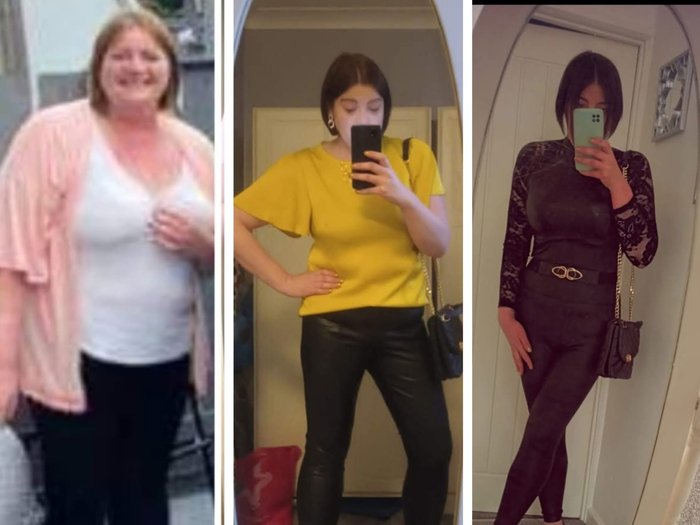
"After my aHUS diagnosis, I had infusions to stabilise my kidney function and I continued with medication and monitoring until 2022 when my eGFR dropped to 11. I started being worked up for dialysis and a kidney transplant and I worked really hard to lose close to 10 stone in weight. As a result, my eGFR started to go back up to 27, which everyone was surprised with! So, I was taken off the transplant list, which I was happy with.
"I was stable, renal were happy, and I went back to work until April 2025 when I got a chest infection and I was told my eGFR was back down to 12. It stayed at 12 for about a year and was manageable until February 2026 when I started having problems with my potassium, my blood pressure was spiralling and I had low calcium. For four or five weeks I kept being admitted to hospital – it was like a revolving door in and out – until I had a discussion with my kidney team and we looked at starting peritoneal dialysis (PD)."
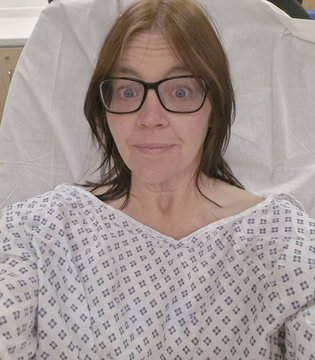
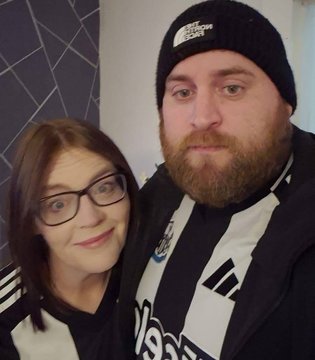
Gemma in hospital for low calcium, and with her partner Andrew
My PD machine is called ‘Bean’, as in ‘Kidney Bean’. You’ll often hear me yelling “shut up Bean!” when it beeps during the night, trying to make light of it!
Treatment decision
"I wanted to do haemodialysis (HD) because I wanted my ‘hospital life’ to stay in hospital. But, because I had two failed fistulas in 2022 when I was being worked up for HD, my team didn’t recommend it. Instead, I chose automated peritoneal dialysis (APD); I didn’t want it, but I wanted to get better.
"It felt like it happened so quickly, from the potassium issue in February to having a catheter fitted and PD nurses visiting my house in March. Within two weeks of that visit, I was starting treatment.
"PD has pros and cons. I hate hospital, as much as I spend a lot of time there, and with PD I am at home and have independence. At first, when the nurses came to train me on the machine, I was worried about being responsible but now I am doing it, it is better. I appreciate the freedom to be able to manage my own treatment. I am not restricted; I can go out when I want to and connect myself when I get home.
"When we go on our next holiday, I can just take the machine and the supplies. It is a lot to remember, but I feel like I can have more of a life on PD, I am not restricted to going to hospital at certain times for HD. As much as PD does cause upheaval, it is flexible. At first, there were a lot of unknowns, but I am getting used it.
"The biggest negative is having to dialyse every single night! Even when I am tired and want to go to bed, I still have to connect the machine. It is disruptive too, the machine is quite noisy, and it wakes up my partner sometimes. It can just be a lot; alarms going off, drain pain that disrupts my sleep, the treatment running over in the morning.
"I do get low days where I am sick of kidney disease, and then other days I feel lucky there is a treatment like dialysis that keeps me going. My PD machine is called ‘Bean’, as in ‘Kidney Bean’. You’ll often hear me yelling “shut up Bean!” when it beeps during the night, trying to make light of it!"
Things suddenly change and you are left trying to manage everything. People have this idea that you get a fortune on benefits, and you do not.
Work and employment
"Work has probably been the biggest challenge. From 2020 to 2023 I had lots of hospital appointments, so I decided to come out of work because it wasn’t fair my employer and the people I was caring for as a healthcare assistant. I was ecstatic when I went back to work in 2024. I felt like I got my life back, but my kidney disease had other ideas… Now it is like I am back to where I was in 2020. I don’t think people don’t understand the extent or seriousness of kidney disease.
"Some days, I feel like I don’t have much of a purpose. Work was motivating and it was often good for my mental and physical health. My employer has been really understanding, and I was hoping things would settle and I could go back to work, but then PD came about. As a healthcare assistant I have to be physically able and well because I am looking after someone else and I can’t do that right now.
"People say health is the most important thing, and I know it is, but from 16 to 40 I was independent and working. Now, relying on sick pay has been hard. Things suddenly change and you are left trying to manage everything. People have this idea that you get a fortune on benefits, and you do not. I have looked at other jobs, but I am reluctant to apply – I know they can’t discriminate, but if they have someone applying who is healthy and someone else who is on dialysis, who are they going to pick…"
Life now
"Day to day, for the first few weeks of PD I felt like I wasn’t doing much, but that was because I was poorly. I was sitting and resting a lot, I didn’t have motivation. The last few weeks I have been more upbeat, pottering about in the house, walking the dogs in a local dog park, going on drives or going for a coffee. All I have to remember is that when the machine is on, it’s for at least eight hours, so I just need to plan around later mornings.
"I am also waiting to get back on the transplant list, but tests have highlighted some potential concerns with my heart. My team think it could be an issue with blood pressure, so I am waiting for a heart scan.
"Kidney disease is just pain in the backside! I hate the disease and just because someone with CKD looks okay on the outside, doesn’t mean they are alright on the inside. When you are poorly, people say, ‘you look awful’ and other times I can be really ill but not show it and they say, ‘oh you look really well.’
"There isn’t a lot of knowledge about PD; people assume I go to hospital and don’t realise I am on it every single day. People don’t always grasp that kidney disease affects us all differently. They say ‘I know someone on dialysis, and they still go to the pub or go to the gym’ but that’s not the same for everyone.
"I have even heard someone say that CKD is okay because you can just, ‘get a kidney’ like you can go and buy one from a corner shop. But unless you can get a living donation, someone has to die for you to get that organ. I don’t want sympathy all the time, that would be overwhelming, it just would be nice for people to recognise my kidney disease."
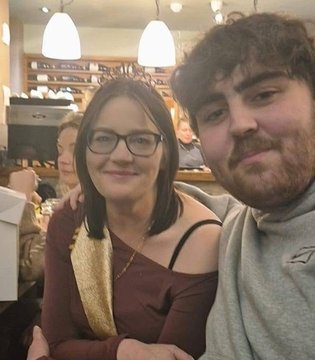
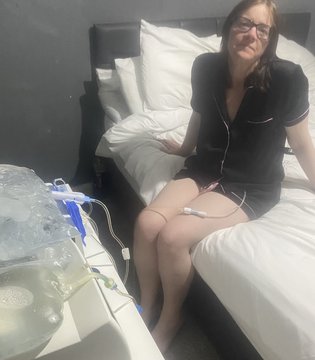
Gemma with her son, Rhys, and with her PD machine
Kidney Care UK and applying for a grant
"I was aware of Kidney Care UK through my best friend’s husband who had kidney failure. When I went onto PD, I didn’t know where to put my PD equipment – I didn’t want to keep everything in the living room when everything else was upstairs. The amazing renal team at Sunderland gave me a form to apply to Kidney Care UK from a grant to pay for a storage shed for my PD stuff.
"This took a financial burden from myself due to currently being off work unwell. Communication was brilliant and I will be forever grateful. I hope one day I can repay the kindness in some way, and I just want to express my gratitude to the people that kindly donate so the charity can offer patient grants."