It is like James is living on in all these people that have parts of him. It makes it better for us. James is doing these people some good, giving them a better life.
James and growing up
Paul: "Our son James was born with brain damage. As he grew up, it was one thing after another, but he seemed to conquer everything. In his younger days he was difficult. He didn't walk until he was about two and a half, so he used to bum shuffle everywhere. When he eventually stood, he had to wear surgical boots to support his weak feet and ankles. When he was angry (which was quite frequently) he would kick out at anything and anybody. We had bruises on our legs all the time!
"He also didn't like noise, and he was very uncontrollable at times. But changes to his medication soothed him and made him more mellow. As he grew up, he came to terms more with himself and his environment. He loved active sports, playing football and swimming.
"He was quiet and reserved a lot of the time, but in the right mix of people he would be very outgoing. He was involved with something five days a week, including a social club on a Thursday evening shortly after we moved to Broadstone. My wife Andrea and I are now on the committee for that club.
"One of the clubs he attended was so good at getting him to be more confident and independent, going off to meet someone or getting the bus on his own. He made so many friends. James had always been protective of those who were less able and more vulnerable than he was, and he especially enjoyed caring for young children. He initially volunteered to work in a pre-school and after our move the club manager organised a post at the nursery her children attended. This was his 'job' and he absolutely loved it."
Andrea: "James had a real sense of humour. When his brother Andrew was with us, it would be both of them and Paul, all egging each other on! I would say to James, you just make me laugh."
Paul: "James had to learn sarcasm at an early age because of me! If someone said something funny, James would cotton on and add something funny himself. You'd think, how did his brain work like that? You'd forget at times he had the brain damage."
Andrea: "We always tried to treat him according to his age, not to treat him as a child. We always thought we should get him to find his own level of understanding. Luckily, he really benefitted from that."
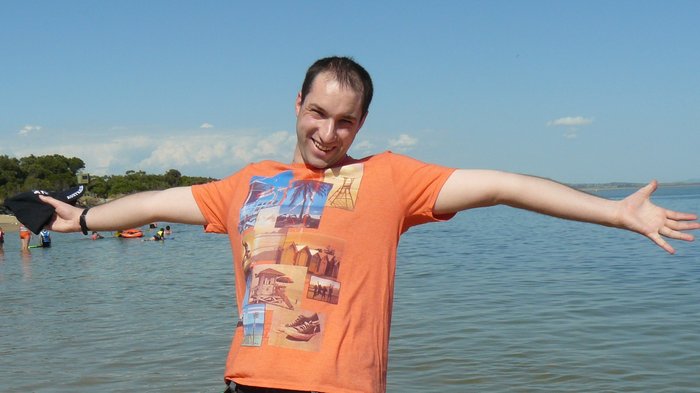
I asked if I could nominate someone to receive a donation. The only person I knew who needed something was John, so I nominated him.
Deciding to donate James's organs
Paul: "James was 35 years old was he was taken ill. He had been to his swimming club on the Wednesday and said he felt sick when he got home. He wasn't himself at all.
"He suffered from cellulitis, and it wasn't uncommon for him to feel drowsy and want to go to bed. That evening we checked him over, but we didn't know what it was and over the next two days he didn't get better and he just slept constantly. On the Saturday we took him into Poole Hospital, and they put him on antibiotics in case it was meningitis or a viral infection. He was kept in overnight because he was delirious, talking about strange things. It was all completely out of character.
"Andrea and I went back to the hospital the next day, and we could see James had deteriorated in front of our eyes. He had lost the feeling in the right side of his body and he was incontinent. He was taken to intensive care and never left. For the rest of the time he was alive, until the following Saturday, he never regained consciousness.
"We were told he had a series of fits that had caused several bleeds on the brain. The doctors at Poole transferred him to Southampton in order to relieve the pressure but, in the end, the specialist said they couldn't do any more for him. He was totally unresponsive and the decision to take him off life support was made by the medical team. We were dreading that because we had previously been asked to turn off life support on two of our other children.
"When they said James wasn't going to survive, a donor service care representative spoke to us. She asked if we had thought about organ donation and Andrea and I simply looked at each other and without a second thought we both said yes, do it. James would have wanted us to, especially if he had known how many people he would potentially have been helping.
"The representative sat down with us to show us a long list of what James could donate and that amazed us. You think of organs and eyes, but bones, skin and muscles can be donated. It was a two-page document, and we said yes to everything. After the representative completed the form, I asked if I could nominate someone to receive a donation. She told us no one had ever asked her that and she explained she would have to check if it was ethical for someone to jump the national queue and that it also depended on whether James was a match with a potential recipient. The only person I knew who needed something was John, so I nominated him."
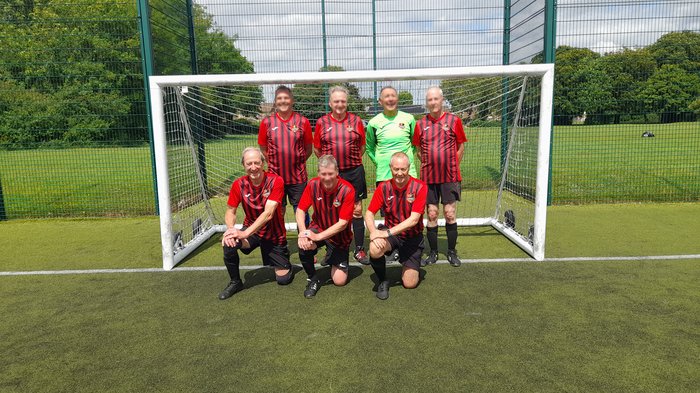
That was the hardest part, speaking to John at that time. The conversation was tearful. John hadn't met James; he didn't know him. John just said that if James's kidney was not a match for him, it would be a match for someone else who needed it.
John and receiving James's kidney
Paul: "I first met John at Bournemouth walking football club. Lots of players over 50 go to the Wednesday session and sometimes John and I would play. I was aware of John's CKD, but I didn't fully understand the extent of it. I just knew he was on the transplant waiting list. I didn't know anyone else living with kidney disease until I met John.
"I rang John after speaking with the organ donation representative to verify where he was being treated so the teams could check his details and see if there was a match with James's kidney. I was told that his hospital would also have to accept John being nominated by me.
"That was the hardest part, speaking to John at that time. The conversation was tearful. John hadn't met James; he didn't know him. John just said that if James's kidney was not a match for him, it would be a match for someone else who needed it. But, by some miracle, James's kidney was a match for John. I think Andrea, John and I were all equally amazed. The chances of it being a match were tiny."
Andrea: "It was wonderful, in a way. Although he was autistic, our son was always helping others. I think he would have been the first one to say, 'Take what you like.' He loved helping people; he was a really happy person. Everyone loved him. He just kept going and did everything he wanted to do. He had a really good life."
Paul: "James's other kidney went to a woman who had been on the donation list for seven years. Someone else got both of his lungs, another person got his liver. It was nice to know that so much had been donated."
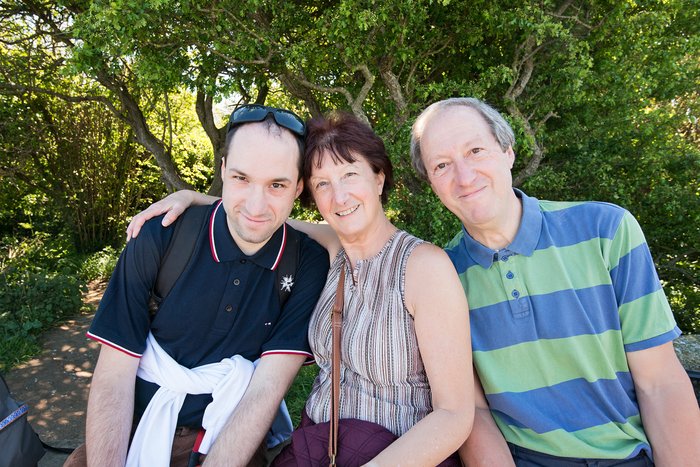
Whenever we meet up, John gives us an update about his kidney and he says that every morning he pats his bulge and says, 'Good morning, James.'
Life after donation
Paul: "After John's kidney transplant, he posted a message in our walking football message board and explained he had received a kidney transplant. He didn't mention James then, he talked generally about organ donation and how important it is and that everyone should consider doing it.
"It wasn't until after James's funeral, a month or so later, that I posted a message in the message board, telling mine and Andrea's story about making an organ nomination that treated a friend. At the end of the message, I said, 'You all know who the benefactor was'. All the wonderful, heartfelt responses that came in affected us so deeply, it was so emotional.
"John rang me to say he wanted to attend James's funeral. I said I didn't know if it was a good idea because of the high risk of him catching an infection, but he was adamant and agreed that he would speak with his specialist and get permission to go. He stayed at the back, and when everyone left, he was the last one out."
Andrea: "It was a shock… Paul and I both turned around at the same time and John was just stood there in the doorway with his wife Maggie, tears in his eyes. I gave Maggie a hug, it was just amazing. It was so lovely to see them. We wanted the service to be a celebration of James's life and less a mourning of his passing.
"Everybody wore something that was yellow and so many carried sunflowers, his favourite flower. After the funeral, the sunflowers were donated to a local hospice for them to sell. Even the funeral directors said it had been the best service / funeral they had been to in a long time. James would have enjoyed it, seeing all of his friends and family there. At the funeral I put a box out for people to put a letter about James in. All the notes and messages were lovely."
Paul: "John told us he learnt a lot about James from the funeral ceremony and wanted to find out more about his life. Whenever we meet up, John gives us an update about his kidney and he says that every morning he pats his bulge and says, 'Good morning, James.'
"When it comes to organ donation, we want to encourage other people to think about it. What we would say to other families is just this: if you lose a loved one, please be prepared to say yes when the time comes to discuss organ donation. It is a difficult decision to contemplate at that time. You are at your lowest ebb, but despite that, if you are asked, please don't hesitate because when you later reflect on that decision and realise the life-changing benefits given to so many others, you will be grateful that your loved one has left such a wonderful legacy."
Andrea: "It is like James is living on in all these people that have parts of him. It makes it better for us. James is doing these people some good, giving them a better life. It's just lovely to see John so well, and Maggie looks so happy too. I would also like thank all the staff at Southampton General Hospital, they were amazing. They were very honest about James's condition, very caring and very compassionate. They helped us all the way through James's final days."