Try out our Kidney Kitchen soup and stew recipes to find some new favourite meals, easy to batch cook and freeze.
Make your meal even more nutritious by baking your own bread to eat with your soup – we recommend Kidney Kitchen's quick wholemeal bread rolls, soda bread rolls or a gluten free white bread loaf.
If you have been advised to follow a fluid restriction, remember to check the fluid allowance guidance for each individual soup and stew recipe.
When it comes to food and nutrition, there is no one-size-fits-all advice for people living with kidney disease. If you have chronic kidney disease (CKD) stage 4 or 5, your kidney dietitian will offer you personalised nutrition advice and support. Kidney Kitchen makes CKD diet recommendations easy to follow, with recipes that have analysed by kidney dietitians and approved by the British Dietetic Association (BDA) Kidney Dietitian Specialist Group (KDSG) and are suitable for people living with all stages of CKD.
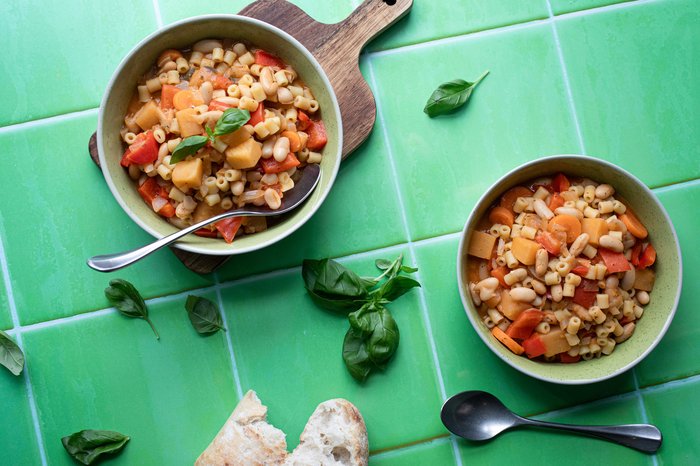
Soup-er soups!
As the weather turns chilly, nothing beats a bowl of hearty, steaming-hot soup to keep ourselves warm and cosy. If you are living with CKD, soup can still be on the menu as an inexpensive and healthy choice, but before you stock up on tinned soups, here are a few tips to help you enjoy soup safely from our Kidney Kitchen lead dietitian Angeline Taylor, also Chair of the British Dietetic Association Kidney Dietitian Specialist Group.
Why soup?
Soups are a winter favourite that can be enjoyed safely by people living with CKD. The trick is to be mindful of salt, potassium and additive content and by counting soup as part of your fluid intake (if you have been advised to do so). By doing this you can enjoy warming bowls of soup that nourish your body and your soul.
Soups are mostly liquid, so if you’ve been advised by your kidney team or kidney dietitian to keep an eye on your fluid intake, soups will need to be included as part of this. Choosing smaller portions, or thicker soups, can help you manage this.
Too much salt can raise blood pressure and make you thirsty. Shop-bought soups, stock cubes and flavour sachets often contain more salt than you need. Processed meats such as ham, bacon, or chorizo can be added to soups for flavour, but they also add to the overall salt content. Many people find it helpful to make their own soup, using fresh ingredients, lower-salt stock and adding flavour with herbs and spices instead.
Some people with CKD are advised to reduce the amount of potassium they eat or drink. Common soup ingredients such as potatoes, tomatoes and lentils can be higher in potassium, but there are simple ways to manage this. Tinned beans, potatoes and lentils (well rinsed and drained) are good alternatives for adding to soup. If you want to use tomatoes, use smaller amounts for flavour and pair with lower-potassium vegetables in your homemade soup.
Some ready-made soups, or those with processed meats, may contain phosphate additives. Check ingredient labels to see if words like phosphate are on the list. If you are trying to reduce phosphate, choosing homemade soups with fresh ingredients is a good option.
Everyone’s protein requirements are different, depending on your stage of CKD and treatment, and soups can be adapted either way.
If you're having dialysis, you may need more protein, so try adding cooked, lean chicken, turkey, fish, or pulses.
Or, you may have been advised to reduce your protein intake, for example, if your kidney function is failing, but you have not yet started dialysis. If this is the case, you can use smaller amounts of meat, or other protein, but add more vegetables, pulses and grains such as rice, pasta, or barley.
Practical tips for kidney-friendly soups
Cooking from scratch gives you more control over ingredients.
Having single portions of soup in the freezer means a quick, kidney-friendly meal is always ready.
Ready-made soups vary. Some may be higher in salt, or include phosphate or potassium additives. Checking the ingredients list and traffic light labels can help you choose those that are free from additives and lower in salt.
Chunky soups with vegetables and grains often feel more filling, even in smaller portions, and will contain less fluid.
Herbs, spices, lemon juice, garlic, ginger and pepper can bring out the flavour without the need to use extra salt.
When to seek advice
Everyone’s kidney diet is individual to them, with no ‘one size fits all’. For some people, potassium, phosphate or protein may need more attention, while for others, these do not need to be considered.
Your kidney team can let you know what matters for you. Salt is always worth keeping an eye on. But fluid needs are very personal; some people are asked to limit how much fluid they have each day, while others are not.
Kidney Kitchen recipes take away guesswork, as each one has been analysed by kidney dietitians for salt, potassium, phosphate and protein content. This means you can enjoy Kidney Kitchen soups knowing they are safe. The only additional consideration you need to make is whether to include them as part of your daily fluid allowance, if you've been advised to keep an eye on this.
