Puttanesca spaghetti with tuna and olives
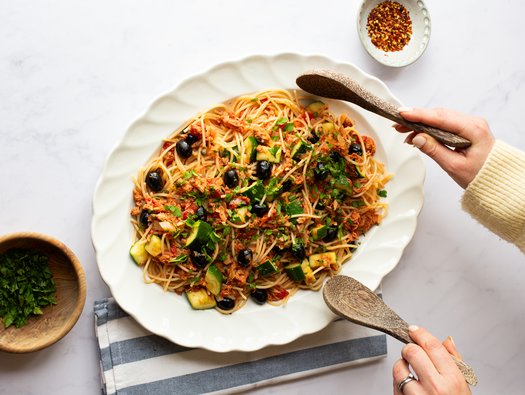
This recipe provides good heart-friendly fats from tuna and olives.
https://kidneycareuk.org/get-support/healthy-diet-support/kidney-kitchen/recipe-index/puttanesca-spaghetti-with-tuna-and-olives/
This recipe provides good heart-friendly fats from tuna and olives.
1 tablespoon olive oil
340g tin tuna in spring water (drained and flaked)
1 white onion, peeled and finely chopped
100g pitted black olives
2 cloves garlic, peeled and crushed
10g capers (drained) or 10g green peppercorns
½ teaspoon chilli flakes
300g dried spaghetti
400g tin chopped tomatoes
10g fresh parsley, chopped
1 courgette, diced
Heat the oil in a pan over a medium heat. Add the onion and fry until soft (around 8 to 10 minutes), then add the garlic and chilli flakes and cook for another minute.
Add in the tinned tomatoes, flaked tuna, olives and capers or green peppercorns, bring the sauce to a simmer, reduce the heat and cook for 15 minutes.
Cook the pasta in a large pan of boiling water for 10 – 12 minutes, or according to packet instructions. Add the courgette into the pasta for the last 5 minutes of cooking.
Drain the pasta and courgette, mix into the sauce and serve with a sprinkle of parsley.
Serving sizes are based on adult portions. Here is a guide for children:
Toddler (age 1-4): ¼ adult portion
Young child (age 5-9): ½ adult portion
Older child (age 10-13): ¾ adult portion
Teenagers (14+): 1 adult portion
Some children do have bigger appetites than others. You child’s portion may need to be changed to fit their typical diet if you think the recommended serving sizes are too large or small. We would advise speaking with your dietitian prior to increasing the serving size if your child has struggled to manage potassium or phosphate.
The pasta is the main source of carbohydrate in this recipe, and the value has been provided for those who have been trained in insulin adjustment.
Despite the use of some high potassium ingredients, such as tomatoes, this recipe is low in potassium, when following the quantities in the ingredients, and the serving sizes. Therefore, suitable for those advised to lower potassium in their diet.
This recipe is also low in phosphate, however it does contain some phosphate, mainly provided by the tuna therefore if you have been prescribed a phosphate binder you should take as directed.
To lower the phosphate further than you could consider replacing some or all the fish in this dish with a plant-based alternative, such as tinned mixed beans or butter beans.
This recipe provides a source of protein. If you have been advised to eat less protein, consider reducing the amount of tuna to half and substitute with tinned mixed beans/butterbeans.
Use gluten-free pasta.
If you need to gain weight, have a growing child who needs more calories, or have a poor appetite, you can add these high-energy ingredients to the recipe.
Add 1 tablespoon of butter at the end while mixing pasta with the sauce. Alternatively use 2 tablespoons olive oil instead of one to fry the onions. Consider adding 30g grated cheddar/parmesan for extra calories.
Capers are soaked in brine and therefore will be high in salt. Drain and rinse the capers in cold water before adding to pasta to reduce salt content. Use wholemeal pasta to increase fibre.
Capers or green peppercorn can be replaced with the zest of half a lemon to give a tangy taste to the recipe.
Best served fresh but can be stored in fridge for up to two days.
Cooking without salt doesn’t mean bland meals. There are plenty of ingredients that give your cooking a flavour boost without reaching for the saltshaker. We’ve checked with kidney dietitians so you don’t have to worry about the science – or compromise on fantastic flavour.
You can enjoy a wide variety of delicious and healthy food when you are living with kidney disease. All Kidney Kitchen recipes are analysed and approved by kidney dietitians. Search through our kidney-friendly recipes or filter them by category below.
This recipe is simple to cook and high in protein, but does take some time in the oven

By giving us your email address, you're giving us permission to send you regular Kidney Kitchen emails from Kidney Care UK. Further information about how we protect and use your personal data is available in our Privacy policy. If you would like to change the way we communicate with you at any time please email [email protected]. You can unsubscribe at any time by using the link at the bottom of every email we send.