I was diagnosed with nephrotic syndrome, specifically FSGS. I wasn't happy, but I tried to keep working and stay positive. I didn't want anyone to see me down, but internally it was hard.
Diagnosis
Hayley: "The first symptom was that I was drowsy all the time and I knew something was wrong, but I didn't want to do anything. As a nurse, I was in denial that anything was happening. I felt that it should have never happened to me. I thought I was careful and as a health professional, it was difficult for me to accept the diagnosis.
"At first, I thought it was diabetes, so I tested my urine. It was a dark colour and protein showed up. I contacted my GP, who sent me for an X-ray. Within 48 hours, my GP had referred me to a kidney doctor, who admitted me to hospital.
"I had a kidney biopsy, and I was given steroids and stayed in hospital for a few days. I was diagnosed with nephrotic syndrome, specifically FSGS, a type that is not seen in the UK that often.
"I wasn't happy, but I tried to keep working and stay positive. I didn't want anyone to see me down, but internally it was hard. My husband Bertram was the one who carried the baton. He just took over, physically and emotionally, so I didn't have to think about things other than my diagnosis. I wanted to be 'normal', and he knew what I needed him to do for me."
Bertram: "Hayley was having a really difficult time, but she was playing it down. There were times when I really wanted to hug her, but her muscles were so painful I couldn't and that really upset me.
"Just knowing she was in pain, that she couldn't dance and she wasn't smiling, was difficult. She's very positive about life and I could see the light in her going out."
Hayley: "It was around two or three years before I was on dialysis. The day I started, a friend of ours was getting married, and I wanted to go to the wedding! I began haemodialysis in the morning, and Bertram came with me to my first session. This big needle came towards me and I was frightened.
"On dialysis I had a renewed energy. I had this mindset that I wanted to get over this somehow. So, after dialysis, I would walk from the unit to the town centre, which was about a mile and a half. I was determined that I wasn't going to allow myself to be sickly, but sometimes, I was so tired, I just couldn't move!"
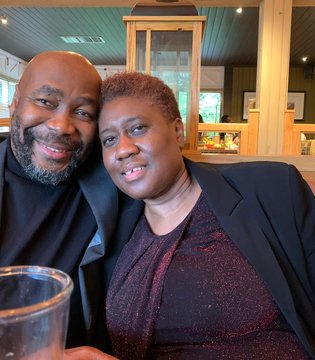
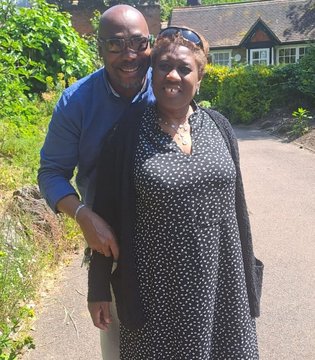
I wanted a transplant, but I didn't quite know where it would come from. I was just living and I didn't want to put pressure on anybody to donate.
Living donation
Hayley: "When I realised I needed a transplant I spoke with my brothers. One said yes but he had to lose weight, and I was reluctant because he was struggling to do so. My two other brothers in Trinidad also said they would donate, but I said no. I am older than my three brothers, a good ten to nineteen years, and I wasn't keen on having a kidney from them. I wanted a transplant, but I didn't quite know where it would come from. I was just living and I didn't want to put pressure on anybody to donate."
Bertram: "Hayley and I didn't really have a discussion about donation. Hayley was existing but not really enjoying life. She is fun-loving and she was always full of zest after a dialysis session, but she would quickly get tired again and she wouldn't want to do anything.
"I wasn't a blood match so I couldn't donate my kidney directly to Hayley, but one day when she was in clinic, I asked a nurse if there was anything I could do. The nurse explained the paired/pooled sharing scheme, and I remember getting annoyed and asking why they hadn't mentioned this to me before! We got more information and started going through the process.
"Once we'd made a decision, things moved very quickly. Tracey, our living donor nurse, was fantastic and really looked after me. The first run in late 2016 / 2017 was unsuccessful. But the second time, in March 2017, it all fell into place and on 12 June 2017 we had the operation."
Hayley: "Bertram rang me at work to say that there was a kidney waiting for me. I started screaming and crying. All the patients wanted to know what was happening! Someone shouted, 'She's got a kidney,' and everyone in the clinic applauded."
Bertram: "The hospital couldn't get hold of Hayley, so they rang me at work! Hayley went into hospital well but scared and I went in very well, hoping to get my wife well again. She came out extremely well, she was fantastic! Her eyes cleared up, she had life and energy, and I just wanted to be left alone!"
Hayley: [laughs]
Bertram: "I was in pain and I was tired. [Recovery seemed] almost automatic for Hayley, but I was bleeding a bit internally and I had to have another operation."
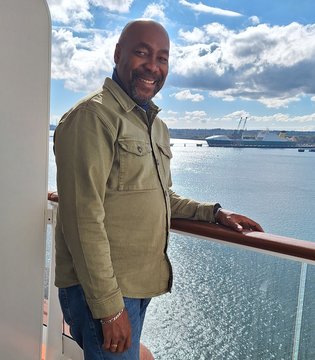
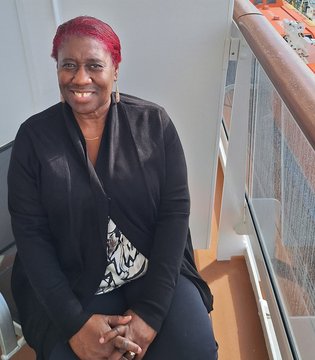
The best part of my transplant has been seeing the happiness on my husband's face, in how he expresses himself. He talks about the change to others. He always says I look beautiful, even if I don't feel it.
Black Living Donor Choir and life after transplant
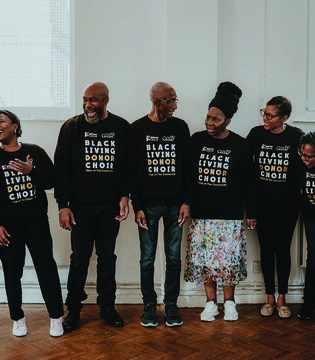
Bertram: "I decided to join the Black Living Donor Choir after talking to our friend Dela Idowu and listening to her story about how she couldn't donate her kidney. Dela is amazing and always wanted to give something back. The Choir was her idea, and we all said it will work, because it's donors coming together to sing and show we all can live life after kidney donation. We chatted about singing and the experience of a choir that gives the messaging of the transplant journey.
"The stories we share would be able to transcend those who don't believe in giving kidneys or blood, perhaps because of cultural differences. Dela set about getting us all together, and since starting the Black Living Donor Choir, there have been so many lives touched, or influenced to donate a kidney, and many lives saved. We all feel like a family, because we've all been through similar challenges.
"Everyone's journey shines a light on the trials people with CKD endure, and all the difficulties in life because of their physical health. And none of us needs to explain anything to each other, because we all just know what it's like. We've all done this for someone that we love.
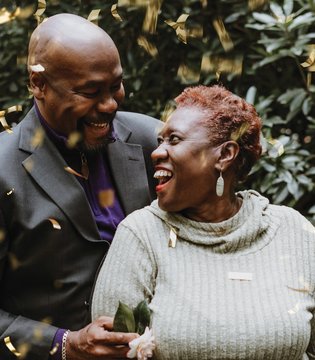
"We are not singers who gave a kidney, we are kidney donors who happen to come together to sing. So, some of the notes aren't necessarily the best, but it's beautiful when we come together. The sheer gift of living brings it all together, too. When Hayley had her new kidney, we had life again. It feels like I now have my wife back."
Hayley: "The best part of my transplant has been seeing the happiness on my husband's face, in how he expresses himself. He talks about the change to others. He always says I look beautiful, even if I don't feel it.
"Also, not having the shortness of breath that happened rather suddenly before dialysis is great. I can walk freely up the hill where we live, and I just feel good and comfortable now. I was in a lot of pain when I was diagnosed and on dialysis. That's something I really don't miss!"
Bertram: "I think Hayley is more like herself, like the Hayley I know from years ago. She is energetic, she can dance when she hears music, she can do things like 'normal'. Lots of things that she stopped doing when she had the kidney problem. The light is back in her eyes; it was dimmed for a while, but it is back. She has a vigour for life."
The first time in the kitchen with the Kidney Kitchen crew was a bit daunting, but once I'd met everyone, I really felt at ease.
Cautious about the process
Hayley: "I first met Dela through a friend of ours who knew I'd had a transplant. This friend invited Dela to mine to eat because I like cooking and Dela enjoyed it and visited again and again.
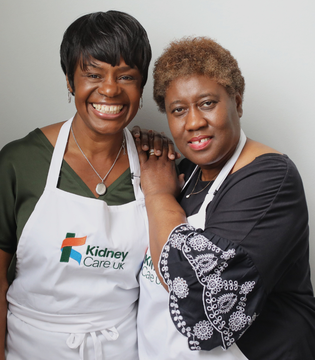
"Dela mentioned the Kidney Kitchen to me and said there was not really any Caribbean food. I was interested so Dela contacted the Kidney Kitchen team and said it would be good to have some African and Caribbean recipes on the website. They asked if I would be interested in helping them develop some traditional meals. I said, 'Sure, anything to give something back,' and that is how it started.
"I'm a free-hand cook, and when it comes to recipes, I read one, then put my own spin on it, taking away ingredients, or adding things I prefer, but as it was for kidney patients, I knew I couldn't use salt and would need to watch potassium levels.
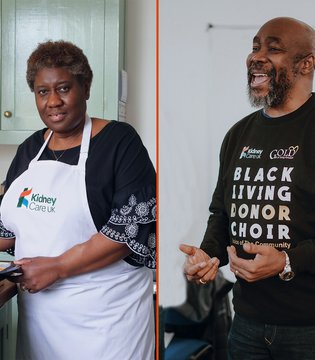
"The first time in the kitchen with the Kidney Kitchen crew was a bit daunting, but once I'd met everyone, I really felt at ease. From day one I enjoyed it. It could have been overwhelming with the photographer, dietitians and chef, but I was very relaxed. And chef Ripley is such a class act, we had a great day."
This story was first featured in Kidney Matters issue 29.